

Bath Bench Company Guide to Choosing a Sturdy Shower Seat
2026-09-29
Most shower seats feel sturdy in the showroom—until you actually sit down and feel that first sideways shift. Bath Bench Company's guide skips the vague reassurances and gets specific about what keeps a seat rock-solid: frame materials, weight ratings, leg locking, and base grip. That's the difference between a seat that earns your trust and one you'll constantly second-guess. Before you make a purchase you'll rely on every day, it's worth understanding the engineering that separates genuine support from a plastic placeholder. And if you'd rather skip the guesswork entirely, Suncare has already vetted a lineup of shower seats designed to hold firm—no wobble, no drama.
The Hidden Factors Behind a Sturdy Shower Seat
Most people look at the advertised weight limit and assume a shower seat is sturdy, but the real story starts inside the wall. If the seat is anchored to tile backer board or, worse, drywall, it will loosen and pull away no matter how thick the seat looks. Solid blocking installed between studs before the tile goes up gives the mounting screws something substantial to bite into. Some installers also use steel plates or reinforced brackets behind the waterproofing layer to spread the load across a wider area. Without this hidden prep work, even a high-end seat can become a safety hazard within months.
Another factor that rarely gets attention is how the seat transfers weight through its hinges and support arms. A fold-up model may feel tight in the showroom, but tiny gaps in the pivot bushings can gradually develop into a wobble once it is mounted and used daily. The load path matters just as much as the materials: a straight vertical support under the front edge will hold far better than a design that relies on angled braces or thin metal tabs. Corrosion also works quietly at the joints where different metals meet, especially in humid bathrooms, weakening the connection before any rust becomes visible on the surface.
Finally, water and changing body positions create stresses that static weight tests never capture. A wet seat surface can cause a person to slide slightly, introducing twisting forces that pull against the mounts in unpredictable ways. Repeated off-center sitting, combined with heat and moisture cycles, gradually loosens fasteners and breaks down seals. Hidden rubber gaskets, properly sloped surfaces for drainage, and sealed end caps help keep water away from internal hardware, which preserves rigidity and prevents the kind of slow failure that often goes unnoticed until it is too late.
Why Some Materials Fail in Steamy Bathrooms
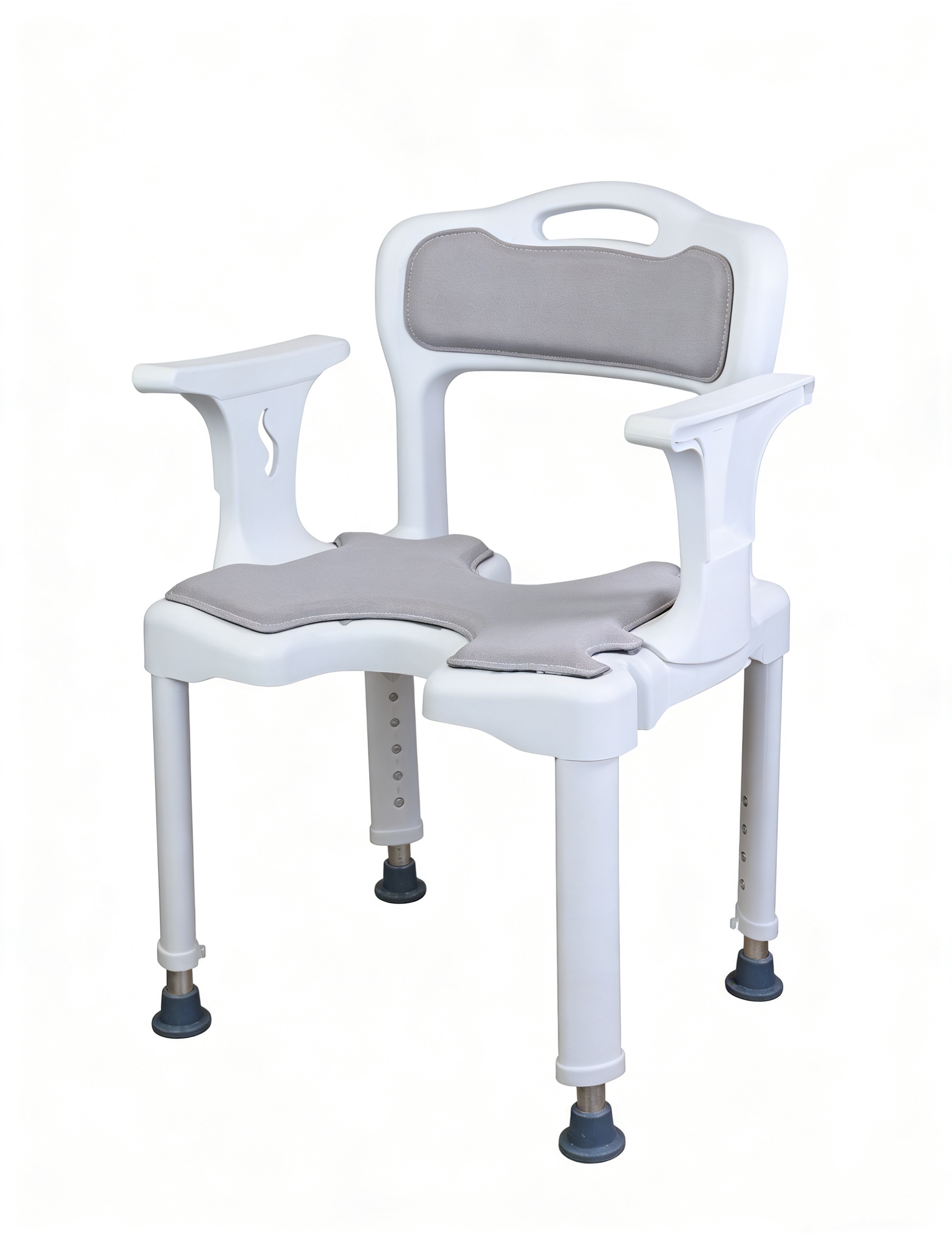
Steamy bathrooms combine heat, moisture, and frequent temperature swings—conditions that quickly expose weaknesses in building materials. Many products are tested in dry, stable environments, so they never reveal how they behave when humidity hovers near saturation. Wood swells and warps as fibers absorb water unevenly, while low-grade steel sheds its protective coating and rusts beneath bubbled paint. The failure often starts invisibly, at joints or micro-scratches, long before it becomes a visible stain or crack.
Adhesives and sealants face a similar problem: repeated condensation cycles force water into tiny gaps, then the heat of a shower expands that moisture, prying surfaces apart. Cheap acrylic caulk may look smooth on day one, but without elastic recovery it tears away from tile edges within months. Even “water-resistant” labels mean little if the material behind the surface traps moisture instead of letting it breathe. Trapped water feeds mold and accelerates rot, turning a small leak into structural damage.
The real difference shows up in how materials handle thermal shock. A bathroom mirror fogs, a shower wall heats and cools, and each cycle stresses the bond between layers. Glass and ceramic can survive this if their backing is properly ventilated, but laminated boards with paper cores swell at the first hint of steam. Choosing materials for a steamy bathroom means ignoring the showroom look and asking a simpler question: what happens after a thousand hot showers?
Weight Ratings: The Number That Keeps You Safe
A weight rating isn't just a random stamp on the side of a box or a footnote in a product manual. It's a carefully calculated limit that tells you exactly how much stress a piece of equipment, a shelf, a ladder, or even a vehicle tire can handle before things start to go wrong. Ignore it, and you're gambling with more than just a broken item—you're risking a sudden collapse, a fall, or a load shifting at the worst possible moment.
Think of that number as a quiet promise from the manufacturer. It's based on real testing, not guesswork. For example, a ladder rated for 300 pounds includes your body weight plus whatever you're carrying. A shelf rated for 50 pounds means every bracket, every screw, and the board itself have been pushed to that limit and held. The moment you overload it, that promise breaks. Maybe not instantly, but gradually—wood splinters, welds crack, plastic warps—until one day it gives way without warning.
Smart users make a habit of checking weight ratings before loading up. Leave a safety margin: if the limit says 200 pounds, don't push it to 199. Factor in dynamic forces too—a tool chest rolled over a bump hits harder than its static weight. The number on the label isn't there to slow you down. It's there to keep you upright, keep your stuff off the floor, and keep your spine out of a hospital bed.
Beyond Suction Cups: Real Slip Protection
Most anti-slip solutions stop at suction cups, but those tiny vacuum grips have a dirty secret: they fail exactly when you need them most. Tile grout lines, textured surfaces, or even a bit of fine dust can break the seal and leave you reaching for the wall. Real slip protection doesn't rely on a perfect surface—it digs in, grips, and holds even when conditions are less than ideal.
Think about the places where a fall is actually dangerous: a wet shower floor, a soapy bathtub, a ramp after rain. Suction cups struggle with all of them. A smarter approach uses micro-textured materials or aggressive rubber compounds that create friction on both smooth and rough finishes. These grips don't need air pressure to work; they use mechanical interlocking and high-friction contact to stay put.
The difference is obvious the moment you step onto a mat that actually holds. Instead of that faint slide-and-catch feeling, you get stable footing you can trust. No readjusting, no pressing down to re-seal, no surprise slips. If your current safety gear depends on suction, it's time to look past the cup and demand protection that works on the real surfaces you walk on every day.
Measuring Your Shower Before You Buy
Before you fall for a particular shower unit, pull out a tape measure and map the space it will actually live in. Start with the width and depth of the alcove or corner, measuring at three heights—near the floor, at waist level, and around shoulder height—because walls are rarely perfectly plumb. Note the position of the drain, the hot and cold supply lines, and any existing tile lip or base. Jot these numbers down on a simple sketch, even if it is messy; it will keep you honest when a showroom model tries to convince you that 'close enough' will work.
Also pay attention to how the shower will be entered and how far the door or glass panel needs to swing. In a small bathroom, a pivot door that opens outward can steal valuable floor space, while a sliding or bi-fold option might make better use of a tight layout. Keep at least 30 inches of clear space in front of the shower for toweling off and bending down. If you are replacing an existing unit, do not assume the old dimensions are correct—builders often shim walls or adjust tile thickness, and a quarter-inch here and there changes whether the base fits without gaps.
The Stability Difference Between Mounting Styles
Through-hole mounting creates a mechanical interlock that surface-mount cannot easily match. The component leads pass through drilled holes and are soldered on the opposite side of the board, forming a solid plug that resists pulling, twisting, and repeated flexing. This anchoring effect distributes stress away from the solder joint itself, which is why connectors, transformers, and large capacitors still lean heavily on through-hole designs when long-term stability is non-negotiable.
Surface-mount components rely on a thin layer of solder at the pad surface. The joint is electrically sound and space-efficient, but mechanically it depends on the adhesion between the component termination and the board pad. Any board bending, vibration, or thermal expansion mismatch concentrates force at that small fillet. Without the extra support of a plated through-hole barrel, the solder can develop micro-cracks over time, especially at the edges where the component lifts away from the laminate.
In practice, the stability gap shows up most clearly under sustained mechanical shock or thermal cycling. Through-hole parts shift less because their leads act like tiny springs that absorb some of the strain. Surface-mount designs can close the gap with underfill adhesives, thicker copper pads, or strategic placement away from high-flex regions, but the starting point remains different. A designer chasing maximum mechanical stability will often reserve through-hole for the few components that face the harshest loads and keep surface-mount for everything else that tolerates a lighter mechanical footprint.
FAQ
Look for a seat with a reinforced frame, usually aluminum or stainless steel, and check the weight capacity. A good bench should feel solid without wobbling, even before you sit. Avoid thin plastic legs or flimsy cross braces—those are the first to crack under repeated stress.
Most quality benches are rated for at least 250 to 300 pounds, and many go higher. It’s smart to choose a rating well above the user’s weight because wet conditions and sudden movements add extra strain. For bariatric needs, look for 500-pound capacity models with extra-wide seats.
Teak and bamboo are naturally water-resistant and warm underfoot, but they need occasional oiling to prevent mildew and cracking. Metal benches with a powder-coated finish are lower maintenance and often lighter. The better choice depends on whether you prioritize looks or easy care.
Wide, rubberized feet with a slight suction grip make the biggest difference. Some benches also have adjustable legs to level on uneven floors. Avoid hard plastic feet, which tend to skate on soapy water. A slightly textured seat surface helps the user stay put too.
Choose a height that lets the user keep both feet flat on the floor with knees at roughly a 90-degree angle. For most adults, 17 to 19 inches works well. If the bench will be used for transfers from a wheelchair, match the wheelchair seat height as closely as possible.
Yes, but only if it’s specifically designed for that purpose. Transfer benches have a longer seat that extends outside the tub and usually include a backrest. Standard shower benches are too narrow and can tip if one side hangs over the tub edge, so check the product description carefully.
Wipe down the bench after each use to prevent soap scum buildup, and give it a weekly wash with mild dish soap and warm water. For metal frames, dry the joints to avoid rust. If you have a wooden bench, apply teak oil every few months to keep the wood from drying out.
Yes, folding benches are a great space-saver. They mount to the wall and fold flat when not in use. Choose one with a locking mechanism that feels secure when open and a weight capacity that matches your needs, even though the seat is thinner than a freestanding bench.
Conclusion
Most people assume a shower seat is just a slab of plastic or teak, but the Bath Bench Company guide reveals that true sturdiness depends on details you rarely notice until something wobbles. One of the first hidden factors is how the seat handles constant humidity and temperature swings. Cheaper woods and certain plastics can warp, crack, or grow mold within months in a steamy bathroom, while marine-grade aluminum, high-density polyethylene, and properly sealed teak hold up far longer. Then there's the weight rating—often printed as a single number, but the guide explains that this figure assumes even distribution and correct installation. If you need extra support, look for a seat rated well above the user's weight, not just barely meeting it. Real slip protection goes beyond suction cups, which lose grip on textured or slightly curved tub floors; instead, look for wide rubber feet with drainage channels or a textured seat surface that stays grippy when wet.
Before you make a purchase, the guide advises measuring your shower carefully—not just the floor space, but also the height of the tub lip and the distance between walls if you want a fold-down seat. A seat that technically fits but forces you to angle your legs awkwardly will feel unstable no matter how heavy it is. Mounting style makes a huge difference, too. Freestanding benches can be moved but may rock on uneven tiles, while wall-mounted fold-down seats offer rock-solid stability if anchored into studs or solid blocking. Clamp-on tub seats are convenient but only work with certain tub wall shapes and thicknesses. The Bath Bench Company ultimately stresses that a sturdy shower seat is not about a single feature—it's the combination of moisture-resistant materials, an honest weight rating, non-slip contact points, and a mounting style matched to your actual shower layout. Get those four things right, and you'll have a seat that feels secure every single time you use it.
Contact Us
Contact Person: Frank Chan
Email: [email protected]
Tel/WhatsApp: 0086-13924529088
Website: https://www.suncare-medical.com