

Calcium Chloride 77% Pellets Factory Quality Control and Production Insights
2026-11-21
Behind every reliable de-icing operation or dust-control program lies a product that rarely gets the spotlight until it fails. Calcium chloride 77% pellets may look identical from the outside, but what happens inside the factory determines whether they dissolve evenly, resist caking, and perform under pressure. At Shouguang Golden Chemical, quality control is not a final checkbox—it shapes everything from raw material screening to pellet hardness testing and moisture control. In this article, we pull back the curtain on the production floor: the critical checkpoints, the operational trade-offs, and the quiet signals that separate consistent 77% pellets from the rest. If you have ever wondered why two bags with the same label behave differently in the field, the answers start here.
Raw Material Checks Before the Brine Ever Reaches the Pelletizer
Brine quality is settled long before it hits the pelletizer feed line. Each incoming tanker or pipeline batch is sampled at the unloading manifold, not after blending, so a bad lot cannot hide behind later dilution. The lab runs a quick density check against the expected Baumé range, then screens for calcium, magnesium, sulfate, and iron because even small shifts in those ions change how the brine binds during pellet formation. If the numbers drift outside the narrow band, the batch is held in a quarantine tank until adjustments are made.
Beyond the chemistry panel, the operators pay attention to things that do not always show up on a standard report. Temperature is taken at the storage tank and again at the day tank because colder brine thickens unevenly and tends to carry more dissolved gas into the pelletizer. Turbidity and total suspended solids are checked with a bench-top meter. A clear brine can still carry fine silt or corrosion debris from piping, and that material ends up as rough pellet surfaces or hard specks after drying.
The last checkpoint is a small side-stream filter before the feed pump. It catches anything that slipped past the bulk tests and gives the shift team a visible record of what the brine is carrying. If the filter loads up faster than normal, production slows the feed rate instead of pushing dirty brine into the pelletizer. That simple gate has prevented more pelletizer downtime than any single instrument on the line.
Why Pellet Hardness and Moisture Decide Whether a Batch Ships
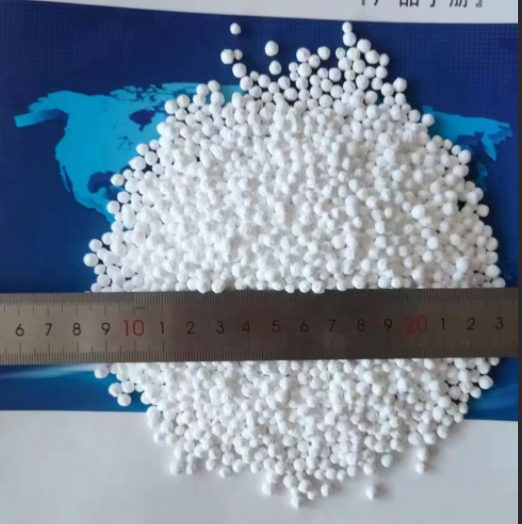
Pellet hardness is not just a number on a spec sheet; it is the first thing a downstream feed line notices. If the pellets crumble under light pressure, fines pile up in conveyors and bins, causing feed refusal in some species and uneven intake across a pen. A batch that leaves the mill with acceptable durability but poor hardness often arrives at the farm as dust, which no nutritionist wants to explain.
Moisture acts as the quiet variable that ties hardness to shelf life. Too little moisture and the pellet surface develops micro-fractures during cooling, weakening the structure even when initial hardness reads high. Too much moisture and a load can heat, mold, or bridge inside storage before it ever reaches the feeder. The acceptable window is narrow because both extremes produce the same complaint: the pellets do not hold together where it matters.
A shipment decision therefore hinges on the interaction between these two measurements. Hardness confirms the pellet survived the die and cooler; moisture confirms it will survive the truck and bin. When either value drifts outside the range established for that formula, the batch gets held, reprocessed, or redirected. It is less about hitting an ideal number and more about avoiding the field failures that follow a weak or wet pellet.
How the Lab Confirms a 77% Concentration Without Trusting the Label
A drum marked 77% enters the lab with no special status. The analyst logs the container, samples from the middle after gentle mixing, and starts with a density check against a curve made from gravimetric standards prepared that morning. The label is not entered on the bench sheet until the first measured value lands within the historical range for 77.0% material; if not, the sample is set aside and the supervisor is called.
From there, confirmation becomes a disagreement test. One portion goes to HPLC or GC, depending on the matrix, while another is titrated against a standard that has been checked against two independent lots. The two values are compared before anyone reads the supplier’s certificate. A difference larger than ±0.3% absolute triggers a full reinjection and a fresh titration, not a note explaining the label.
The final acceptance rests on an in-house reference lot that has been tested repeatedly across different instruments and analysts. If the reference tracks within expected limits, the 77% value is accepted and tied to that specific container. Raw data, column or electrode condition, temperature, and analyst initials are recorded so the result is defended by the lab’s own work rather than the printed claim.
Where Calcium Chloride Pellets Tend to Degrade After Production
In many storage yards and transfer warehouses, the first signs of degradation appear near doorways, damaged pallet wrap, and any area where humid outdoor air moves across the palletized product. Calcium chloride pellets pull moisture aggressively, so a few hours of exposure at a loading dock in a coastal or rainy region can create a wet film on the outer bags. Once that film forms, the pellets begin to soften, clump, and leave brine stains on the packaging. Poorly sealed trailers and containers add another layer of risk, especially when cargo shifts from cold overnight storage into warmer daytime air, causing condensation inside the film or liner.
High humidity does not have to mean tropical. In temperate climates, seasonal swings create problem spots in warehouses without vapor barriers or climate control. Pellets stored near concrete floors or metal walls often degrade first because those surfaces change temperature more quickly than the surrounding air. Condensation forms, and the pellets wick that moisture upward through the bag. Over weeks, product near the bottom of a stack can turn into a solid block, while bags in the middle remain free-flowing. Recirculated air from battery-charging areas or wash-down stations can also introduce enough moisture to trigger localized degradation even when the overall facility seems dry.
Transport and transfer points further shorten shelf life if product is held over in unventilated containers, cross-docks, or outdoor staging areas. Pallets wrapped tightly in plastic may trap residual moisture from the production line, so degradation can start from the inside before the product ever reaches a customer. The worst-case spots are often those with repeated temperature cycles: railcars sitting on sidings, metal shipping containers in direct sun, and unheated warehouses in early spring. In these settings, the damage is rarely uniform; it shows up first along the edges, corners, and seams where the packaging breathes most.
Which Production Bottlenecks Show Up Most on a 77% Pellet Line
On most pellet lines running around 77% of nameplate capacity, the real constraint tends to sit upstream of the press. Uneven moisture in the incoming fiber, an underperforming hammermill screen, or a conditioner that cannot hold temperature long enough will quietly set the ceiling. Push beyond that point and the pellet mill starts drawing high amps, die wear accelerates, and the operator ends up fighting fines instead of making product.
Cooling is another recurring bottleneck. Once pellets leave the die soft and hot because the mill has been pushed too hard, the cooler cannot remove enough moisture before the load reaches the screen. Fines climb, specs slip, and the recycle loop starts filling with material that should not be there. That returning material then steals surge capacity from fresh feedstock, making the line feel sluggish even when the press is running wide open.
Steam quality often caps these lines more than the equipment list suggests. Undersized traps, slow boiler response, or condensate collecting in the wrong spots can drop conditioning temperature enough to force lower feed rates or tighter die settings. The bottleneck moves around as a result: one shift it is the dryer, the next it is the screen deck, while the pellet mill itself rarely gets pinned at full load.
What Operators Change First When a Batch Starts Drifting
When a batch starts drifting, the first adjustment is usually the one that costs the least downtime. Operators tend to nudge a temperature offset, trim a feed rate, or open a bypass valve before touching anything that would require stopping the line. This isn’t always the textbook fix, but it keeps material moving while the real cause is still unclear.
The specific dial changed depends heavily on the process. A molding technician might raise barrel heat a few degrees because the last lot of resin came in colder or wetter. On a packaging line, the immediate move is often to tighten a fill nozzle or adjust a sensor’s sensitivity threshold. These small corrections are less about solving drift and more about buying a few stable cycles.
Experienced operators also watch how the batch responds to those first moves before making bigger changes. If a speed reduction steadies a thickness trend, they’ll leave pressure settings alone and note it for the next shift. That sequence—small, reversible, observable—tells you as much about the process as the drift itself does.
FAQ
It refers to the available calcium chloride content by weight, with the remainder mostly being water of crystallization and minor processing residues. For users, it means you can calculate the exact active material you are adding per ton of product without guesswork.
Dissolution rate is often tied to pellet size distribution, surface porosity, and how the melt was cooled. Slow cooling tends to produce denser, less porous pellets that take longer to break down, while faster cooling creates more surface area and quicker release.
The main control point is moisture exposure. Plants typically keep storage silos under low humidity, use lined bags, and monitor free moisture with near-infrared sensors. Frequent titration against a certified standard also catches any drift before shipment.
A standard lot release includes assay by EDTA titration, total alkalinity, magnesium and alkali chloride content, sulfate level, and a sieve analysis for size range. Some buyers also request a visual check for broken pellets or dust.
Color variation usually comes from trace iron or organic matter in the limestone and hydrochloric acid used as raw materials. It rarely affects performance, but high-purity applications may require extra purification or activated carbon treatment.
Yes, that is the most common application. The pellets are spread directly on icy surfaces, and the exothermic dissolution plus freezing point depression does the work. No pre-dilution is needed, though users should avoid over-application to reduce residue.
Dust is managed through controlled screening to remove fines, gentle conveying equipment, and sometimes a light coating of a dust suppressant. Regular particle attrition tests help the plant adjust cooling and transfer speeds to minimize breakage.
Conclusion
In a 77% calcium chloride pellet plant, quality control starts long before material reaches the pelletizer. Incoming limestone and hydrochloric acid streams are screened for magnesium, iron, and sulfate levels because those impurities quietly shift final assay and caking behavior. The brine is filtered and adjusted to the correct concentration before drying, and the lab runs titration or density checks against a known standard rather than relying on supplier certificates. Once pellet formation starts, hardness and moisture become the make-or-break measurements. A batch that looks uniform but carries too much free moisture will bridge in storage and dust out later, while overly hard pellets tend to fracture unevenly during screening and transport. Operators track these values shift by shift, comparing dryer temperature, spray pressure, and bed depth against a narrow target band instead of chasing a single number.
Finished pellets face their own risks after leaving the production line, mostly tied to humidity exposure and mechanical handling in bulk bins or supersacks. The lab confirms the 77 percent concentration through repeated water content and chloride titration, because a label alone never proves a batch. On the floor, common bottlenecks include uneven feed to the pelletizer, screen blinding, and dryer zones that run cooler at the edges. When a batch begins to drift, hardness falling, moisture climbing, or particle size shifting, experienced operators tend to adjust dryer residence time and recirculation air first, then fine-tune the brine feed rate. These small corrections usually bring the line back before a full shutdown becomes necessary.
Contact Us
Contact Person: Tom Cui
Email: [email protected]
Tel/WhatsApp: +8618663670626
Website: https://www.jinjigoldenchem.com