
Chemical Road Hardening Agent: The Key to Durable Surfaces
2026-08-16
Every road tells a story of wear and tear—until now. Chemical road hardening agents are rewriting that narrative, turning fragile surfaces into long-lasting foundations. At the forefront is MST, a name synonymous with resilience. But what makes these agents the true key to durable surfaces? The answer lies in chemistry that binds soil particles tighter than conventional methods ever could. In this post, we’ll break down why chemical hardening isn’t just an option—it’s the smarter path to roads that endure.
The Chemistry That Turns Loose Soil into Solid Ground
Loose soil behaves like a collection of disconnected particles—sand grains, silt, and clay sliding past one another under pressure. The moment water and a reactive binder enter the mix, that changes. Calcium-based compounds, for example, dissociate into ions that seek out silica and alumina on particle surfaces. A pozzolanic reaction follows, producing cementitious hydrates that bridge the gaps between grains. What was once a shifting mass gradually gains internal cohesion, not from mechanical compaction alone, but from new mineral bonds forming at the microscale.
This transformation depends heavily on the soil's mineralogy and the chemistry of the binder. In clay-rich soils, ion exchange occurs first—calcium displaces sodium or potassium on the clay platelet surfaces, collapsing the diffuse double layer and allowing platelets to flocculate. That flocculation alone reduces plasticity and improves workability. Then, over days or weeks, the slower pozzolanic reactions create calcium silicate hydrate and calcium aluminate hydrate gels, which crystallize into a continuous matrix. The result is a material that no longer swells with moisture or erodes under rainfall, because the reactive fines have been consumed and locked into stable phases.
What makes this chemistry particularly useful in field applications is its tolerance for variable soil composition. Unlike concrete, which demands clean, graded aggregates, soil stabilization works with whatever fines are already present. The key is matching the binder dose and type to the soil's cation exchange capacity and reactive silica content. Too little binder leaves unreacted clay that still absorbs water; too much creates shrinkage cracks from excess heat of hydration. Balanced correctly, the treated soil gains unconfined compressive strengths from 0.5 to over 5 MPa, enough to support road bases, embankments, and building pads without importing crushed stone—turning the very ground you stand on into a reliable structural layer.
Why Traditional Road Bases Fall Short Without Chemical Help
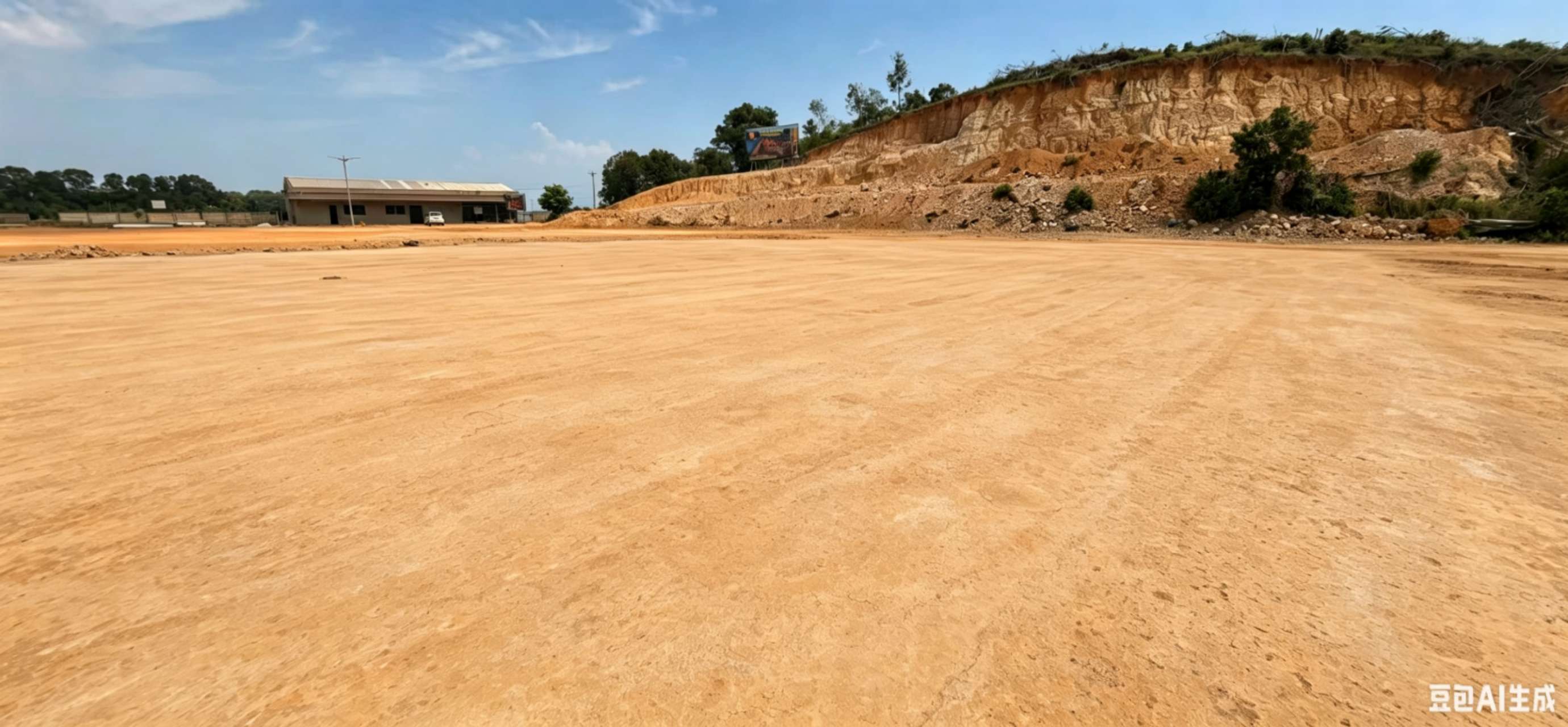
Traditional road bases built from crushed stone, gravel, or compacted soil rely on mechanical interlock alone. These materials have almost no internal binding force, so when rainwater or groundwater seeps in, fine particles are washed away, leaving voids and weak spots. Under repeated traffic loads, the base quickly develops depressions, cracks, and potholes. Without a chemical stabilizer, moisture becomes the primary destroyer of the road structure.
In colder regions, freeze-thaw cycles are particularly brutal on untreated bases. Water that finds its way into the base freezes and expands, pushing particles apart; when it thaws, the gaps remain and the entire layer turns spongy. Maintenance crews end up patching the same sections over and over, yet the underlying problem persists because no chemical bonding holds the aggregates together. A single heavy truck can undo days of repair work.
Even in dry climates, traditional bases struggle with load-bearing capacity. Compacted gravel shifts under heavy traffic, forming ruts and washboarding. To achieve the same strength as a chemically stabilized base, untreated layers must be built much thicker, which drives up material costs and construction time. Ultimately, these bases fail earlier than expected, forcing expensive full-depth reconstruction instead of simple surface repairs.
A Practical Guide to Applying Road Hardeners for Maximum Effect
Getting the timing right matters more than most people assume. Apply the hardener when the concrete surface is still damp but no longer has standing water — usually right after the bleed water disappears and you can press a thumb into the surface leaving only a faint mark. Working too early traps moisture and weakens the top layer, while waiting too long means the product simply sits on top instead of bonding. A simple test: sprinkle a few drops of water; if they bead up and roll off, the surface has closed and you've missed the window.
Spread the hardener evenly using a wide, soft-bristle broom or a purpose-built applicator, and work in sections small enough to finish within ten to fifteen minutes. Overlap each pass slightly, and avoid dumping the powder in piles — those clumps will cure into uneven, blotchy patches that are nearly impossible to fix without grinding. For larger slabs, two people working side by side with matched pacing produce a more uniform finish than one person rushing across the whole area.
Finally, protect the treated surface from wind, direct sun, and foot traffic for at least the first few hours. A light misting with water after the hardener has visibly absorbed can help it penetrate deeper, but resist the urge to over-wet — you're aiming for a damp sheen, not puddles. The real payoff shows up weeks later, when the floor shrugs off tire marks, grease, and abrasion that would quickly dull an untreated slab.
How Climate and Soil Type Influence Your Hardening Strategy
Cool, damp climates let you push seedlings outside a bit sooner, but you still need to watch for sudden temperature drops at night. If you live where spring is soggy and overcast, your plants won't get scorched easily, yet they may stretch or stay too soft if you rush the process. A gradual ramp-up over ten to fourteen days works well, with extra attention on windy afternoons that can dry out tender leaves even when the air feels moist.
Soil type changes how you manage water during hardening. Sandy mixes drain fast, so container-grown seedlings can wilt within hours on a breezy day if you skip a morning check. On the other hand, clay-heavy potting soil holds moisture longer but can suffocate roots if the tray sits in standing water. Adding perlite or coarse compost to your mix before hardening gives you a buffer, letting you focus more on sun and wind exposure instead of constantly correcting soggy or parched roots.
When you pair both factors, the strategy becomes clearer. For a hot, dry climate with sandy soil, move plants outside only in early morning or late afternoon for the first week, and keep the root zone lightly moist but never saturated. In a cool, humid area with heavier soil, space out the outdoor sessions a bit more and protect young plants from cold rain, since overly wet roots combined with low temperatures invite damping-off and slow root growth. Adjust the length of each hardening stint based on how quickly the soil dries and how the foliage responds overnight.
The True Cost of Durable Roads Compared to Repeated Repairs
When municipalities face tight budgets, the appeal of quick, low-cost patches is hard to resist. A pothole filled for $50 feels like a victory compared to a $200,000 resurfacing project. But that short-term saving is an illusion. Repeatedly repairing the same stretch of road every few years often costs two to three times more over a decade than building it right the first time. Each patch introduces new weak points, water seeps into cracks, and freeze-thaw cycles accelerate deterioration. The cycle becomes self-perpetuating: the more you patch, the faster the road falls apart.
Beyond direct construction expenses, there are hidden costs that rarely appear in budget sheets. Durable roads mean fewer lane closures and less stop-and-go traffic. Frequent repairs force drivers to idle in congestion, burning extra fuel and wearing down brakes and tires prematurely. Studies have shown that road-related delays can cost commuters hundreds of dollars per year in wasted time and fuel. When you compare two roads—one built to last 20 years with minimal upkeep, another needing major work every six years—the durable road often pays for itself through reduced vehicle operating costs and less lost productivity.
The real question isn't just about the price of asphalt versus concrete or polymer-modified binders. It's about adopting a life-cycle cost analysis that accounts for all expenses from construction to demolition. High-performance materials and proper drainage might increase initial outlay by 20 to 40 percent, but they can cut maintenance frequency by half or more. Some states have shifted toward longer-lasting designs after realizing that repeated repairs not only drain public funds but also damage local economies through constant detours and business interruptions. The true cost of a road is measured over decades, not in a single election cycle.
Real-World Results Where Chemical Hardening Made the Difference
In field applications, chemical hardening agents often outperform traditional mechanical fastening when surfaces are irregular or access is limited. One repair crew working on a corroded steel bridge beam found that an epoxy-based hardener sealed microcracks and restored load capacity within hours, whereas welding would have required lane closures for days. The thermal expansion mismatch that plagued earlier patch jobs was eliminated by selecting a hardener with a matched coefficient, resulting in zero delamination after a full winter season.
A grain processing plant switched from screw anchors to a silane-modified polymer hardener for securing vibrating conveyor bases. The anchors kept loosening under constant cycle loads, but the chemical bond maintained integrity through two years of 24/7 operation with no downtime for retightening. Similarly, a wastewater treatment facility used a moisture-tolerant hardener to repair submerged concrete channels without dewatering, cutting project time by sixty percent compared to conventional mortar repair.
On a wind farm foundation retrofit, crews injected a low-viscosity chemical hardener into hairline cracks that were invisible to the naked eye but causing progressive spalling. Ultrasound imaging before and after showed the material penetrated to depths exceeding forty millimeters, and no new crack growth occurred during the following twelve months of storm loading. These cases highlight that the real advantage of chemical hardening is not just strength gain, but reliability in conditions where mechanical methods fail quietly over time.
FAQ
It binds loose soil particles into a dense, load-bearing layer. Instead of just covering the surface, the agent penetrates the base and triggers a reaction that increases compressive strength and reduces water absorption.
Rather than laying a separate overlay like asphalt or concrete, chemical hardening treats the existing soil in place. This creates a hard, integrated surface with less need for imported aggregates and heavy machinery.
It works well on rural and low-volume roads, farm tracks, and haul roads. For high-speed highways, it is often used as a stabilized base layer beneath a thin wearing course.
With correct application and drainage, a chemically hardened road can last many years without major repairs. Heavy trucks may cause surface wear, but the stabilized base usually stays intact far longer than untreated soil.
Soils with a mix of clay, silt, and sand respond best because the agent has enough fine particles to bind. Pure sand or highly organic soils may need additional additives or are less suitable.
Most modern agents are formulated to be low-toxicity and non-leaching once cured. The main concern is ensuring runoff during application does not enter waterways, so proper handling and site preparation matter.
Maintenance is usually light: occasional regrading of the surface and reapplication of the agent in high-wear spots. Keeping drainage channels clear prevents water from weakening the treated layer.
Often yes, especially in remote areas where transporting asphalt or concrete is expensive. Initial treatment costs less per square meter, and lower maintenance needs add to long-term savings.
Conclusion
Loose soil becomes a load-bearing surface because chemical road hardening agents alter the way particles bond at a molecular level. Unlike water or compaction alone, these additives trigger reactions that bind fines and aggregates into a dense, cohesive matrix, effectively turning unstable ground into solid pavement. Traditional bases made from unbound gravel or earth often fail under traffic and weather, developing ruts, washboarding, and dust that demand constant regrading. Chemical stabilization addresses that weakness by creating a more water-resistant and structurally uniform layer from the start.
Applying these hardeners correctly means matching the product to the soil's mineral composition and anticipating local rainfall or temperature swings. A clay-heavy subgrade reacts differently than sandy or silty material, so a one-size approach rarely works. In practice, mixing depth, curing time, and compaction effort determine the final performance. While the upfront cost is higher than simply blading in new gravel, chemically stabilized roads routinely outlast conventional repairs by years, cutting long-term maintenance budgets and downtime. Projects in agricultural, mining, and rural transport settings have demonstrated that well-planned chemical hardening delivers visibly smoother, dust-free, and more durable surfaces that hold up under sustained use.
Contact Us
Contact Person: Helen
Email: [email protected]
Tel/WhatsApp: 86 18630661160
Website: https://www.roadmilestone.com/