

China Polyurethane Production Line Supplier Options That Improve Manufacturing Efficiency
2026-11-27
Finding a China polyurethane production line supplier that actually moves the needle on efficiency is harder than it should be. Many suppliers list similar specs, but few show how their equipment cuts downtime, reduces material waste, or keeps output stable under real production pressure. That’s the gap this guide closes. We look beyond the standard catalog promises and focus on supplier options that improve manufacturing efficiency across mixing accuracy, temperature control, and line automation. Along the way, you’ll see how YI ZHOU TECHNOLOGY approaches these challenges differently, with design choices that show up in daily throughput rather than just brochures.
Metering Pumps That Hold Tolerance With Filled Polyol Blends
Filled polyol blends punish ordinary metering pumps in two ways at once. The suspended fillers—often calcium carbonate, alumina trihydrate, or milled fiber—scrub against check valves and seals, opening internal clearances until the displacement per stroke begins to wander. At the same time, the blend’s viscosity shifts with temperature, filler loading, and even how long it has been recirculating. A pump that holds tolerance here needs more than a tight stroke adjustment; it needs wetted parts that resist abrasive wear and a drive mechanism that does not load up or slip when the fluid gets stiff.
That usually pushes the design toward a mechanically actuated diaphragm head rather than a packed plunger. The diaphragm removes the dynamic seal that abrasive slurries cut first, while the mechanical actuation keeps the displaced volume fixed regardless of changing discharge pressure. Hardened seats, ceramic balls, and bypass-free head geometry help trapped solids pass without letting the pump double-stroke. The result is a delivery curve that stays within a narrow band even after several hundred kilos of filled polyol have moved through the same head.
The real test comes on multi-stream blending lines where a ratio drift of half a percent shows up as off-spec foam density or hardness. Pumps that hold tolerance with these blends tend to be the ones with repeatable refill behavior at the suction side, slow enough stroking to avoid cavitating the thickened feed, and stroke-length control that remains linear across the operating range. That combination keeps the actual dosed weight close to the setpoint without constant trimming at the HMI.
Line Layouts Built Around Your Existing Floor Space Constraints
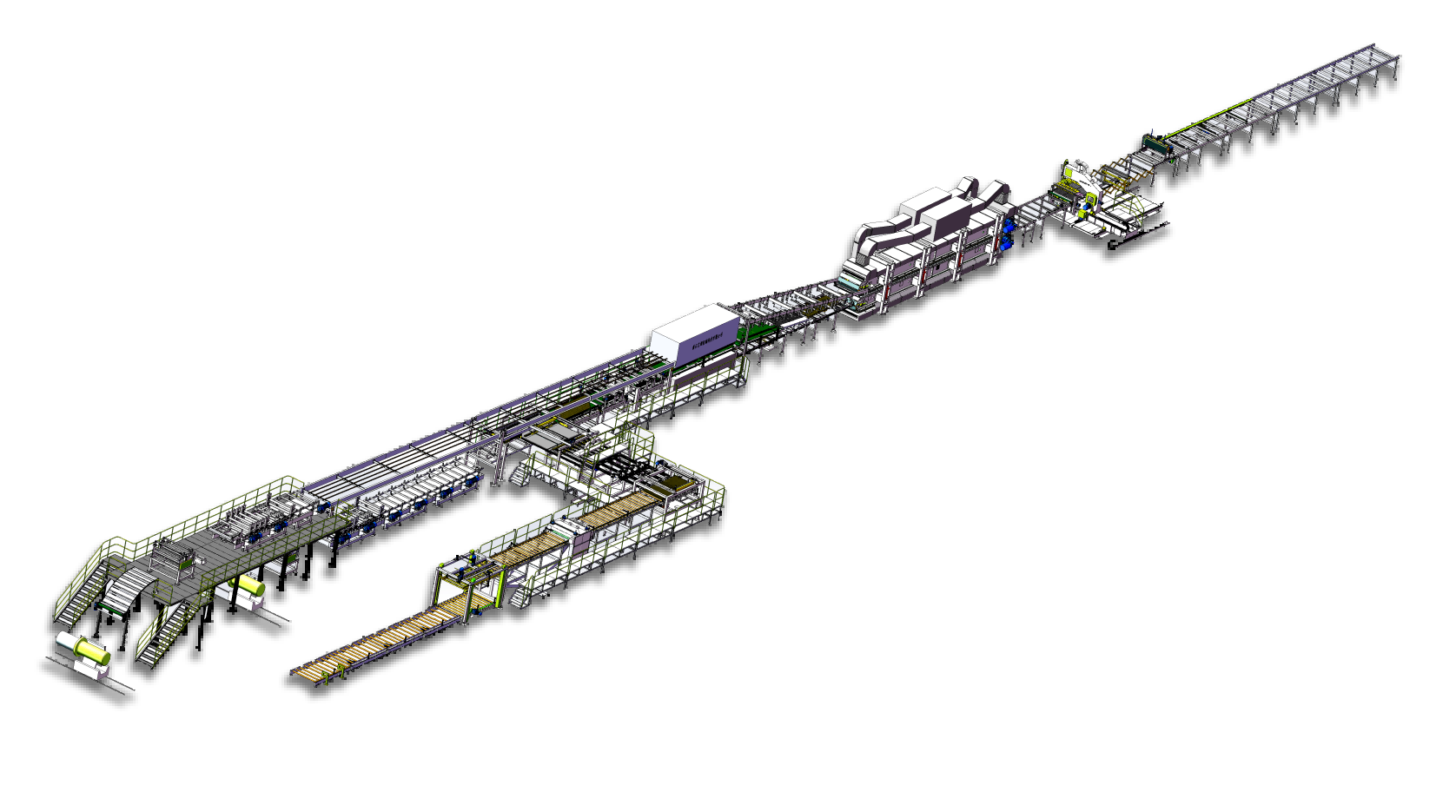
Most line layouts start as a clean drawing, but the actual floor rarely gives you that kind of freedom. Columns, existing power drops, floor drains, and the distance between the loading dock and the aisle all push back on the first plan. Rather than fighting those limits, the layout works from the narrowest path, the awkward corner, and the fixed walls first. Workstations get placed only after the space has shown where people and pallets can actually move.
Short runs often suit an L-shaped or U-shaped line better than a straight layout. That keeps material return paths close without demanding extra square footage. A station might be angled around a support column, or a small lift table can sit in a dead corner to avoid interrupting the main path. Entry and exit points follow the doors already in the room, so the line does not force a new opening or a long detour.
Working inside the existing floor also keeps changeovers simpler. Conveyor sections and bench frames are sized to roll through current doorways and sit between existing utilities. The result is less walking between steps, fewer places for inventory to stack up, and a line that fits the building instead of asking the building to change.
Closed-Loop Temperature Control for Predictable Foam Rise
Foam rise rarely fails because the formula is wrong. More often, the heat history of the tool and the liquid components drifts from shot to shot, and that drift changes the expansion curve enough to create short shots, voids, or overly dense sections. Closed-loop temperature control attacks that variability directly. Thermocouples embedded in the mold and sensors in the chemical lines feed a controller that continuously adjusts heating or cooling output, keeping the reacting mixture inside a thermal window that matches the target rise profile.
The loop does not simply hold a setpoint. It responds to the exotherm as the foam begins to expand. If a cavity section runs cool, the system opens a coolant valve less aggressively or pulses an electric heater before the flow front arrives. If the tool starts to overheat after several cycles, it pulls more heat out so gelation does not accelerate too early. This keeps cream time, rise time, and free-rise density from wandering across a production run.
Predictability improves most at the edges of the process: start-up after a tool change, the first pour after a material switch, or a line speed change. Those are the moments an open-loop recipe usually needs several scrap shots to stabilize. With the temperature loop already compensating for shifting exotherm, the foam reaches the vents and packs the cavity with less manual intervention. The rise curve becomes something closer to a process signature than a daily variable.
Quick-Change Mixing Heads That Cut Shift Downtime
Production stops for a lot of predictable reasons, but a mixing head change shouldn't be one of them. With quick-change hardware, the head unlocks from the manifold with a partial turn and slides out without pulling the hoses or recalibrating the metering pumps. That means an operator can swap from a high-output foam head to a compact bead head between shifts and be back at full pressure before the next pallet is staged.
The real saving shows up in the first 20 minutes of a shift. Instead of draining lines, flushing solvent and resetting temperatures, the crew handles only the component that actually wears or clogs. The old head goes onto a bench cart for cleaning while the replacement head is already seated and locked. No guesswork with alignment pins, no waiting on a maintenance tech to re-torque bolts.
Over a week of small batch runs, those minutes stack into extra productive hours. Quick-change heads also reduce the temptation to run a partially fouled head just to avoid a long teardown, which keeps shot consistency and mix quality more stable across the shift.
Live Production Dashboards That Focus on Usable Data
Most production dashboards drown operators in numbers that look impressive but answer nothing. A live view only earns its screen space when each metric ties directly to a decision someone can act on right now. That means stripping out vanity counters, focusing on change over time, and pairing every figure with a threshold or expected range. If the data doesn't narrow the next action, it's noise.
Usable data also respects human attention. Instead of stacking dozens of panels, the most effective live dashboards show a small set of signals that shift visibly when conditions change. Color, position, and movement carry meaning: a line drifting past a safe band matters more than a precise decimal. The goal isn't to display everything the system knows, but to make the few things that require intervention impossible to miss.
Finally, context turns raw values into judgment. A temperature reading of 74°F means little without the safe range for that specific stage of production. A reject count of 12 matters only when compared to the last hour, the current shift average, and the known cause patterns. Live dashboards built this way feel less like reports and more like a conversation with the process itself.
Supplier Support That Continues After Commissioning
Real support doesn't end the day your system goes live. Our team stays involved long after commissioning, checking in on performance, adjusting settings as your operations evolve, and helping your staff build confidence with the equipment. You won't be left chasing a call center or waiting days for a callback—your original project contacts remain available for direct, practical guidance.
That continuity matters when unexpected situations arise. Whether it's a shift in production demands, a component that needs attention, or simply a question about best practices, you reach someone who already understands your setup. We track how the system performs in your environment and offer proactive suggestions that fit the way you actually work, not a generic checklist.
Over time, this turns into a working partnership. We monitor wear patterns, flag potential issues before they interrupt your schedule, and help you plan for upgrades or expansions at your pace. The result is less downtime, fewer surprises, and equipment that keeps earning its place on your floor.
FAQ
Many lines lose time at the mixing head and during material changeovers. Suppliers that use self-cleaning mixing heads, fast color-change manifolds, and heated hose packages can cut purge waste and shorten downtime between batches. The difference shows up quickly in overall equipment effectiveness, not just in the spec sheet.
The more practical setups use servo-driven piston pumps with sealed flow paths and fewer wear parts. That gives repeatable ratio control for both polyol and isocyanate while keeping daily maintenance simple. Some suppliers also add mass flow meters for real-time correction instead of relying only on pump speed.
Yes, some suppliers offer modular mixing and pouring stations that can be swapped or reconfigured. That approach usually includes separate temperature control loops for each material family and software recipes that store parameters for different foam densities and cure profiles. It works well when a manufacturer needs product variety without running two full lines.
Look for closed-loop temperature control, automatic shot-size calculation, and material level monitoring tied to the PLC. These prevent the common problems of off-ratio foam and running a tank empty mid-pour. The best lines also log batch data automatically, which makes troubleshooting much faster than checking manual records.
Ask about the cost of critical spares, typical lead time for seals and mixing heads, and whether the supplier provides remote diagnostics. A slightly higher upfront price often pays back if the supplier keeps common wear parts in stock and can walk your team through a calibration issue without waiting for an overseas visit.
Variable-frequency drives on pumps and conveyors, insulated heated hose packages, and heat recovery from the curing ovens make a measurable difference. Some suppliers also use servo-hydraulic systems that idle at lower power during part loading. These are not exotic upgrades; they are standard options on mid-range and high-end lines.
Fast calibration support and local spare parts availability tend to matter more than a long warranty on paper. Suppliers that offer remote access for PLC diagnostics, clear maintenance schedules, and training on mixing head rebuilds help manufacturers avoid small issues turning into multi-day shutdowns.
Conclusion
Chinese polyurethane production line suppliers have moved well beyond copying basic layouts. The more capable builders now treat metering as a variable rather than an afterthought, using pumps that hold repeatable output even when filled polyol blends settle or change viscosity mid-run. That stability matters because slight ratio drift can alter foam density and waste an entire batch. Layout decisions are just as critical. Instead of forcing a standard footprint, several suppliers rework conveyor paths, curing zones, and operator stations around existing columns, low ceilings, or limited loading docks, which avoids expensive civil work and keeps installation timelines realistic. Temperature control has also become less reactive, with closed-loop systems tied to the actual exotherm rather than ambient readings, making foam rise more predictable from morning to afternoon shifts.
On the floor, quick-change mixing heads are reducing the hidden downtime between product grades. Operators can swap chambers and nozzles without draining lines or resetting the entire pour pattern, so short runs stop being a penalty. The better suppliers pair this with production dashboards that skip vanity metrics and focus on shot weight, pressure deviation, and cycle-time loss, giving supervisors something they can act on before a drift becomes scrap. Support after commissioning is often the real differentiator. They keep application engineers available for formulation changes, seasonal humidity swings, and wear-part planning rather than disappearing once the acceptance test is signed. That ongoing contact turns a one-time equipment purchase into a sustained efficiency gain.
Contact Us
Contact Person: Sophia Jiang
Email: [email protected]
Tel/WhatsApp: +86 17367381818
Website: https://yzwelding.com/