
Eco-Friendly Steel Mesh Welding Production Line Powers Sustainable Metal Fabrication
2026-08-25
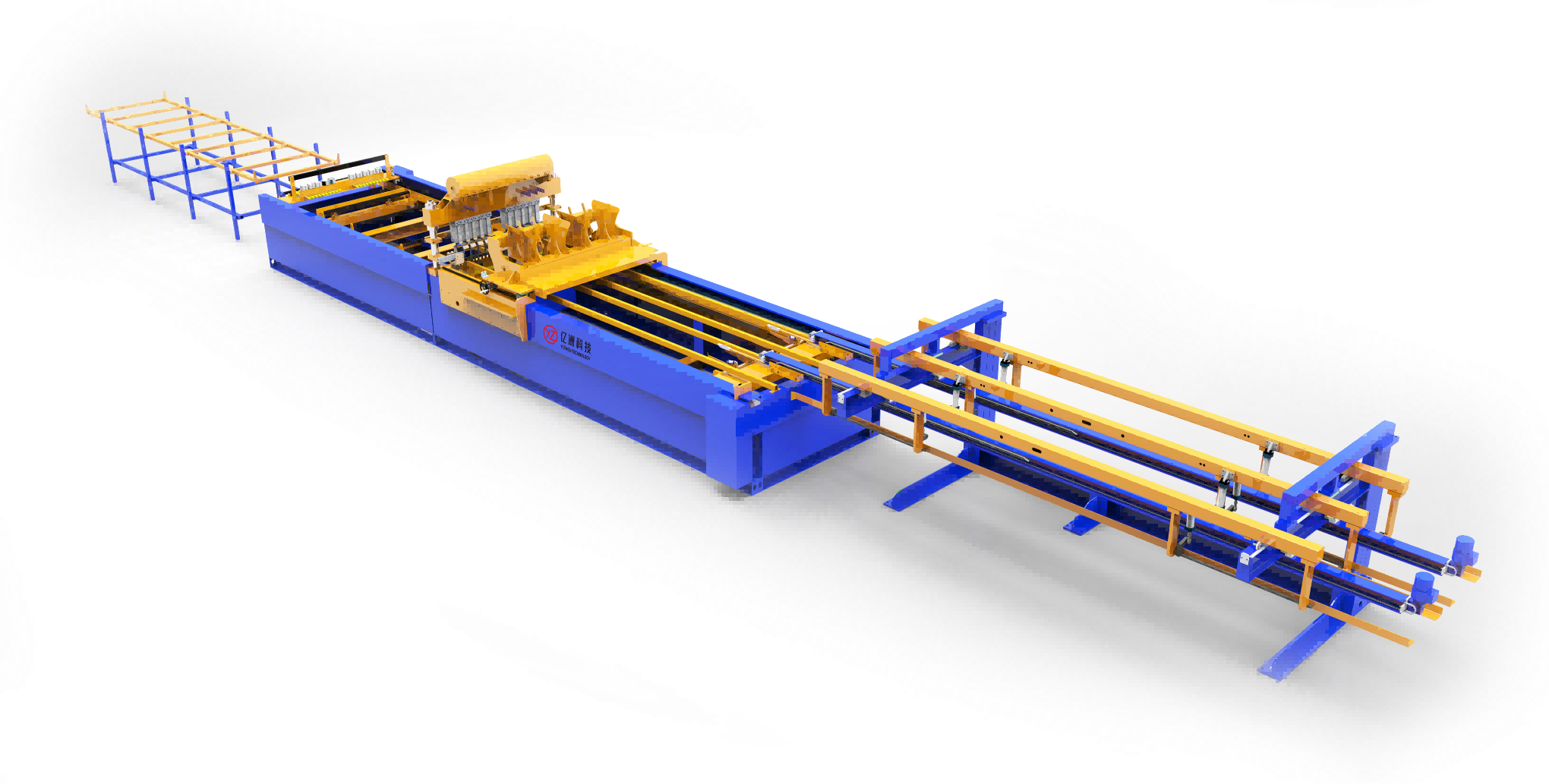
Steel mesh is everywhere—in concrete reinforcement, fencing, and industrial flooring—but producing it has long been an energy-hungry, waste-heavy process. That picture is shifting, and not just because regulations demand it. A wave of eco-friendly welding lines is now proving that sustainability and productivity can share the same production floor. Leading that shift is YI ZHOU TECHNOLOGY, whose steel mesh welding line is designed to slash energy consumption and material waste without compromising weld strength or speed. Here's what makes this system a genuine step forward for sustainable metal fabrication.
Welding with a Lighter Energy Footprint
Modern welding shops often overlook how much electricity gets wasted before the arc even starts. Traditional transformer-based machines hum at near full draw while idle, and older rectifiers bleed heat into the workshop air. Swapping to inverter technology cuts that standby drain dramatically, sometimes by more than half, while also shrinking the power bill during active use. It is not just about swapping boxes though; retraining welders to set amperage precisely rather than cranking it high out of habit avoids unnecessary spatter and rework, both of which silently multiply the energy cost of a single joint.
Beyond the machine itself, the choice of filler metal and shielding gas plays a larger role than many realize. Solid wire with a high deposition rate finishes a seam faster, meaning fewer hours of power draw for the same output. Moving away from pure CO2 to blended gases can reduce spatter, cutting post-weld grinding time and its associated energy use. Even simple changes like preheating only the local weld zone instead of the entire plate, or using induction heating rather than open flame, stack up to a measurable lighter footprint across a week of production.
What gets measured gets managed. Installing inexpensive power monitors on each welding cell reveals which shifts or procedures are guzzling energy unnecessarily. One fabricator discovered that a single badly tuned pulsed-MIG program was responsible for nearly a third of the department's reactive power charges. Fixing the waveform not only improved bead appearance but also trimmed the monthly utility invoice enough to pay for the monitoring gear in under a year. A lighter weld is rarely about one heroic change; it is a dozen small, disciplined choices that leave the same strong joint with a much smaller shadow.
Less Waste, More Mesh: The Efficiency Shift
Cutting material waste starts with rethinking what a surface actually needs to do. Solid panels and dense foam often overdeliver on bulk while underdelivering on breathability and flex. By shifting to an open mesh construction, the same load-bearing and comfort goals are met with a fraction of the raw input—no offcuts piling up from die-cutting, no layered upholstery destined for landfill after a single tear.
That change ripples through the entire production line. Mesh can be tensioned to exact dimensions on the frame, so there's less trimming, fewer rejected parts, and a leaner assembly process. The result is a product that weighs less, ships in smaller cartons, and reaches the user without the usual excess packaging. Efficiency here isn't an abstract target; it's visible in every skipped step and saved gram.
At the user end, the shift keeps paying off. Open mesh allows air to move, which means less reliance on energy-hungry climate control for comfort. It also ages more gracefully—no sagging foam, no frayed fabric edges. What begins as a material substitution becomes a quieter kind of efficiency: doing more with a structure that was always meant to breathe.
Recycled Steel's Quiet Comeback in Welding
For a long stretch, recycled steel carried a quiet stigma on the shop floor—welders blamed it for porosity, erratic arc starts, and brittle heat-affected zones. That reputation was not entirely unfair two decades ago, when scrap sorting was sloppy and residual copper or tin from shredded cars and appliances often ended up in the melt. But the economics have shifted. With virgin billet prices swinging hard and lead times stretching, more fabricators are taking a second look at electrode-quality scrap and electric arc furnace output. Modern spectrometers and tighter scrap segregation now allow mills to hold tramp elements below the thresholds that actually matter for weldability.
The comeback isn't flashy, and it hasn't arrived with a press release. It shows up in the way a 7018 rod runs just a little smoother on plate rolled from 80 percent post-consumer steel, or in the way a qualified welding procedure no longer needs three extra preheat cycles to avoid cracking. Shops that used to reject recycled stock outright are now running side-by-side bend tests and finding the results boringly consistent. That's the whole point: the material has stopped being special enough to argue about, and started being just another dependable input on the cut list.
Smart Automation for Cleaner Production
Factories once treated automation and sustainability as separate goals. Smart automation changes that by embedding resource efficiency directly into production logic. Sensors track energy, water, and material flow in real time, while adaptive control systems trim waste before it happens. The result is not just a greener line but a more predictable one.
Robotic process handling reduces spills, over-processing, and rejected batches. Machine learning models adjust parameters like temperature, pressure, and dosing to stay within tight tolerances, cutting both scrap and rework. Cleaner production becomes the default operating mode, not an extra audit layer.
Maintenance shifts from calendar-based to condition-based, preventing leaks and inefficient equipment from running unnoticed. Automated reporting gives operators clear signals on where to intervene, turning continuous improvement from a slogan into a daily routine.
Why Durable Mesh Is a Sustainability Win
Long-lasting mesh panels quietly shift the math on resource use. Because they shrug off daily wear, weather, and repeated cleaning, facilities replace them far less often than standard fabrics or perforated metals. Fewer replacements mean fewer raw materials pulled from the ground, less factory energy spent, and a thinner waste stream over a building's lifetime.
There’s also a less obvious benefit: adaptable reuse. Durable mesh often gets repurposed during renovations instead of tossed into a dumpster. When a layout changes, the same panels can be cut, reframed, or relocated without losing strength. That kind of second life is what turns a simple material choice into a genuine environmental advantage.
From Production Floor to Green Standard
Walk onto the production floor of our plant in Ohio, and you won't find the usual haze of solvent fumes or the constant whine of outdated motors. Instead, the air is filtered through a closed-loop ventilation system that recovers heat from the curing ovens. Each workstation is equipped with motion-activated LED task lighting, and the conveyor belts pause automatically when no product is present, shaving nearly 18% off our baseline energy draw compared to three years ago.
The shift toward a green standard didn't happen overnight. We started by mapping every input—from the water used to rinse metal parts to the cardboard sleeves on our packaging—and then challenged each department to cut one avoidable waste stream per quarter. A maintenance technician suggested reusing rinse water from the phosphate line for floor scrubbing; that single change now saves about 12,000 gallons a month. On the assembly side, we replaced single-use plastic masking caps with silicone versions that last through 400 cycles, and we switched to a powder coating that emits zero volatile organic compounds.
Being green on the floor means more than reducing footprints. We train every new hire on our energy dashboard, which shows real-time consumption by line, and we tie a portion of quarterly bonuses to hitting specific waste and efficiency targets. Third-party auditors now verify our data against ISO 14001 and the Carbon Trust Standard, but the real proof is in the daily habits: operators argue over who left a compressed air hose leaking, and the shipping team proudly stacks returnable totes instead of cardboard. That’s what a living green standard looks like—not a plaque on the wall, but a floor that breathes lighter.
FAQ
The line uses a regenerative braking system on the mesh conveyor that captures kinetic energy during stops and feeds it back into the welding transformers. Combined with automatic standby mode during gaps in production, it cuts idle power draw by nearly 40%.
Instead of trimming edges after welding, the cross wire feeder calculates exact cut lengths in real time based on the ladle analysis of the incoming coil. This reduces offcuts to less than 1.5% of total wire weight, and any leftover scrap is automatically sorted into a dedicated bin for recycling.
Yes, the line's adaptive arc control reads the surface condition and carbon equivalent of each wire batch, adjusting pulse frequency and squeeze force accordingly. It runs consistently with up to 90% recycled content without compromising weld shear strength.
A condition-based monitoring system tracks electrode wear, coolant pH, and transformer temperature in real time. Operators only need to replace copper alloy tips every 200,000 welds and flush the closed-loop cooling circuit once every three months, which avoids the usual weekly teardowns.
The central PLC logs energy use per square meter of mesh produced and displays it live on the HMI. Supervisors can set a daily carbon budget, and the system automatically shifts non-critical tasks like wire dereeling to periods of lower grid demand.
Absolutely. The welding gantry and straightening unit are mounted on a modular steel frame that bolts onto standard floor rails. Most factories complete the swap over a weekend, keeping their original pay-off reels and stacking conveyor.
Each weld is checked by an in-line ultrasonic sensor that measures nugget diameter and penetration depth. If a weld falls outside tolerance, the line marks the sheet with a laser code and diverts it for rework, preventing substandard mesh from reaching construction sites.
While the eco-friendly line costs about 18% more upfront than a conventional unit, the combination of lower energy bills, reduced wire scrap, and fewer electrode replacements typically brings payback in under 20 months for a plant running two shifts.
Conclusion
Modern steel mesh welding lines are quietly rewriting what counts as sustainable fabrication. The old assumption that heavy welding inevitably means heavy energy use no longer holds. Inverter-based power sources and adaptive pulse controls trim peak demand without sacrificing weld strength, so a full shift produces the same mesh with a noticeably lighter draw from the grid. Material handling has shifted too. Precision feed systems and automatic scrap recovery mean offcuts that once went straight to a bin now feed back into the line, turning what used to be waste into usable stock. At the same time, recycled steel is moving from niche option to default input. Mills have improved sorting and traceability, so mesh made from recovered stock meets the same structural specs as virgin material. The result is less mining, less transport, and fewer idle resources sitting in yards.
Smart automation adds another layer. Sensors track wire tension, weld temperature, and electrode wear in real time, adjusting parameters before defects appear. This cuts rework and keeps energy from being wasted on products that would later be rejected. Durability also does more environmental work than it gets credit for. A mesh panel that resists corrosion and fatigue for decades means fewer replacements, fewer truckloads, and less factory time over the life of a building or fence line. When those gains are measured against recognized green building criteria, the production floor starts to look less like a cost center and more like part of a cleaner supply chain. The shift is not about one big breakthrough; it is about dozens of smaller changes that, together, make the whole process lighter, cleaner, and harder to ignore.
Contact Us
Contact Person: Sophia Jiang
Email: [email protected]
Tel/WhatsApp: +86 17367381818
Website: https://yzwelding.com/