

ESD Devices Factory: Key Considerations for Safe Manufacturing and Quality Assurance
2026-06-01
When setting up an ESD devices factory, the devil is in the details—from grounding strategies to material choices, every decision impacts both safety and product quality. At TPS, we know that effective ESD control isn't just about compliance; it's about building a resilient manufacturing culture. This blog unpacks the critical considerations that separate a reliable facility from a risky one—are you ready to find the weak links in your process?
Crafting a Resilient ESD Control Plan: More Than Just Grounding
An effective ESD control plan demands a layered approach that extends well beyond simple grounding measures. While proper grounding of workstations, equipment, and personnel through wrist straps and conductive flooring forms the foundation, organizations must integrate static-dissipative materials, humidity controls, and regular auditing to address the unpredictable nature of electrostatic discharge. Without this broader perspective, even grounded environments can harbor hidden risks from isolated conductors, charged insulators, or fluctuating ambient conditions.
Training and procedural consistency are equally critical, turning technical safeguards into ingrained habits. Operators need to understand not just the how but the why behind each step—from proper handling of sensitive components to the correct use of ionizers where grounding alone falls short. Incorporating real-time feedback tools, such as continuous monitors and periodic workplace assessments, helps catch lapses before they escalate into costly failures. This human-centric layer ensures that the plan stays dynamic and adaptive to both personnel changes and production pressures.
Finally, resilience comes from designing the plan to evolve with emerging challenges, such as miniaturized components with lower voltage tolerances or new automated processes. By treating ESD control as an ongoing system rather than a one-time setup, teams can embed redundancy through backup ionization, shielded packaging, and environmental monitoring. Regular review cycles that analyze incident data and incorporate lessons from across the industry transform the plan from a static checklist into a living strategy that protects yield and reputation alike.
Personnel Grounding: The Human Element in Static Safety
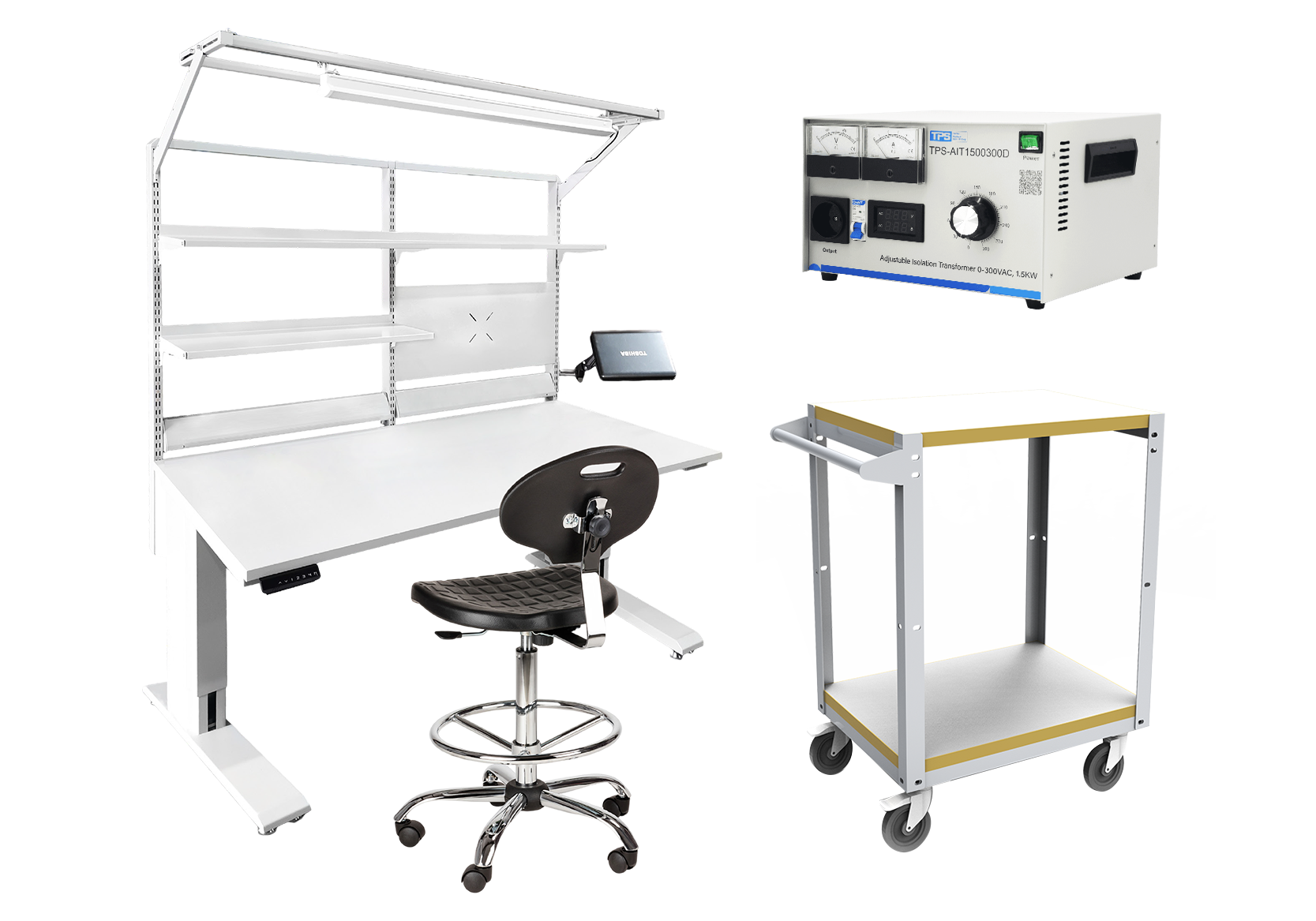
In many manufacturing and repair environments, esd-sensitive components can be damaged by the smallest discharge – often too minute for a person to feel. The human body naturally picks up static charges through movement and friction, turning an unsuspecting technician into a risk vector. That’s where personnel grounding comes in: bridging the static potential between a worker and the equipment they touch.
Wrist straps and conductive footwear are the workhorses here, each providing a controlled path to ground. Checking these with a simple meter isn't just a routine chore – it's the only way to catch a broken resistor or a frayed cable before a hidden failure slips through. Some facilities require dual grounding paths for extra resilience, especially when handling ultra-sensitive parts.
But tools alone don’t make a safe workstation. The human factor – forgetfulness, sloppy connections, improper testing – remains the weakest link. Continuous monitors are gaining traction because they alert in real time when a ground is lost, something a morning check can’t do. Ultimately, blending reliable hardware with solid habits is what keeps static where it belongs: out of the process.
Selecting ESD-Safe Materials: Avoiding Hidden Static Traps
When building an ESD-safe workspace, the materials you choose can either protect your electronics or become silent saboteurs. It’s easy to focus on grounding wrist straps and ionizers while overlooking the bench mat or storage bin that’s quietly generating static. Hidden traps often lurk in unexpected places—a seemingly innocent plastic tray can accumulate enough charge to fry a sensitive component the moment it’s picked up. That’s why selecting materials isn’t just about ticking a box; it’s about understanding how they behave in your specific environment.
Not all anti-static claims are created equal. Many materials are labeled as “static-dissipative” but only work under limited humidity ranges or after special treatment that wears off over time. Ordinary plastics like acrylic or polystyrene are notorious for building up high voltages, yet they still appear in handling trays or equipment covers. Even some rubber mats can lose their protective properties if they get dirty or coated with insulating films. The real challenge is spotting these impostors before they cause latent damage that won’t show up until a product fails in the field.
To avoid these pitfalls, look beyond marketing labels and dig into surface resistance data. A truly ESD-safe material should maintain its resistivity between 10^6 and 10^9 ohms per square, creating a controlled path for charge to dissipate. When in doubt, test materials yourself with a surface resistance meter instead of relying on datasheets alone. And remember that ESD protection is a system—pairing a conductive bin with an insulating shelf can still create a charged isolated conductor waiting to zap your board. By thinking through every contact point, you’ll build a setup where static simply has nowhere to hide.
Environmental Monitoring: Humidity, Ionization, and Beyond
Humidity sits at the heart of countless environmental monitoring systems. It shapes the way materials expand, how pathogens survive, and the comfort levels we perceive indoors. But measuring it precisely isn't always straightforward—sensor drift, temperature interference, and the slow creep of contamination can quietly skew data over weeks or months. Modern capacitive and resistive sensors have come a long way, yet field calibrations and redundancy checks remain essential. In settings like museums or semiconductor cleanrooms, where even a small deviation can damage irreplaceable artifacts or ruin wafer batches, humidity monitoring becomes less of a routine task and more of a silent guardian.
Ionization monitoring opens a window into a hidden layer of the environment. Air ions—those invisible charged particles drifting around us—play an outsized role in processes from static discharge in electronics manufacturing to the coagulation of airborne pollutants. Positive and negative ion counts shift with air movement, altitude, and the presence of radon or electrical equipment. While many facilities focus on particulate counts and temperature, overlooking ionization can lead to unexplained electrostatic damage or inaccurate aerosol readings. Portable ion counters and bipolar ionizers have made oversight more practical, but interpretation still demands a feel for local conditions that automated systems rarely capture on their own.
Beyond these staples, environmental monitoring now stretches into realms once considered too tricky or expensive to track continuously. Dissolved oxygen in waterways, volatile organic compound fingerprints in urban air, soil moisture at root level across a vineyard—sensor networks are weaving a denser picture of our surroundings. The real challenge isn't just gathering data, but fusing it into a coherent view without drowning in noise. Low-power wide-area networks and edge computing help, but the art lies in choosing what to measure and where. Often the most insightful parameter is the one nobody thought to monitor until a subtle pattern finally came into focus.
Continual Verification: Testing and Auditing ESD Systems
Regular checks keep ESD systems from quietly degrading into liabilities. You can't just install wrist straps and floor mats and forget them. Humidity drifts, materials wear down, and grounding points loosen over time, so a snapshot test from a year ago tells you little about today's actual protection level. The only sane way to stay ahead is to build verification into daily routines, using simple pass/fail tests that operators can perform themselves at the workstation before handling sensitive boards. This way, a dead wrist strap gets caught before it ever touches a board, not after a batch yields field failures.
But relying solely on quick daily go/no-go checks invites blind spots. You need deeper auditing on a weekly or monthly rhythm to catch slow-moving anomalies: ionizer decay, resistance drift in static-dissipative flooring, or the subtle buildup of an insulative film on tote boxes from repeated cleaning. An audit should walk the entire material flow, from incoming receiving to final packaging, and challenge every link in the chain not just with a surface resistivity meter, but by observing actual handling behaviors. For example, are operators unknowingly re-contaminating garments by resting them on untreated shelving? Such details only surface when someone takes time to watch the process unfold.
Ultimately, the data from testing and auditing must connect to corrective actions, or it's just paperwork. Smart teams treat each failing ESD checkpoint not as a blame event but as a trigger for root cause analysis. They might discover that a particular bench location consistently tests high because the floor mat connector gets kicked loose. The fix isn't just reconnecting it; it's rerouting the cable or adding a protective cover. By feeding findings back into training and design, the program evolves from reactive testing into a continuous improvement loop where each audit cycle raises the floor of protection a little higher.
Empowering the Workforce: ESD Training That Sticks
Traditional ESD training often feels like a one-time checkbox exercise—quickly forgotten once the session ends. But truly empowering the workforce means designing learning that resonates on a daily level. When we shift from dry theory to hands-on demonstrations, short refreshers, and real-world troubleshooting, people naturally absorb why protecting sensitive components matters. They begin to see ESD control not as an extra step, but as part of their craft.
One overlooked strategy is embedding ESD awareness into the flow of work. Instead of isolated annual courses, quick pre-shift reminders near workstations or visual guides at assembly points keep the principles fresh. When a technician can immediately connect a training concept to the board in front of them, retention skyrockets. It transforms passive knowledge into active, almost instinctual, behavior.
The goal isn't just compliance—it's building a shared mindset where everyone takes ownership. Encouraging feedback from the floor, celebrating teams that consistently meet ESD standards, and making the "why" clear: every static-safe action prevents costly failures downstream. Over time, this approach fuses skill with pride, creating a workforce that protects product integrity as second nature.
FAQ
Even a small, imperceptible discharge can degrade sensitive components like integrated circuits or transistors. This often results in latent failures that pass initial testing but fail prematurely in the field, undermining product reliability.
It starts with a risk assessment of every workstation, followed by defining ESD protected areas (EPAs). The plan must specify grounding for personnel and surfaces, packaging standards, and regular verification. Consistency is more critical than complexity.
Without proper understanding, workers may bypass safeguards unknowingly—like removing a wrist strap to fetch a component. Training should focus on why rules exist and how daily habits affect product safety, not just what the rules are.
ESD incidents can cause intermittent or marginal defects that escape detection during QA inspection. A robust prevention program reduces such escapees, leading to fewer warranty claims and stronger long-term customer confidence.
The baseline includes grounded antistatic wrist straps, ESD-safe flooring, ionizers to neutralize static on insulators, and shielding bags for component storage. Regular monitoring with field meters and wrist strap testers keeps the system honest.
A reliable path to earth ensures static charges dissipate safely instead of arcing through components. Poor grounding—like a worn-out cord or dirty connection—can create false security and even turn a workstation into a charge-accumulating hazard.
In high-volume production, wrist straps and footwear are often tested at shift start, while worksurfaces and ionizers may be checked monthly or quarterly. The frequency depends on usage intensity, but skipping checks invites hidden failures.
Beyond spot-checking equipment, auditors review training records, compliance with labeling standards, and whether the EPA layout follows the documented plan. They also verify that corrective actions from previous audits are genuinely implemented.
Conclusion
Manufacturing ESD-sensitive devices demands a disciplined yet flexible approach to static control, intertwining safety measures with unwavering quality standards. At the heart of any effective program lies a comprehensive ESD control plan that extends well beyond basic grounding. It weaves together personnel grounding systems—such as wrist straps and conductive footwear—with judicious selection of static-safe materials. Overlooking hidden static traps in ordinary plastics or coatings can silently erode yields, so every work surface, tool, and container must be evaluated for its static propensity. The human element remains critical; even a well-designed bench cannot compensate for inconsistent personnel grounding, which relies on daily checks and habit formation.
Environmental stability complements these fixed safeguards. Carefully maintaining humidity levels and deploying ionization in areas where insulators exist neutralizes residual charges that grounding alone cannot address. Yet no plan endures without continual vigilance. Regular testing, audits, and calibration of ESD equipment—combined with data-driven reviews—turn static control from a checklist into a living system. Underpinning everything is a workforce that internalizes ESD principles through hands-on, role-appropriate training that sticks. When employees recognize why a shielded bag matters or how their actions impact device integrity, safe manufacturing evolves from a set of rules into a shared culture. Ultimately, the convergence of these elements in an ESD factory yields not just compliant devices but consistently high-quality output that builds trust and reliability in every product shipped.
Contact Us
Contact Person: Lily
Email: [email protected]
Tel/WhatsApp: +49 (0) 2161 49526-0
Website: https://tps-elektronik.com/en/