

Fiberglass Geogrid Manufacturer Guide for Durable Road and Retaining Wall Projects
2026-10-03
It's easy to buy a fiberglass geogrid. It's a lot harder to buy one that still holds its interlock after ten years of traffic, frost, and shifting backfill. This fiberglass geogrid manufacturer guide strips away supplier jargon and focuses on the selection details that make or break durable road and retaining wall projects. Whether you're comparing tensile strength, aperture geometry, or coating quality, one wrong choice can turn a routine build into an expensive repair. WEN FENG STONE knows where those failures hide—and the rest of this article gives you the practical criteria to avoid them.
Why Fiberglass Geogrids Outlast Traditional Reinforcement in Pavement Layers
The secret lies in how fiberglass handles the relentless stress cycles that slowly tear apart steel mesh or polymer grids. Where steel eventually succumbs to corrosion from moisture and de-icing salts, fiberglass remains chemically inert—no rust, no weakening joints. That resistance alone keeps its load-transfer capacity intact decades after installation, something metallic reinforcement simply cannot promise in aggressive environments.
Beyond chemistry, the stiffness of fiberglass works differently under traffic loads. Traditional polymer geogrids often stretch enough to let the aggregate layer shift before the grid engages. Fiberglass, with its high tensile modulus, activates almost immediately, locking the interlock between base and asphalt. The result is less rutting and fewer reflective cracks, because the reinforcement isn't waiting for excessive deformation to do its job. This means pavements maintain their structural integrity far longer before needing rehabilitation.
Installation damage is another silent killer of long-term performance. Steel mesh can be bent or displaced during paving, creating weak spots. Some polymer grids degrade under ultraviolet exposure if left uncovered too long. Fiberglass geogrids arrive in coated rolls that resist handling abrasion, UV breakdown, and asphalt placement temperatures. That durability from day one translates directly into a longer service life, making the initial choice of material the single most important factor in pavement longevity.
What Actually Happens When You Skip Proper Subgrade Prep with Geogrids
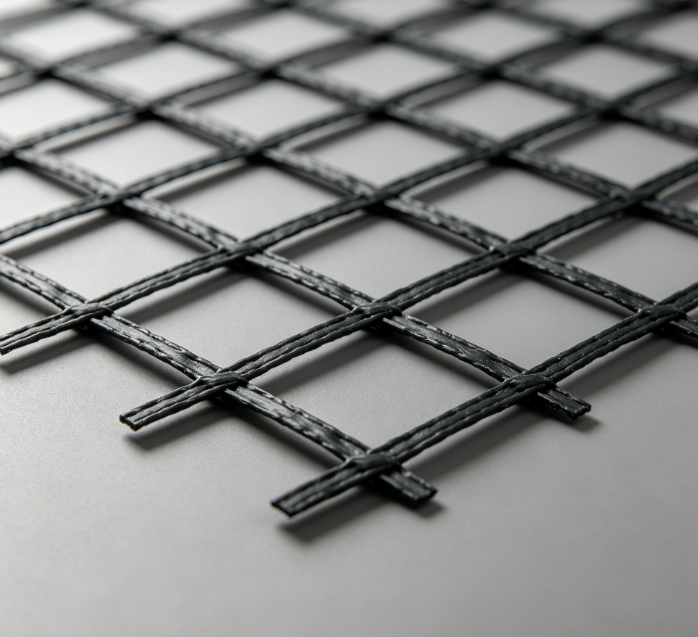
Skimping on subgrade prep before laying geogrids doesn't just shave a few hours off the schedule—it quietly transfers all that unresolved weakness straight into the layers above. The subgrade is supposed to act like a firm handshake, giving the geogrid something to lock into and distribute load across. Without proper compaction, moisture conditioning, and grading, the grid ends up floating over soft spots, unable to mobilize its tensile strength. The first sign is usually a wandering, uneven surface after just a few heavy passes, followed by rutting that seems to appear out of nowhere. What's actually happening is the geogrid is doing half its job: it's holding the aggregate together laterally, but there's no consistent foundation underneath to push back. The result is a pavement section that flexes more than it should, accelerates fatigue cracking, and demands patching far sooner than anyone budgeted for.
Another thing people don't anticipate is how skipped subgrade prep changes the failure mode from gradual to sudden. When you properly stabilize and proof-roll the subgrade, you create a predictable bearing surface—geogrids then extend that performance by interlocking with compacted fill. But if the subgrade is left spongy or variable, the grid becomes a band-aid over a moving target. Wheel loads punch through localized soft zones, creating differential settlement that rips the grid from its anchorage in the stronger adjacent areas. You'll see it as a sharp, stepped crack at the edge of a tire path, or a pothole that forms in a single wet season. It's not that the geogrid failed—it's that the system was never given the chance to work as designed. The grid can't replace modulus; it only amplifies what's already there.
There's also a compounding cost issue that rarely shows up in initial estimates. Sure, you save on compaction equipment time and maybe some imported fill by skipping subgrade prep, but the hidden price arrives later in the form of thicker base courses, more frequent regrading, and shortened service life. Moisture trapped in an unprepared subgrade wicks upward, softening the stone layer and reducing the friction that geogrids rely on for interlock. On an unpaved road, this looks like the grid gradually getting exposed as aggregate sinks into the mud, snagging tires and grader blades. On a paved section, it means reflective cracking that no overlay can hide for long. In short, the geogrid gets blamed for the symptom while the real culprit is the prep that never happened.
Reading a Manufacturer's Spec Sheet: The Numbers That Matter for Retaining Walls
Most people flip straight to the wall block’s compressive strength or face area, but the numbers that actually keep a retaining wall standing are buried further down the sheet. Look first at the maximum unreinforced wall height and the minimum embedment depth—two figures that tell you whether the block can handle your site’s slope before you add geogrid or deadmen. A spec sheet that lists only "wall height" without tying it to soil type or setback is basically advertising, not engineering data.
Next, check the drainage and backfill requirements. You want a number for aggregate size, usually ¾-inch clean crushed stone, and a minimum depth of that drainage column behind the wall, often 12 inches. If the manufacturer skips this or says "site soil is fine," walk away. Hydrostatic pressure, not block weight, causes most retaining wall failures, so the presence of a drainage specification is more telling than any load rating.
Finally, glance at the safety factors for sliding and overturning. Reputable manufacturers will list these as dimensionless ratios—typically 1.5 for sliding and 2.0 for overturning under static conditions. If those figures are absent or you have to request them, treat the product as unverified. A wall that meets a compressive strength of 3,000 psi but has no published global stability numbers is still a guess.
Field Fixes: Handling Fiberglass Geogrid Rolls in Tight Road Shoulders
On a narrow shoulder, wrestling a full-size geogrid roll into place usually ends with a torn edge and a lot of swearing. What we've found works better is to slide a length of steel pipe through the cardboard core, rest the pipe ends on two jack stands, and unroll the grid like a giant paper towel. If the shoulder is too tight even for that, cut the roll down to manageable lengths back at the truck. Pre-cutting into six-foot sections and re-rolling them loosely makes it possible for one person to carry the material through a gap that would never fit the original bundle.
The real problem shows up during unfolding. Fiberglass geogrid loves to curl back on itself, and once you get a sharp kink in those strands, that section is scrap. We keep a handful of six-inch gutter spikes in the truck for this. Push one through the grid near the outer edge and into the soil at a shallow angle, so the head traps the material without puncturing the load-bearing yarns. If there's any breeze at all, toss a sandbag every couple of yards, but never use broken concrete chunks or anything with a rough edge. Those will cut the glass fibers faster than you'd believe.
Sometimes the grid arrives a few inches wider than the actual compacted shoulder surface, and trying to tuck the excess under the pavement edge just creates a hump. Take a sharp utility knife and follow one of the longitudinal fiber bundles to trim off the extra strip. Cutting parallel to the main yarns keeps the edge from fraying, unlike a crosswise cut which unravels in minutes. The leftover strip isn't trash either. Fold it double and lay it across any soft spots near the shoulder hinge point, then cover with a thin layer of base rock. It stiffens up the transition without adding another full roll to the job.
Matching Grid Strength to Wall Height Without Overbuilding Every Time
Many retaining wall failures happen because the grid was picked for a shorter wall, while taller sections got the same reinforcement out of habit. Height drives the required tensile strength, but not in a straight line. Doubling wall height can quadruple the lateral earth pressure, so grid spacing and long-term design strength need to step up accordingly. A wall that's only six feet tall rarely needs the same heavy grid as a fourteen-foot wall, yet some builders default to the max spec for every course.
Good design matches the zone: lower courses carry more load, so you can place stronger or closer-spaced grid near the base and taper off higher up. This avoids overbuilding the upper half while keeping the critical bottom stable. Check the manufacturer's connection strength and pullout capacity for each layer, not just the ultimate tensile number. If the site has heavy surcharge or poor backfill, adjust from the baseline—don't just add an extra layer and call it done.
The simplest way to avoid overbuilding is to start with a design chart that plots required grid grade against exposed wall height for your specific block and soil type. Then verify the top layer is actually needed; many walls can stop reinforcement a few courses below the top if the cap isn't carrying traffic. Specifying what the structure needs, not what feels safe, keeps material costs down and speeds up compaction between lifts.
Long-Term Cost Shifts When Switching from Steel Mesh to Fiberglass Grids
When a project moves from steel mesh to fiberglass grids, the most visible shift isn't the invoice price—it's where the money goes over the next decade or two. Steel mesh tends to generate costs later: rust expands, concrete spalls, and repair crews have to chase cracks every few years. Fiberglass grids, by contrast, don't corrode, so that recurring patch-and-seal expense largely disappears. The upfront purchase may be higher per square foot, but the expected maintenance line drops sharply.
There's also a quieter shift in labor and handling. Steel mesh arrives heavy, often needs cutting with torches or shears, and can cause injuries from sharp edges. Fiberglass grids weigh a fraction as much and cut with standard tools, so crews move faster and with fewer lost-time incidents. Over the life of a structure, that difference compounds into lower insurance premiums, fewer schedule delays, and less need for specialized lifting equipment.
The long-term budget essentially trades recurring corrosion control and structural inspections for a one-time material premium. Owners who track total cost of ownership often find the break-even point sits somewhere between three and seven years, depending on exposure to deicing salts or coastal air. After that, the fiberglass option keeps paying back in reduced downtime and avoided replacement.
FAQ
Look for a manufacturer that shares full material test data without being asked. That includes creep resistance, junction strength, and alkali resistance. A dependable supplier also has field references for both asphalt overlay and mechanically stabilized earth walls, not just lab reports.
Fiberglass geogrid interrupts reflective cracking by distributing stress over a wider area. Instead of letting cracks from the old pavement migrate straight up through the new layer, the grid holds the asphalt together at the interface. Thicker pavement alone delays cracking but doesn't stop the stress concentration.
The most common mistake is laying the grid over an uneven or debris-covered surface, which prevents full contact with the asphalt. Another is using too little tack coat, so the grid slides under the paver. Finally, vehicles turning sharply on the exposed grid can tear it before the overlay is placed.
It works well for retaining walls, especially in cohesive or marginal backfill where steel strips might corrode. Fiberglass geogrid offers high tensile strength at low strain, so the wall face doesn't move much before the reinforcement engages. Just make sure the manufacturer specifies long-term design strength for the soil pH and drainage conditions.
Fiberglass has a higher tensile modulus, meaning it stretches less under load, which is useful where small deformations matter. Polyester is more flexible and tolerates construction damage better, but it creeps more over time. For road base reinforcement where stiffness is critical, fiberglass usually wins; for very soft ground needing large deformation, polyester might be more forgiving.
Ask for tensile strength at 2% and 5% strain, not just ultimate strength. Also request junction efficiency, creep-limited strength at the design temperature, and resistance to installation damage. A manufacturer that only provides an ultimate tensile number is hiding something.
Keep rolls off the ground and covered, because prolonged UV exposure degrades the coating. Don't stack more than three rolls high, and never drag rolls across sharp gravel. Once unrolled, place the overlay the same day if possible—wind can lift exposed grid and fold it over, creating wrinkles.
Check the coating uniformity: bare spots or dripping resin suggest poor manufacturing control. Measure the aperture size—if it varies more than a few millimeters, the grid won't interlock with aggregate consistently. Also flex a small sample; if the yarns snap easily or the coating cracks, it will likely fail under construction traffic.
Conclusion
Fiberglass geogrids earn their place in road bases and retaining walls by doing what steel mesh and biaxial plastics cannot: resisting creep, shrugging off chemical attack, and locking aggregate under repeated loads without losing tensile stiffness. But that durability only matters if the subgrade beneath is compacted and drained properly. Skip that step and the grid ends up bridging soft spots rather than reinforcing them, leading to reflective cracking and edge failures that look like product defects. When reviewing a manufacturer's spec sheet, pay less attention to marketing adjectives and more to the long-term design strength, junction efficiency, and aperture stability. Those figures tell you whether the grid will actually hold a wall face under sustained pressure, not just pass a short lab pull.
On tight road shoulders, fiberglass rolls demand a different set of field habits. The stiff, high-modulus material can snap if bent too sharply around curves or dropped from a truck bed, so crews often unroll it in shorter sections and use temporary pins to keep it flat before backfilling. Matching grid strength to wall height is equally practical: a low garden wall doesn't need the same ultimate tensile capacity as a six-meter reinforced slope, and over-specifying only inflates material and freight costs. Over a project's life, the shift from steel mesh to fiberglass often lowers corrosion-related maintenance, reduces excavation depth because thinner grids need less cover, and speeds up installation—savings that show up long after the initial bid.
Contact Us
Contact Person: Jennifer LEE
Email: [email protected]
Tel/WhatsApp: 8618553418999
Website: https://vip.e-baixing.com/wenfengshitong