

Flexo Printing Machine for Plastic BOPP Solutions That Improve Print Quality and Efficiency
2026-11-24
Flexo printing on BOPP film often walks a fine line between crisp, vibrant results and production bottlenecks that quietly eat into margins. What if the same machine could sharpen dot reproduction while cutting waste on every run? In this guide, we look at practical ways to lift both print quality and throughput for plastic packaging — with flexible solutions from HuiPeng designed to handle the demands of modern BOPP work without overcomplicating the pressroom.
Getting Reliable Dot Reproduction on BOPP Film
BOPP film usually arrives with a surface energy around 29–31 dyn/cm, which is far too low for most inks to anchor cleanly. A corona or plasma treatment line that raises the film to a stable 38–42 dyn/cm makes a measurable difference before the first plate touches the web. Untreated or uneven film tends to let ink crawl away from fine highlight dots, so checking treatment levels at the edges and center of the roll—not just on one side—prevents the familiar problem of dots that print well in the middle and break up near the ends.
Dot quality on BOPP is also shaped by plate, tape, and impression more than many press operators expect. A softer plate or tape combination may hold a highlight dot, but too much squeeze quickly turns it into a distorted ring or a solid smear. Running the minimum impression needed to transfer the dot keeps the printed size closer to the file, especially below the 10% range. Flat-top dot plates and a slightly harder tape usually hold shape better on smooth film because there is less material movement under load.
Ink condition often decides whether a dot stays sharp or spreads after transfer. On BOPP, solvent blends that dry too slowly allow the dot to flow outward before the film reaches the drying tunnel, while over-thinned ink can flood the screen and push the dot beyond its original size. Maintaining a tight viscosity band and adjusting solvent speed for press speed gives the dot enough time to release from the plate but not enough time to move. This balance matters most in process-color work where small shifts in one separation shift the entire tone curve.
Tuning Ink Viscosity for Fast Plastic Substrates
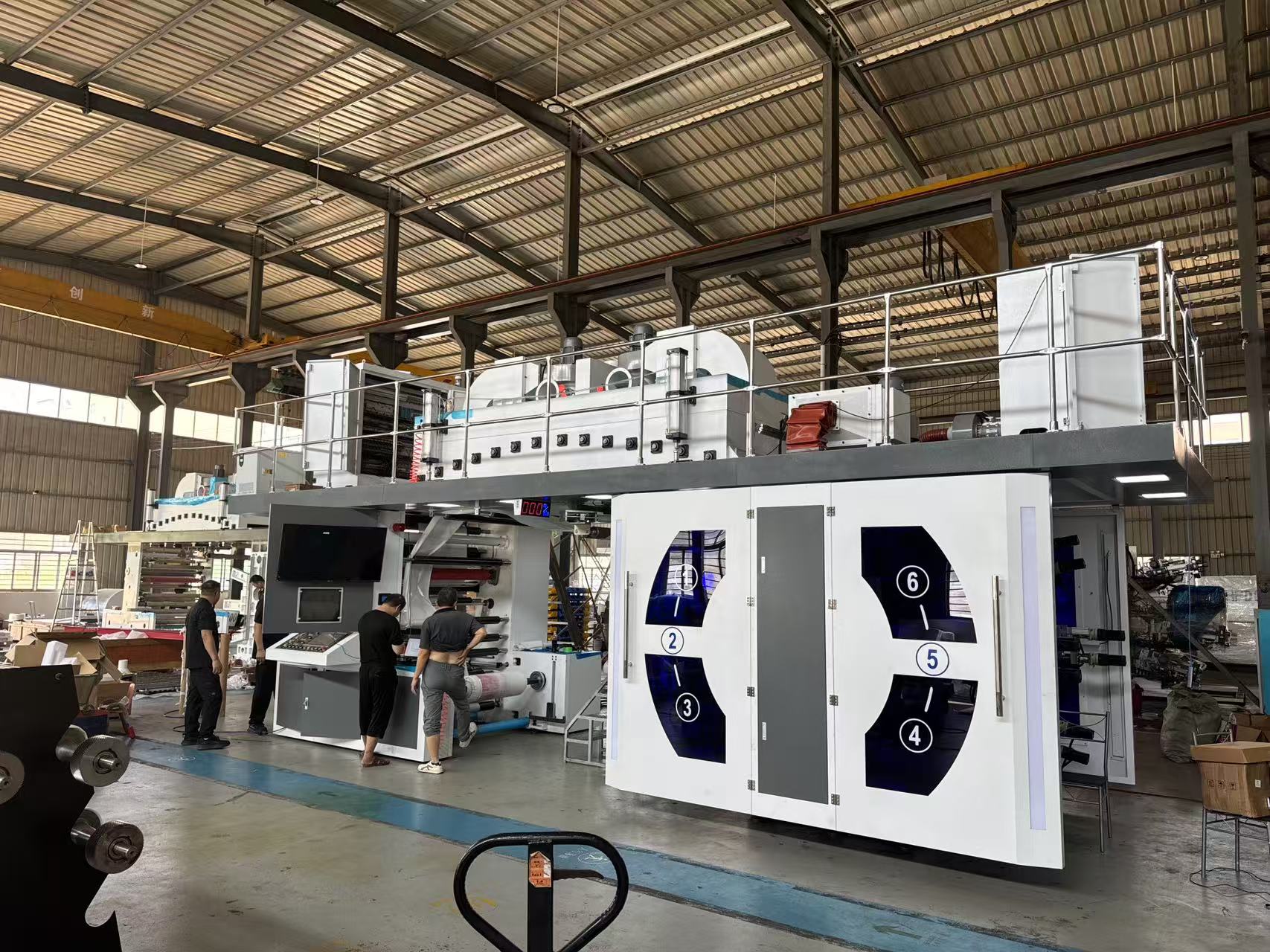
Getting solvent or UV inks to grip non-porous plastic at high line speeds often comes down to how the fluid behaves the instant it leaves the anilox or plate. A slightly higher viscosity can hold a crisp dot on slick film, but push it too far and you'll see pinholing, mottling, or a rough laydown that kills solid areas. The aim is to find a body that transfers cleanly, stays open long enough to level, then locks up before the web reaches the next station.
Plastic substrates pull heat away quickly and give almost nothing back, so the ink's flow characteristics need to be adjusted around that lack of absorption. Fast-drying formulas often rely on a short, buttery rheology that shears down under the blade and recovers on the substrate. On PET or vinyl, we usually start slightly above the viscosity used for coated paper, then dial back while watching the edge definition of fine text and the smoothness of large floods. Temperature control on press matters just as much as the initial reading, because a warm ink tray can thin the body and change trap before anyone notices.
Small batch adjustments work best when they respond to what the printed sample actually shows. If bridging occurs in reverses, thin in 2–3% increments and retest at running speed. If the ink spreads or feathers on the trailing edge of a solid, add a touch of body or reduce the solvent's aggressiveness. The right viscosity on fast plastic rarely stays constant through a shift—monitor the tray, keep the viscosity cup clean, and make corrections based on film appearance rather than a fixed number.
Why Drying Capacity Dictates Flexo Line Speed
In flexo printing, the press can mechanically run faster than the drying system can handle. It is not the motors or gear train that set the real ceiling; it is how quickly solvents or water leave the ink film. If the web reaches the next print station or rewind before the ink is stable, trouble shows up fast: set-off on idler rollers, blocking on the roll, and registration drift that looks like a press problem but is actually a drying shortfall.
Operators often push line speed and then chase defects that have nothing to do with plate or tape. The dryer airflow, temperature profile, and dwell time all have to move enough energy into the ink without skinning the surface. Heavy coverage, thick films, and absorbent stocks magnify the demand. A speed increase that works on a light vignette can fail on a solid because the drying load jumps sharply, and the available heat does not scale with the line speed setting.
That is why drying capacity, not maximum rated speed, dictates what you can actually run. Upgrading anilox, plate, or press controls will not help if the drying tunnel is already saturated. The practical fix is often to map drying limits by coverage and substrate, then set line speed around those curves rather than treating the dryer as an afterthought.
Managing Thin Web Tension Without Stretch Marks
Thin webs rarely forgive sudden tension shifts. A small jerk at a splicing unit or an out-of-round idler can turn into a hard crease that telegraphs through the roll before the operator even sees it. The first thing to check is not always the tension setpoint, but whether each section between nips is doing its share of the work. Splitting the line into distinct zones with dedicated feedback at the unwind, process, and rewind stages keeps a minor disturbance from traveling downstream and becoming a permanent stretch mark.
Roll alignment and surface condition matter more than many tension curves suggest. On films under roughly 12 micron or lightweight tissues, a slightly tapered roller or a worn bearing can pull one edge tighter and create diagonal puckers that look like tension problems but are actually geometric ones. It helps to mark a suspect roll and rotate it by hand while watching the web path. Low-friction, low-inertia idlers also stop the control system from chasing small variations that would otherwise show up as banding or smile-shaped defects.
Acceleration and deceleration need to be treated as part of the tension recipe. Many stretch marks are created not at steady speed but during ramp-up and emergency stops, when the unwind brake and rewind drive briefly disagree. Using a softer ramp with a controlled stop distance gives the trim system a chance to follow without overshooting, and adding a dancer in the most sensitive span can absorb the small speed mismatch that sensors miss. Once that buffer is in place, the tension setpoint can often be lowered, which itself reduces the chance of leaving marks in thin substrates.
Automated Registration That Holds Sharp Detail at Speed
Speed usually comes at the cost of precision, but this automated registration workflow flips that expectation. Instead of relying on a single high-level match, the system iterates through a coarse-to-fine alignment strategy, locking onto structural landmarks first and then refining the fit with sub-pixel interpolation. The result is a registration that keeps edge boundaries crisp and fine textures intact, even when the capture stage is moving quickly or the input feed is less than perfectly stable.
The sharpness comes from a selective weighting scheme that prioritizes high-contrast regions during the optimization step. Rather than averaging out detail across the entire frame, the algorithm tracks strong gradients, corners, and short-range patterns, giving those features more influence over the final transform. This prevents the typical smoothing artifacts that make fast registrations look soft or smeared. As the pipeline repeats frame after frame, small deviations are corrected locally without sacrificing the overall alignment speed.
In practice, the approach holds up well across varied surfaces, from printed circuit boards with dense micro-components to printed textiles with repeated motifs. Because the registration model adapts its feature set on the fly, it avoids overfitting to a fixed template and keeps the recovered geometry true to the actual object. The output maintains sharp transitions and fine line work, which matters most when downstream inspection or measurement depends on edge accuracy rather than just a visually plausible match.
Cutting Setup Time and Material Waste on Short Runs
Most of the waste on short runs doesn't come from bad parts. It comes from the first few sheets, the test cuts, the registration checks, and the leftover stock hanging around after the job is already packed. One quick fix is to separate setup stock from run stock. Keep offcuts and slightly damaged sheets near the cutter or press, and use those for registration and first-article checks instead of pulling fresh material every time. It sounds obvious, but shops that actually do this stop seeing their best board disappear into the scrap bin.
Setup time is usually about hunting, not the actual changeover. Tooling gets scattered, notes are missing from the job ticket, and the operator has to re-learn what the last shift figured out. A simple visual board with the most-used tools, a single-page setup sheet, and photos of the finished piece can cut ten or fifteen minutes per job without any new equipment. On short runs, that kind of reduction shows up immediately in your margin.
Batch sequencing matters more than people admit. Running similar stocks, similar cut depths, or similar ink colors back-to-back means the press or cutter stays close to where it needs to be. It also lets you plan shared waste: the skeleton from one job becomes a test piece for the next. When setups are sequenced well, the line between setup and production gets shorter, and the dumpster stops filling up before lunch.
FAQ
BOPP has a non-porous, low-surface-energy surface, so inks sit on top instead of absorbing. That makes corona treatment, primer layers, and fast-drying solvent or water-based inks far more important than on paper or board.
Thin BOPP stretches easily under heat and web tension. If tension spikes or drifts, registration shifts, gusseting appears, and repeat lengths become inconsistent. A closed-loop tension system with low-inertia rollers keeps the web stable from unwind to rewind.
Start by checking dyne level right before printing, not just when the roll arrives. Use inks matched to BOPP and the job's end use, avoid over-thinning, and make sure the drying system fully removes residual solvent or water before the next deck.
Short web paths between print units, servo-driven register controls, and precise edge guides make the biggest difference. BOPP is unforgiving, so any reduction in web path length directly lowers the chance of misregister.
Yes, many modern presses can be configured for both. Reverse printing requires a turner bar setup and careful attention to ink lay order and drying because the image is viewed through the film, which changes how color strength and trapping are judged.
A combination of high-velocity air impingement and temperature profiling works best. Because BOPP is heat-sensitive, you need enough airflow to remove solvent or water quickly without raising web temperature to the point where the film softens or stretches.
Install active static elimination close to unwind and rewind, keep floor and roller surfaces clean, and consider web cleaning units before the first print deck. Dust and static attract each other, so controlling both at once prevents most random print defects.
Conclusion
Achieving repeatable dot reproduction on BOPP starts with controlling the interface between plate, anilox, and film. Because the surface is non-absorbent, slight shifts in pressure or ink transfer become visible quickly. Adjusting ink viscosity for fast plastic substrates keeps highlights open and solids dense without over-inking. At the same time, drying capacity has to be treated as the real speed limiter: if the web leaves the last dryer with residual solvent, registration and blocking problems appear no matter how stable the press is. On thin films, tension control is equally critical. A sudden spike or uneven profile can leave stretch marks that ruin the job before anyone notices.
Modern flexo machines address these issues by linking automatic registration with lighter impression settings and precise rewind tension. Short runs benefit from faster setup paths because plate sleeves, chambered doctor blades, and pre-set recipes cut trial pulls and material waste. The goal is not just to keep the press moving faster, but to make every meter saleable. When dot gain is predictable, drying is matched to the ink system, and registration holds sharp detail at speed, operators spend less time correcting and more time running. For converters working with BOPP, those improvements show up directly in cleaner screens, fewer rejected rolls, and shorter lead times.
Contact Us
Contact Person: Isaias
Email: [email protected]
Tel/WhatsApp: 86-13868693129
Website: https://www.hpflexo.com/