

HDMI Cable ODM Solutions That Simplify Custom Manufacturing
2026-11-18
Custom HDMI cable programs often stall before they start—unclear specs, scattered suppliers, and sample delays pile up fast. EBCYX takes a different approach, offering ODM solutions that simplify custom manufacturing from connector design to final packaging. Here’s how that faster, clearer process works.
HDMI Cables Designed Around Your Board, Not the Other Way Around
Most cable assemblies force the PCB layout to accommodate a fixed connector position and a stiff cable exit. That creates problems as soon as you route differential pairs around mounting holes or try to close an enclosure with barely any clearance. These HDMI cables flip the sequence. Board geometry, connector placement, and the mechanical envelope define the cable, not the reverse. Less rework shows up after the first prototype, and solder joints stop absorbing awkward bends.
Low-profile terminations, right-angle exits, and nonstandard lengths are not treated as special requests. They belong in the design discussion before the first drawing is locked. If a connector sits tight against a chassis wall, the HDMI assembly exits at the angle that actually clears the housing. If the cable has to snake under a heatsink or between mounting posts, the jacket and strain relief are specified around that path. Clearance, retention force, and bend radius carry the same weight as signal integrity.
That changes the rest of the board layout. You stop reserving extra room for a generic cable bulge and stop stacking right-angle adapters that introduce their own impedance mismatches. The assembly arrives ready for the mechanical design, with connector orientation and cable path already settled. It makes the build cleaner because the cable finally acts like part of the board, not an accessory working against it.
Low Minimums and Fast Turnarounds That Match Your Launch Calendar
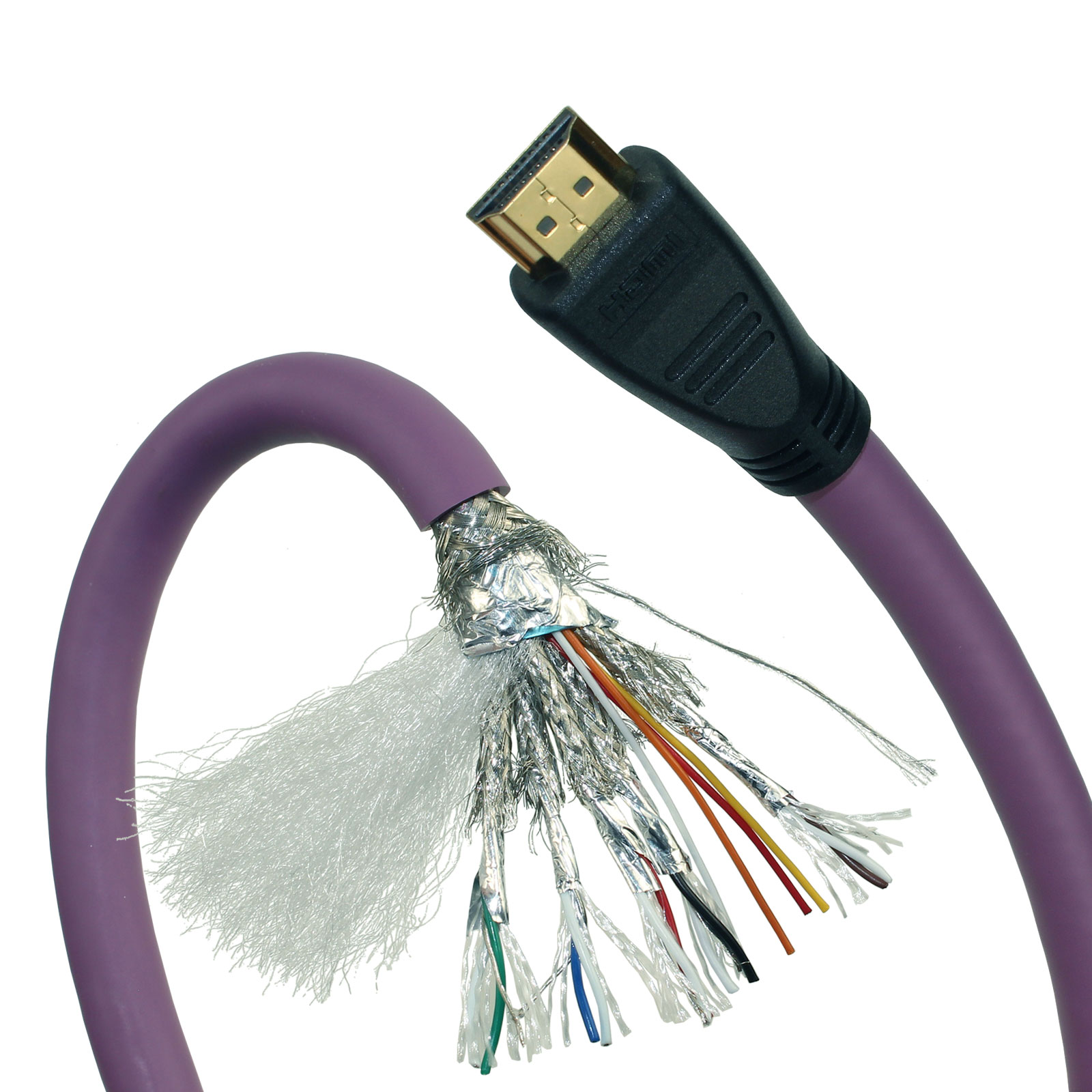
You do not need to order thousands of units to get a production slot. We treat small runs as standard work, which means your first batch can stay lean while you test styles, colors, or regional demand without locking up cash in excess inventory.
Production timelines are built around your release dates, not the other way around. Once materials are confirmed, we schedule cutting, sewing, and finishing in a single coordinated window so replenishment orders land before the momentum from a launch fades.
Short-run work still goes through the same quality checks as bulk orders. That consistency helps you keep a steady release rhythm, whether you are dropping a limited capsule or filling a gap between major seasons.
In-House Signal Integrity Testing Before You See a Sample
Most signal integrity problems are cheaper to catch on our own bench than in a customer's bring-up lab. Before a sample goes out, we put representative test structures through TDR and VNA measurements to check impedance continuity, return loss, and crosstalk margins against the actual stackup that production will use. Simulation guides the design, but it never gets the final word.
We pay close attention to the details that tend to shift between a clean model and a real board: soldermask thickness, glass weave position, via stub length, and launch geometry. Those small variables often decide whether a 25 Gbps pair has enough margin to survive a real enclosure and a less-than-perfect connector. If a measurement shows something borderline, we tune the stackup or routing rules before the first customer sample is built, not after.
The goal is not to hand you a perfect channel, because system-level effects still matter. It is to remove the avoidable surprises so your first bench test starts with a board that already meets the signal integrity targets we agreed on.
Tooling Costs Without the Guesswork or Buried Line Items
Tooling gets its own clear section in every quote, with the mold or fixture broken out by cavity count, material, and expected shots. You won't see a single vague “tooling” charge that gets adjusted later without explanation.
When a design change affects the tool, we send a revised line item that shows the delta against the original cost. If a revision adds slides, texture, or a different gate location, the updated quote shows only the affected tooling entries and the cost shift, so the conversation stays on the part, not the paperwork.
That keeps approval meetings focused on real trade-offs instead of on hunting through spreadsheets for a buried expense, and it gives your team a number you can plan around from day one.
One Engineering Contact From First Drawing to Final Carton
A single engineering contact owns the full journey from the first CAD sketch to the carton that leaves the dock. Instead of passing questions through three departments, the same person sees how an early tolerance choice affects the foam insert, the inner divider, and the final outer box.
That direct line shortens the loop when a drawing revision lands or a carton drop test fails. The contact can walk the change through the part model, update the packaging layout, and confirm the carton spec in one afternoon because no one has to be brought up to speed.
By the time the final carton is printed, palletized, and sealed, the original intent is still intact. What remains is a cleaner record, fewer mismatched assumptions, and a packaging line that does not have to stop for a preventable surprise.
ODM Capacity That Scales When a Retailer Suddenly Says Yes
A yes from a major retail buyer rarely arrives with a comfortable lead time. It lands in the middle of an ordinary Tuesday, often with quantities that double or triple the original forecast. In that moment, the difference between shipping on time and losing the shelf placement comes down to whether the factory floor can absorb the spike without waiting for new tooling or a fresh round of supplier negotiations.
That is why the production model here keeps a portion of molding, SMT, and assembly capacity deliberately uncommitted. Lines are laid out so a shift can move from one product family to another within the same week, and common components are inventoried at the sub-assembly level rather than the finished-good level. When the buyer signs off, the conversation shifts to allocation and scheduling, not to whether the line exists.
The goal is not to have idle equipment waiting for a maybe. It is to run the floor in a way that leaves controlled slack in the right places: tooling that can be duplicated quickly, operators cross-trained on adjacent stations, and a supply base that already understands surge pricing and surge timelines. A sudden yes becomes an execution problem, not a capacity crisis.
FAQ
A rough spec is enough to start: length, connector type, HDMI version, expected volume, and any special requirements like overmolding or labeling. We then come back with a full bill of materials and a design for manufacturability review so you can see exactly where cost and lead time come from.
We set the conductor gauge, insulation thickness, and shielding coverage around the target impedance, then verify every sample on a network analyzer. For 4K and 8K applications we also run eye pattern and crosstalk checks instead of relying on a pass/fail continuity test.
Yes. We often start by teardown and measurement of the reference sample, then isolate the problem: connector termination, shield termination, or raw cable construction. After that we propose changes with measured data rather than guesswork.
Most custom HDMI projects start around 1,000 units, but the real number depends on connector tooling, cable gauge, and packaging. Prototype runs are handled on a separate line with a one-time setup fee that is credited once full production begins.
You can be as involved as you like. Some buyers only review samples; others join weekly DFM calls. We document changes in shared revision logs so the final spec is locked before bulk materials are released.
Yes. We build for HDMI 2.1 and earlier versions, including cables that need to support 48 Gbps. The main difference comes down to tighter twist rates, higher-grade dielectric, and more aggressive shielding, which we validate through pre-compliance testing.
That is standard for us. We can do custom mold shapes, pad-print or laser engraving, and packaging layouts such as hang tabs, boxes, or poly bags. Artwork is checked for print margins and color matching before tooling starts.
Conclusion
Most HDMI cable programs get complicated because the cable is treated as a generic part. This approach starts from the board layout and connector placement, so the pinout, shielding, drain wire, and overmold are built around the actual product. That removes the usual back-and-forth over fit and clearance. Low minimums and fast lead times keep the schedule realistic for smaller teams or first production runs. You can order a short batch to support a pilot build, change a length or connector after field testing, and still get revised samples without waiting months. Every cable is checked in-house for signal integrity before it ships, covering eye pattern, impedance, and near-end crosstalk, so the sample you approve behaves like the cables from mass production.
Tooling costs are quoted plainly, including what the tool covers, how many molding cavities are used, and what happens if a revision is needed later. There are no vague engineering charges added after the fact. One engineering contact stays on the project from the first drawing and BOM review through pilot assembly and final carton marking, which cuts down on miscommunication when details change. If a retailer suddenly expands an order or a product launch moves faster than expected, the ODM setup can add capacity without forcing a redesign, because tooling, test fixtures, and assembly procedures are already documented for scaled runs.
Contact Us
Contact Person: David Yang
Email: [email protected]
Tel/WhatsApp: 8615814734054
Website: https://www.ebcyx.com/