

Industrial Air Compressor Selection: How to Choose the Right One
2026-08-22
Ask any plant manager what keeps them up at night, and compressed air rarely makes the list—until a unit fails on second shift. The reality is that industrial air compressors are the workhorses behind nearly every production line, yet choosing one is often treated like an afterthought. Get the sizing, pressure, or duty cycle wrong, and you're paying for it in energy waste and downtime. This guide cuts through the confusion so you can pick a compressor that fits your actual load profile. For systems built around your operation rather than a generic average, Seize Air brings practical engineering to the selection process.
Pin Down Your Actual CFM and PSI Before Anything Else
Most people shop for an air compressor by looking at horsepower or tank size first, but that habit leads to underpowered tools and frustrating pauses on the job. Instead of guessing, take a hard look at the tools you actually plan to run. Every air tool has a required CFM at a specific PSI, and if your compressor cannot deliver that number continuously, the tool will starve for air no matter how big the tank is.
A quick reality check is to list your highest-demand tool, note its CFM rating at 90 PSI, then add about 20 to 30 percent as a buffer for hose loss, quick-connect restrictions, and future tool additions. Once you have that target CFM, measure the compressor's delivered CFM at the same pressure, not the displaced CFM advertised on the box. This one step cuts through inflated marketing numbers and gives you a machine that actually keeps up with your work.
Rotary Screw vs. Piston: The Real Trade-Offs Nobody Talks About
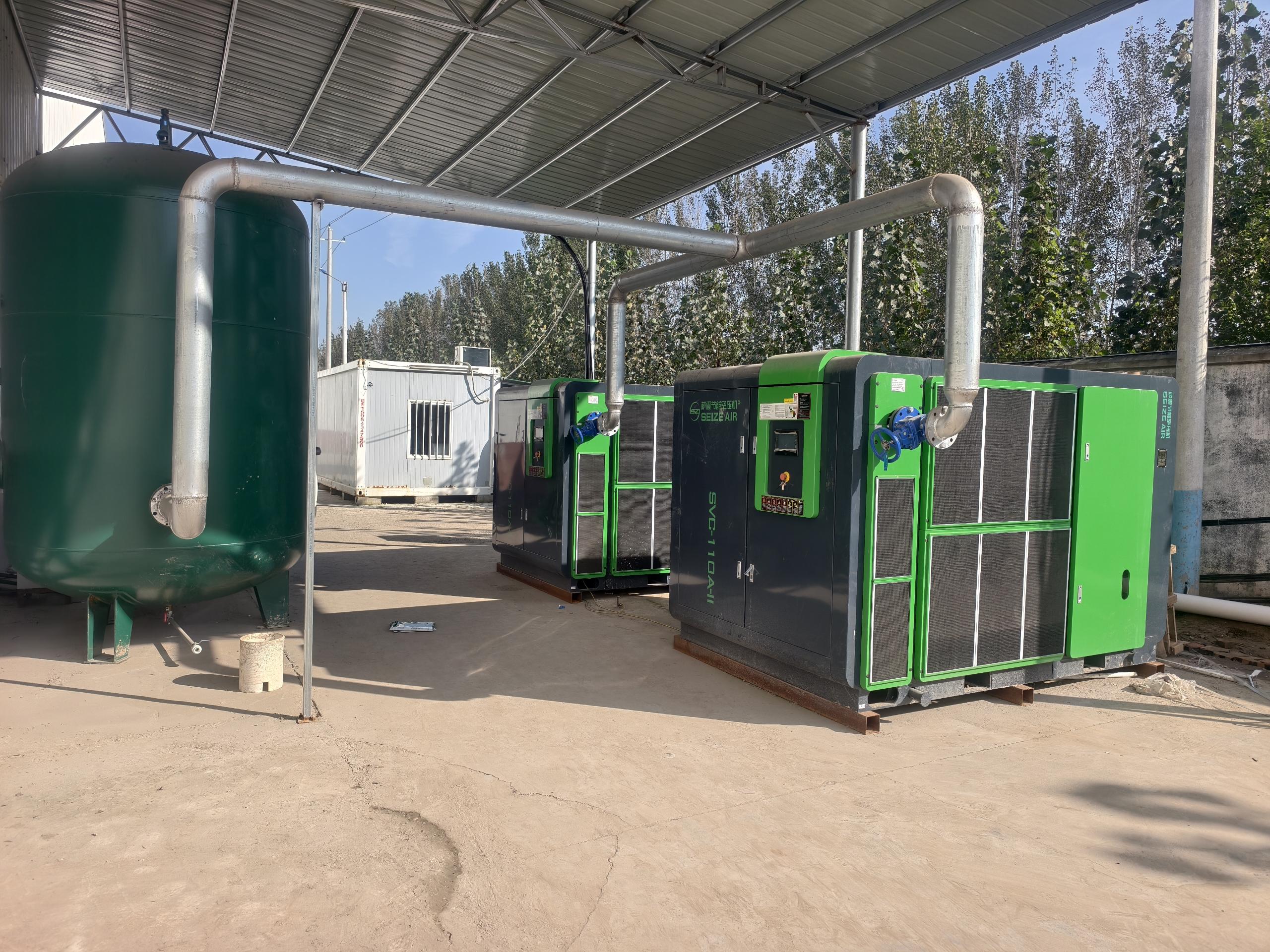
Most comparison charts pit rotary screw and piston compressors against each other using clean numbers: CFM per horsepower, decibel ratings, initial price. But the awkward truth is that the choice often hinges on how badly you treat your equipment. A piston compressor will tolerate long idle stretches, dusty corners, and skipped oil changes in ways that would send a rotary screw into an early grave. The screw's tight clearances and reliance on a steady oil film mean it hates being ignored. If your shop only pulls air a few times a day, that “inefficient” piston machine might outlive two screws simply because it doesn't mind sitting cold.
On the flip side, rotary screw units punish you at purchase time but quietly reward you when the duty cycle climbs. The overlooked trade-off is not just about energy—it's about moisture and heat. A piston compressor running near its limit turns discharge air into a hot, wet mess that overwhelms basic dryers and rots downstream piping. The screw's lower discharge temperature and continuous flow make condensate manageable. In many air systems, the real cost shows up in filter changes, rust in the tank, and inconsistent tool performance months after the sale, not on the spec sheet.
Then there's the noise conversation nobody finishes. Yes, rotary screw machines are quieter, but that only matters if the compressor shares space with people. A piston unit can be tucked into a sound-deadened shed for far less than the premium of a screw, and the money saved buys better filtration or a larger receiver. The honest trade-off is about matching the machine's personality to your work rhythm: intermittent bursts with rough handling favor the piston, while constant demand with attentive maintenance makes the screw the cheaper machine over time. Anyone who claims one is always better has never had to rebuild either of them.
Why Duty Cycle Matters More Than Horsepower
Horsepower gets the spotlight on spec sheets, but it rarely tells you how long a machine can actually sustain the work you bought it for. Duty cycle is the unglamorous number that predicts whether that motor will still be running hard at minute forty or wheezing by minute ten. A 5-horsepower compressor with a 25% duty cycle gives you roughly 15 seconds of true output out of every minute before it needs to cool down. A 3-horsepower unit rated at 100% can keep chugging until you decide to stop. For real jobs—framing, grinding, sandblasting—the second machine finishes the day stronger.
The trap is comparing peak numbers instead of sustained behavior. Horsepower is measured under ideal conditions, often for a few seconds on a test bench. Duty cycle, on the other hand, reflects thermal limits and design intent. A motor that can shed heat efficiently, use heavier windings, or simply run at lower internal stress will outlast a higher-rated motor that's constantly bouncing off its thermal overload. In practice, that means fewer breaks, fewer mid-task shutdowns, and fewer mornings where the tool refuses to start because last night's heat finally cooked a capacitor.
No one brags about duty cycle at the jobsite, but it's the number that quietly separates contractor-grade equipment from weekend toys. Next time you compare two machines, ignore the horsepower sticker for a minute and find the fine print. If the duty cycle is low, you're not buying more power—you're buying more waiting.
The Hidden Cost of Cheap Air: Energy Efficiency Over the Lifespan
A low sticker price on an air compressor or HVAC unit can feel like a win until the first full year of electricity bills arrives. In many industrial and commercial settings, the purchase price accounts for only a fraction of what the machine will cost over a decade. Cheap units often skimp on motor efficiency, heat recovery, and control systems, which means they draw more power for the same output. That gap quietly becomes the largest line item on the balance sheet.
Consider a rotary screw compressor running two shifts a day. A model that costs $3,000 less upfront but operates at 8 percent lower efficiency can burn through that savings in under eighteen months, and then keep costing more every year after. Maintenance intervals also tend to shrink as components run hotter and harder, adding unplanned downtime that never shows up on a spec sheet. The real price of cheap air isn't paid at the dealer; it's paid month after month to the utility company.
Smart buyers flip the math. Instead of asking what a system costs to buy, they ask what it costs to own and run for 10,000 hours or 10 years. High-efficiency motors, variable speed drives, and leak-reduction programs can raise the initial invoice by 15 or 20 percent, yet return that difference several times over. In compressed air, as in most energy-intensive equipment, the cheapest purchase is often the most expensive decision.
Don't Overlook Air Quality: Dryers, Filters, and Contaminants
Compressed air systems often get judged by pressure and flow alone, but what travels through the lines matters just as much. Without proper drying, moisture condenses inside pipes, feeds corrosion, and can wreck pneumatic tools or ruin a paint finish. A refrigerated dryer handles most general workshop needs, while desiccant units become necessary when the job demands a dew point well below freezing.
Filters do the quiet work of catching what dryers leave behind. A general-purpose particulate filter stops rust and pipe scale, but oil vapors and tiny aerosols slip right through unless a coalescing filter sits in the line. Placing the right filter upstream of sensitive equipment isn't overkill; it's the difference between a valve that cycles for years and one that sticks after a few months.
Contaminants don't always announce themselves. Water, oil carryover, and even microbial growth can collect in dead legs or low points, slowly degrading air quality until a process starts acting unpredictably. Regular drain checks, filter element replacements, and an occasional dew point measurement are cheap insurance compared to troubleshooting a contaminated batch or replacing a scored cylinder.
Space, Noise, and Heat: The Forgotten Installation Factors
Most planning sessions obsess over rack units, cable runs, and power budgets, yet the physical room itself rarely gets a second look. A server closet with no clearance behind the intake vents will choke even the most efficient hardware. Similarly, placing a noisy switch or cooling fan next to a quiet workspace turns a minor annoyance into a daily productivity drain that no one anticipated.
Heat behaves like water—it finds the path of least resistance, and that path is usually straight into the components you least want to cook. Without proper airflow design, hot exhaust recirculates into cold aisles, raising ambient temperatures just enough to trigger throttling or unexpected shutdowns. The problem isn't always a lack of cooling capacity; it's often that the available cooling never reaches the spots that need it.
Noise gets dismissed as an afterthought because it doesn't show up in a spec sheet until someone has to sit next to it for eight hours. High-pitched fan whine or low-frequency transformer hum can wear people down in ways that are hard to measure. Factoring in acoustic comfort, clearance for airflow, and a realistic heat load early in the design phase costs almost nothing compared to retrofitting isolation mounts or adding supplemental cooling later.
FAQ
Energy consumption typically accounts for 70% or more of a compressor's total cost over ten years, so dig into specific power at full load, part-load efficiency curves, and whether the unit includes features like heat recovery. Maintenance intervals, expected service life of airends or pistons, and the cost of replacement filters and separators often surprise buyers who focus only on initial capital.
Rotary screw models shine in continuous duty applications where demand rarely drops below 40% of rated flow for long stretches. Reciprocating units work well in shops with intermittent use, lower total running hours, or very high pressure needs below roughly 30 horsepower. If your plant runs three shifts with pneumatic tools and actuators, a screw machine is usually the safer choice.
VSD compressors earn their higher price when air demand fluctuates by more than 30% during a normal shift or when different production lines start and stop independently. If your demand is nearly constant, a fixed speed compressor with adequate storage will cost less to buy and maintain. The real test is logging flow over several weeks, not guessing from nameplate ratings.
That depends on your contact risk and local regulations, but many operations settle on ISO 8573-1 Class 1 for particles and Class 2 for water and oil to protect product. You will likely need a desiccant dryer rather than a refrigerated one, plus coalescing and particulate filters. Confirm with your quality team whether oil-free compression is mandatory or whether filtration and monitoring can provide the same guarantee at lower cost.
Rated cubic feet per minute is often measured at the compressor discharge under ideal inlet conditions, which rarely match your actual piping losses, altitude, or temperature. End-use pressure reflects real restrictions from dryers, filters, and undersized lines. Measuring at the furthest drops identifies the true minimum pressure you must maintain, preventing you from buying a bigger machine when the problem is actually a piping bottleneck.
A good starting rule is 3 to 5 gallons of storage per cfm of expected peak demand, but transient events like sandblasting or large pneumatic cylinders may require larger tanks or a dedicated secondary receiver near the load. Storage smooths pressure dips and prevents short cycling of the compressor. Without it, even an oversized compressor can starve the process for the few seconds that matter.
Oil-flooded machines transfer heat and seal rotors with injected oil, which makes them more efficient and often less expensive upfront. Oil-free models eliminate the risk of oil carryover into the air stream, which matters for sensitive electronics, spray painting, or medical products. For a general plant running air tools and blow-off nozzles, oil-flooded with proper filtration is usually sufficient and cheaper to run, but you should verify no process has zero oil tolerance.
Conclusion
Industrial air compressor selection usually goes wrong when people buy for a single number instead of the full picture. Start with real CFM and PSI at the tool, not the compressor tank—add up everything that runs at once and account for pressure drop across dryers and filters. Then look hard at the screw versus piston trade-off: rotary screws tolerate long, steady runs without overheating, while pistons are cheaper but hate continuous duty and get noisy. Duty cycle, not horsepower, predicts whether a machine will survive your shift pattern. If you run eight hours straight but the compressor is rated for 50% duty, the motor and pump will cook regardless of peak horsepower.
Energy cost over ten years usually dwarfs the purchase price, so compare specific power (kW per 100 CFM) at your actual operating pressure. A bargain compressor that runs constantly or cycles badly can cost more in electricity than a premium efficient unit. Air quality deserves the same attention as pressure: wet, oily air ruins valves, paint finishes, and food-grade product, so size dryers and filters for worst-case humidity, not average. And don't forget the room itself—ventilation, clearance, ambient heat, and noise limits shape reliability and worker safety. The right compressor is the one that fits your true load, duty cycle, air quality needs, and physical space, not the one with the most appealing price tag or the biggest tank.
Contact Us
Contact Person: Mia
Email: [email protected]
Tel/WhatsApp: +86 19821985894
Website: https://www.seize-air.com