

Inside a Flame Resistant Shirts Factory: How Protective Workwear Is Made for Ultimate Safety
2026-07-15
Ever wondered what really happens on the factory floor where flame-resistant shirts are born? At DROTEX, precision meets protection as each stitch is engineered to withstand extreme heat and sudden flames. From raw fabric to final inspection, the journey reveals a world of rigorous testing and hidden innovations that most workers never see — but trust with their lives every day. Let's step behind the scenes and uncover how true safety is woven into every thread.
The Raw Materials: Where Flame Resistance Begins
Fire-resistant fabrics don't magically refuse to burn. The resistance is built right into the fibers, whether naturally or through chemical wizardry. Take wool, for instance. Its high moisture content and protein structure make it exceptionally hard to ignite, and even when it does, it tends to self-extinguish. That's why firefighters' uniforms often rely on worsted wool blends—not just for comfort, but because the material inherently resists flames without a topcoat of chemicals.
For cottons and other cellulosic fibers, nature needs a nudge. Here, the raw materials are treated with flame retardants like tetrakis(hydroxymethyl)phosphonium salts—often called THP—or nitrogen-based compounds that penetrate the fiber's core. Unlike surface coatings that wash away, these treatments become part of the fabric's molecular structure. The chemistry is delicate: too little, and the fabric fails a vertical burn test; too much, and it loses its hand feel and breathability. This balance turns an everyday cotton lab coat into a shield that chars rather than combusts when exposed to an arc flash.
Then there are the synthetic workhorses: aramids, modacrylics, and oxidized polyacrylonitrile. These polymers are engineered from the ground up to be flame-resistant. The secret lies in their carbon-heavy backbones and the absence of hydrogen atoms that fuel combustion. Kevlar and Nomex are famous examples, but newer blends incorporate materials like Basofil, which stays flexible at extreme temperatures. These raw materials are not just modified—they are designed, from monomer to finished filament, to stand up to heat without ever dripping molten plastic or igniting.
Designing for Danger: Patterns That Prioritize Safety
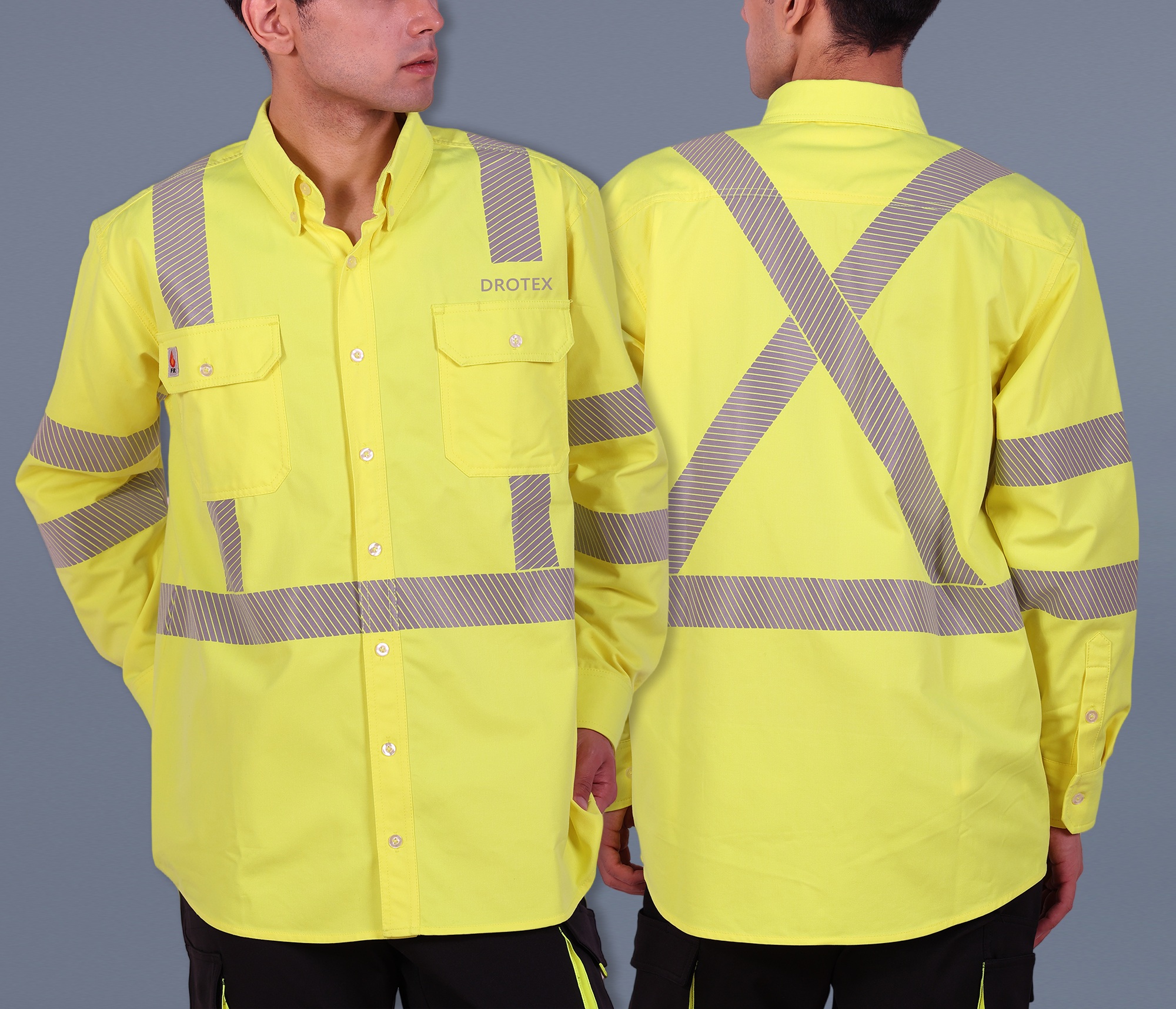
Safety often becomes an afterthought when building products, but certain design choices can fundamentally shift how people experience risk. Take a stair railing that feels as solid as the wall beside it, or a dashboard alert that doesn’t just beep but gently tightens your seatbelt—these are not merely features, they’re embedded warnings that work before conscious thought kicks in. The trick lies in making safety frictionless, so the protective action feels inseparable from the object itself, almost invisible in its reliability.
In high-stakes environments, the most elegant safety patterns are those that guide without demanding attention. Consider an emergency shut-off painted in a shade that’s only visible under smoky conditions, or the subtle way an underground mine’s ventilation schedule mirrors the body’s own circadian rhythms, reducing fatigue-related errors. These designs don’t lecture or restrict—they simply narrow the path toward harm while leaving the user feeling in control. The pattern works because it expects human fallibility and gently corrects it before a conscious decision is ever made.
What separates these patterns from generic safeguards is their deep alignment with how people actually behave, not how we wish they would. A kitchen knife with a handle that becomes less grippy when your fingers stray toward the blade, or a roadway that hums when a dozy driver drifts—these interventions read intent and respond in real time. They turn everyday objects into silent collaborators, proof that the best safety design doesn’t shout for caution. It simply removes the opportunity for catastrophe, so quietly you might never notice it’s there.
Cutting and Assembly: Crafting Each Piece With Care
Every cut begins with a careful study of the material—its grain, texture, and natural character. We don’t rush this part. Instead of relying solely on machine precision, our artisans mark each outline by hand, adjusting for the subtle curves and variations that give each piece its own identity. The saw follows these marks with a steady rhythm, removing just enough to reveal the shape waiting inside. It’s a conversation between the maker and the material, where mistakes are rare because patience leads the way.
Assembly is where the individual parts truly come alive. We dry-fit everything first, checking how the edges meet and whether the joints hold firm without glue. Sometimes a sliver of wood or a whisper of pressure is all it takes to turn a good fit into a seamless one. Only then do we apply the bonding agents—sparingly, because excess has no place in clean craftsmanship. Clamps are set with a gentle but unyielding grip, left overnight so the bond matures naturally, not in a hurry.
After the piece is set, we finish by hand-sanding the assembled form, letting fingertips trace the surfaces to find any remaining whispers of roughness. A light oil or wax then nourishes the grain, bringing out the warmth hidden beneath the dust. The result isn’t just a product; it’s a quiet testament to the hours of focused work—each cut considered, each joint respected, each surface cared for until it feels right in the hands.
Thermal Testing: Proving the Fabric’s Mettle
Subjecting a textile to blistering heat or bone-chilling cold isn’t just a box-ticking exercise—it’s the moment a fabric either crumbles or reveals its true character. Thermal testing pushes fibers to their breaking point, measuring how they hold up when a welding spark lands on a sleeve or when a mountaineer’s jacket faces a -40°F gust. Without this gauntlet, promises of durability are just words on a label.
The process goes beyond simple exposure. Fabrics are cycled through rapid temperature swings, blasted with radiant heat, and sometimes left to soak in extreme conditions for hours. We look for more than survival; we track shrinkage, melting, loss of strength, and whether the material becomes brittle or dangerously stiff. A true performer emerges with its flexibility intact and no permanent damage—a kind of quiet resilience that only the lab can confirm.
What separates a workhorse fabric from a pretender often comes down to the small, unglamorous details. A cotton-polyester blend might char just as quickly as a cheaper alternative, but the real test is whether it self-extinguishes or continues to smolder. Similarly, high-tech synthetics can warp under intense heat unless their fiber structure is engineered for thermal stability. These trials don’t just measure; they expose the engineering beneath the surface, proving that a fabric’s mettle is earned in degrees, not declarations.
Little Extras: Reinforcements and Visibility Boosters
When your brand message starts to feel a bit flat, a handful of clever reinforcements can really turn things around. Think of branded stickers tucked into orders, a quick QR code surprise on packaging, or a quirky insert that makes someone smile—these aren't just add-ons, they're small nudges that keep your business top of mind without being pushy.
Visibility boosters work best when they blend in naturally. Instead of shouting for attention, they slip into everyday moments: an unexpected handwritten note, a subtle yet bold colour choice in your shipments, or a tiny giveaway that customers actually want to show off. These elements quietly increase recall and make people more likely to mention you to a friend, almost by accident.
The real trick is consistency without repetition. Rotate your little extras so long-time customers feel rewarded with fresh touches, while new buyers immediately sense there's more to discover. Whether it's seasonal stickers, limited-time package art, or a playful change in your email signatures, these micro-moments build a layered presence that feels effortless rather than engineered.
From Factory Floor to Field: The Final Quality Check
Before any gear leaves our facility, it endures a battery of tests that mirror actual field conditions. We don’t just inspect—we simulate wear, stress, and the unexpected. Each unit is run through load checks, thermal cycling, and endurance drills that push it past its listed specs. Only when a product holds steady under these extremes does it earn a place on the pallet.
This stage bridges the controlled precision of the factory floor with the unpredictable demands of the job site. A technician examines not just the core mechanism but also the smallest details—weld integrity, seal tightness, cable routing—that often determine long-term reliability. It’s a methodical, unhurried review where intuition from years on the line meets the latest measurement tools.
The final check is less about catching flaws and more about confirming readiness. When a product passes, it carries a quiet assurance that it will perform from hour one to hour one thousand. There’s no ceremony, just a signature on a tag and a nod to the logistics team. That simple handoff is our promise that it’s truly field-ready.
FAQ
Most commonly, you'll find fabrics like treated cotton, aramid fibers (think Nomex or Kevlar), and modacrylic blends. These materials are inherently flame resistant or chemically treated to self-extinguish when exposed to fire. Often they're woven in a way that doesn't melt or drip, which is crucial for safety.
It's a combination of careful material sourcing and rigorous in-line checks. The fabric is tested before cutting, and then finished shirts undergo random sample testing. We use methods like vertical flame tests where a strip of fabric is exposed to a flame for a set time; it must self-extinguish within seconds and have a minimal char length to pass.
Absolutely. Modern FR shirts are designed with breathability and mobility in mind. Manufacturers often incorporate moisture-wicking finishes, stretch panels, and flatlock seams to reduce irritation. They feel much like regular work shirts but with the added peace of mind.
They must comply with standards like NFPA 2112 for flash fire protection or NFPA 70E for arc flash hazards. In Europe, it's EN ISO 11612. These certifications involve third-party testing and regular factory audits to ensure consistent quality.
Most are home launderable, but you need to avoid fabric softeners and bleach because they can coat or degrade the flame retardant properties. Using liquid detergent and not over-drying helps maintain the protective qualities. Some treated cotton shirts might eventually lose effectiveness after repeated industrial washings, though inherent fiber shirts typically last the life of the garment.
They're essential for electricians, oil and gas workers, welders, chemical plant operators, and anyone exposed to fire, arcs, or combustible dust. Even utility linemen and racers wear them. Basically, if your job involves a risk of sudden high heat or flame, an FR shirt is part of your daily PPE.
Beyond lab tests, there are multiple inspection points: visual checks for stitching defects, weight and density measurements of the fabric, and even thermal manikin testing for full garments. Each batch is documented, and many facilities use ISO 9001 quality management systems to trace every production step.
Conclusion
Inside a flame-resistant shirt factory, the journey toward creating protective workwear begins not with fabric rolls but with the careful selection of raw materials. Manufacturers choose inherently flame-resistant fibers—like aramid, modacrylic, or treated cotton—that form the backbone of the garment’s safety features. These materials are engineered to resist ignition, self-extinguish, and prevent heat transfer, laying a crucial foundation. The design phase then translates these properties into wearable protection: patterns are drafted with safety in mind, eliminating unnecessary seams that could fail under stress, incorporating reinforced panels, and ensuring full coverage without restricting movement. Every cut and stitch in the assembly process is executed with precision because even a minor flaw could compromise the barrier between the wearer and a potentially lethal hazard.
Once assembled, the shirts undergo rigorous thermal testing that goes far beyond simple flame exposure. Fabrics are subjected to open flames, radiant heat, and simulated arc flashes to measure their protective performance, often assessed through metrics like the arc thermal performance value (ATPV) or the flame resistance rating. The testing doesn’t stop at the fabric; entire garments are evaluated to ensure that seams, closures, and collar constructions hold up under extreme conditions. To enhance real-world usability, factories add critical details such as reinforced elbows, double-stitched stress points, and high-visibility reflective tape—features that extend durability and make workers more conspicuous in low-light environments. Before shipment, a final quality check inspects each shirt for defects, verifying that every element, from the thread tension to the label legibility, meets stringent safety standards. This meticulous process ensures that when a worker pulls on that shirt, they are enveloped in a shield that has been designed, tested, and proven to protect against the fires and hazards they face daily.
Contact Us
Contact Person: Sandy
Email: [email protected]
Tel/WhatsApp: 86150 8310 5120
Website: https://www.frdrotex.com