Leading China High Strength Steel Plate Manufacturers You Can Trust for Premium Quality
2026-08-21
When a project hinges on steel that won't let you down, the search for a reliable high strength plate supplier becomes critical. Sanhe Steel has emerged as a name that keeps resurfacing among industry insiders—but what exactly sets their plates apart in a crowded market?
Why Some Chinese Steel Plate Suppliers Earn Trust Faster Than Others
Trust in steel plate sourcing rarely comes from a polished website or a long list of certifications alone. Buyers tend to warm up faster to Chinese suppliers who answer technical questions with mill-specific data instead of generic sales copy. A supplier that can explain the difference between a normalizing rolling process and a controlled rolling process for a specific grade, and back it with actual heat numbers, removes much of the uncertainty that slows down procurement decisions.
Another advantage shows up in how setbacks are handled. When a batch arrives with minor surface rust or a thickness tolerance issue, suppliers that offer a clear remedy—whether partial credit, replacement material, or a mill inspection report—without making the buyer chase them repeatedly tend to build confidence quickly. The opposite is also true: delayed responses to a quality complaint can undo months of careful relationship building.
Finally, consistency in documentation plays an outsized role. Suppliers that provide accurate packing lists, test certificates, and loading photos without being asked remove friction from repeat orders. Over time, buyers begin to treat these suppliers less like vendors and more like an extension of their own quality control process, which is where faster trust really comes from.
The Unseen Details That Make High Strength Plates Last
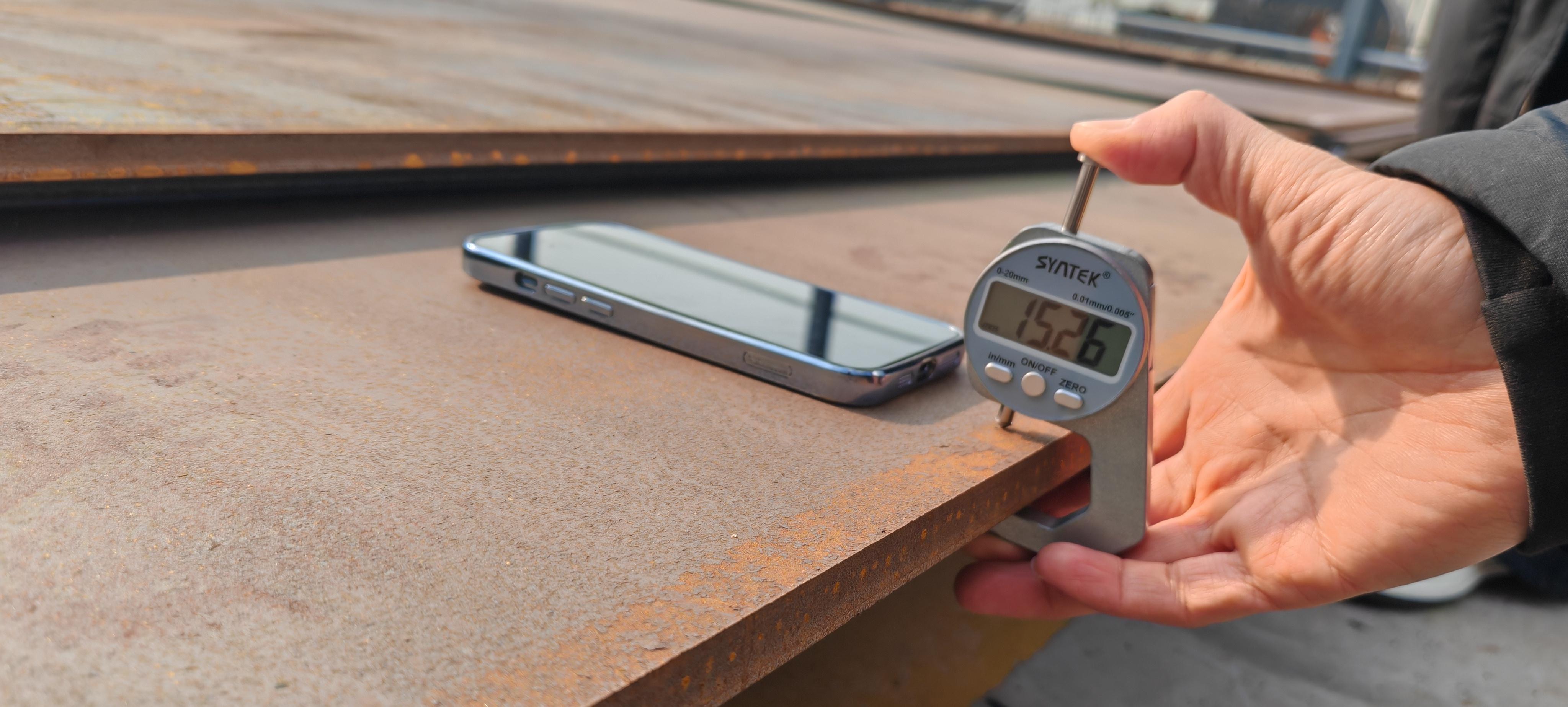
The first hidden factor is not the alloy's bulk chemistry but how non-metallic inclusions are shaped and dispersed. A plate can meet the same nominal composition and still fail early if elongated manganese sulfide stringers line up along rolling direction. Modern producers inject tiny amounts of rare earth elements to convert those brittle sulfides into stable, globular particles that resist cracking under repeated load. It's a sub-millimeter intervention that never shows up on a certificate but changes fatigue life dramatically.
Residual stress is another invisible variable. Controlled rolling followed by accelerated cooling leaves the plate's outer skin in compression while the core carries a balancing tension. That compressive shell acts like a preloaded spring, closing micro-cracks before they can open under service loads. The balance is delicate: overdo the cooling and the plate warps or loses toughness; underdo it and the protective effect disappears. Nobody sees this stress field, but it's often the reason two plates of identical hardness behave completely differently in the field.
Finally, edge and surface preparation quietly decide whether a plate will shrug off decades of abuse or fail at the first stress riser. A flame-cut edge with a hard heat-affected zone and tiny notches can reduce fatigue strength by half compared to a machined or laser-cut edge with a gentle radius. Similarly, removing mill scale before coating prevents moisture from creeping under the paint and starting crevice corrosion. These details are easy to skip because they happen after the plate leaves the mill, but they account for a surprising share of long-term durability.
From Mill to Job Site A Premium Steel Plate's Journey
Every premium plate starts as carefully sorted scrap and pig iron in an electric arc furnace, but the real differentiation happens at the rolling mill. Controlled rolling and accelerated cooling lock in a fine grain structure that gives the plate its toughness and flatness. The plate is then ultrasonically tested edge to edge, shot blasted to a near-white finish, and stamped with a heat number that follows it through every subsequent step.
Before it ever leaves the mill, the plate is cut to close tolerances and inspected for camber, surface defects, and thickness variation. Some orders get a primer coat or edge beveling right on the line. Then the plate is stacked with hardwood dunnage, wrapped in vapor-barrier paper, and secured with steel banding built to survive a cross-country haul without shifting.
At the job site, that same heat number lets the receiving team verify the mill test report in seconds. A premium plate's journey doesn't end when the truck pulls in; it ends when the plate is laid out for fit-up and the crew sees that it requires no rework, no shimming, and no second-guessing.
How to Avoid the Pitfalls of Low-Grade Steel Plate
The first step in sidestepping low-grade steel plate problems is learning to spot them before they reach your workshop. Look for surface irregularities that go beyond normal mill scale—things like deep pitting, laminations, or uneven thickness that suggest inconsistent rolling practices. A cheap plate might look fine from a distance, but run your hand along the edge and you'll often feel subtle waves or burrs that indicate poor shearing. Ask for the mill test report and actually read it, not just the yield strength line. Pay attention to trace elements like sulfur and phosphorus; elevated levels often point to recycled scrap feedstock without proper refinement. If the supplier hesitates to share full chemical composition or mechanical test data, treat that plate as suspect until proven otherwise.
Once the material is in your hands, don't skip the incoming inspection just because the project deadline is tight. Cut a small corner coupon and perform a simple bend test—low-grade steel often cracks along the outside radius at angles that proper structural plate would handle without complaint. Check hardness readings across the surface; a spread of more than fifteen Brinell points within the same plate signals uneven cooling or questionable heat treatment. Weld a test bead on scrap and look for excessive porosity or underbead cracking, both common when inclusions and impurities lurk beneath the surface. These quick checks take less than an hour but can save you from discovering brittle failure after the part is already in service.
Long-term avoidance means building supplier relationships based on transparency rather than price alone. Visit the distributor's yard unannounced and ask to see the actual inventory, not the brochure photos. Look at how plates are stored—standing in water or buried under rusty scrap is a red flag for internal corrosion that won't show up on a surface grind. Require traceability back to the original heat number, not just a generic certificate that could apply to any batch. When you find a mill or service center that consistently delivers clean, homogeneous plate with tight chemistry control, keep them close. Paying a few percent more per ton is far cheaper than machining a finished component twice because the base material couldn't hold tolerance or failed under load.
The Real Reason Chinese Steel Plate Exports Keep Growing
The steady climb in Chinese steel plate exports rarely stems from a single lever like subsidies or excess capacity, though both play a role. The overlooked driver is the mismatch between fast-moving infrastructure projects in Southeast Asia, the Middle East, and Africa and the slow, rigid supply chains of traditional producers. Chinese mills have built rolling schedules around short lead times and flexible specifications, so a contractor in Dammam or Jakarta can get 40,000 tonnes of S355-grade plate delivered in six weeks, while European or Indian mills quote three to four months and often refuse to split lots. That reliability, not just price, wins repeat orders.
Another force is the domestic slowdown in construction steel demand. With high-rise residential projects tapering off, large integrated mills face a brutal choice: idle blast furnaces and lose market share, or push plate into export markets at thinner margins. Most choose the latter, treating exports as a pressure valve rather than a profit center. This explains why Chinese plate prices can undercut competitors by 15 to 20 percent even after freight and tariffs. The mills also invest heavily in third-party certifications—CE, ABS, DNV, JIS—so their products no longer face the quality skepticism of a decade ago.
Looking ahead, the growth has a self-reinforcing logic. Global energy transition projects, such as offshore wind foundations, LNG terminals, and port upgrades, consume massive volumes of heavy plate with tight flatness and toughness requirements. Chinese suppliers have become the default choice because they combine acceptable quality, huge capacity, and a logistics network that can handle 20,000-tonne vessel loads. Trade barriers may slow the rise in some regions, but as long as Western and Asian rivals struggle to match delivery speed and spec flexibility, the export curve is unlikely to flatten.
What Top Engineers Look for in High Strength Steel
Top engineers cut through the spec-sheet noise by focusing on how high strength steel behaves when it's pushed past the textbook limits. They care less about a single tensile number and more about the full curve: yield-to-tensile ratio, uniform elongation before necking, and whether the material gives a predictable warning before failure. A steel that snaps without plastic deformation is a liability, no matter how impressive its ultimate strength looks on paper.
Weldability and heat-affected zone toughness sit just as high on the list. Many high strength alloys become brittle after welding if the cooling rate isn't tightly controlled, so top engineers look for compositions with low carbon equivalents and stable microstructures. They also value consistency across thicknesses and batches, because a grade that performs well in a lab coupon but varies wildly in the field creates costly rework and safety risks.
Finally, experienced engineers weigh practical factors like formability, springback, corrosion resistance, and how the steel interacts with coatings or fasteners. The best high strength steel isn't the one with the highest advertised rating; it's the one that delivers reliable performance through fabrication, assembly, and years of service without demanding heroic process controls.
FAQ
Most established mills supply a broad range, including Q460, Q550, Q690, and Q890 grades under GB/T 1591, plus EN 10025 variants like S690QL and S960QL. Thicknesses commonly span from 6 mm to over 100 mm, with options for controlled rolling, normalizing, or quenching and tempering depending on the required strength and toughness.
Request mill test certificates for every heat, including chemical composition, yield and tensile strength, elongation, and Charpy impact values. Reputable manufacturers also support third-party inspection by agencies such as SGS or Bureau Veritas, provide full heat number traceability back to the original slab, and allow pre-shipment sample testing.
They are widely used in construction machinery, mining and earthmoving equipment, long-span bridges, offshore platforms, pressure vessels, wind turbine towers, and heavy-duty truck chassis. The plates reduce structural weight while maintaining load-bearing capacity, which is critical for these demanding applications.
Look for ISO 9001 quality management, CE marking under the Construction Products Regulation, and material certificates conforming to EN 10204 3.1 or 3.2. For marine and offshore projects, classification society approvals from ABS, DNV, or Lloyd's Register are strong indicators. Compliance with GB/T 1591 and equivalent international standards is a baseline.
Yes. Many mills accept orders for non-standard widths, cut-to-length plates, and specific mechanical requirements such as higher yield strength, lower carbon equivalent for weldability, or improved through-thickness properties. Advanced rolling and heat treatment lines allow customization within practical rolling limits and minimum order quantities.
For standard grades and common dimensions, production usually takes 20 to 45 days after order confirmation. If the specification involves special heat treatment, tighter tolerances, or classification society witness testing, lead times can extend to 45 to 70 days. Shipping method also affects total delivery time.
They use low-carbon equivalent designs, microalloying with niobium, vanadium, or titanium, and controlled thermomechanical processing. Routine testing includes Charpy V-notch impacts at -20°C or -40°C, ultrasonic inspection for internal defects, and welding procedure qualification records. Some mills also provide pre-production welding tests for critical projects.
Premium material has tighter thickness tolerances, lower sulfur and phosphorus content, higher steel cleanliness, and improved flatness. It often carries guaranteed through-thickness properties such as Z15, Z25, or Z35 to resist lamellar tearing. These characteristics translate into more consistent performance in fatigue-loaded and dynamic service conditions.
Conclusion
Trust in Chinese high strength steel plate manufacturers doesn't come from marketing claims. It builds when a mill opens its process to scrutiny—showing heat numbers, mechanical test results, and impact values at low temperatures. Top engineers don't just read certificates; they ask about inclusion control, grain refinement, and how consistently a plate holds its yield strength across an entire batch. Suppliers that earn trust faster are the ones willing to walk a buyer through the rolling schedule and explain why a particular cooling rate was chosen. That kind of transparency separates a dependable source from a trader selling whatever is cheapest.
Durability is rarely visible on the surface. The difference between a plate that lasts twenty years and one that cracks early often comes down to sulfur content, notch toughness, and flatness tolerances. Low-grade plates can slip through when buyers fixate on price per ton and ignore through-thickness properties or welding compatibility. Meanwhile, Chinese exports keep growing for a practical reason: modern mills have replaced aging equipment with automated rolling and accelerated cooling, allowing them to meet EN 10025 or ASTM A709 requirements without the old variability. A premium plate's journey from mill to job site matters too—proper marking, edge trimming, and protected storage prevent damage that no amount of alloying can fix later. For an engineer, the real test is repeatability: can the manufacturer produce the same plate tomorrow, next month, and next year? That repeatability, backed by third-party inspection and honest documentation, is what makes a high strength steel supplier genuinely trustworthy.
Contact Us
Contact Person: Zoey
Email: [email protected]
Tel/WhatsApp: +86 15865577002
Website: https://www.sanhesteels.com