

Leading Massage Gun Manufacturer Shares Insights on Quality Craftsmanship
2026-11-16
Most massage guns look alike on the outside. The difference is in the craftsmanship you can’t see—and a leading manufacturer is finally pulling back the curtain. XINGBU shares the exact engineering decisions that separate a tool that lasts from a toy that fails. Here’s what to look for before you buy.
The Motor Isn't the Only Part That Needs Precision
While a finely tuned motor grabs most of the attention in high-end machinery, the surrounding components often make or break overall accuracy. Couplings, for instance, demand tolerances measured in microns—any slight angular misalignment translates into vibration that degrades cutting quality over time. Machinists who overlook these details end up chasing phantom errors that no amount of motor calibration can fix.
Linear guides and ball screws are equally unforgiving. A single poorly seated bearing can introduce backlash that shows up as inconsistent part dimensions, even when the motor encoder reports perfect positioning. Real precision lives in the stack-up of dozens of small interfaces, not just the rotational heart of the system. That's why experienced builders spend as much time lapping mounting surfaces as they do tuning servo loops.
Sensors, too, quietly demand their own share of exactness. A temperature probe placed a few millimeters off or a limit switch with a loose bracket can cause the control system to compensate for conditions that don't actually exist. The result is a machine that works beautifully on paper but drifts in practice—a reminder that true repeatability is a property of the whole assembly, never just its prime mover.
Choosing Materials That Can Take a Beating
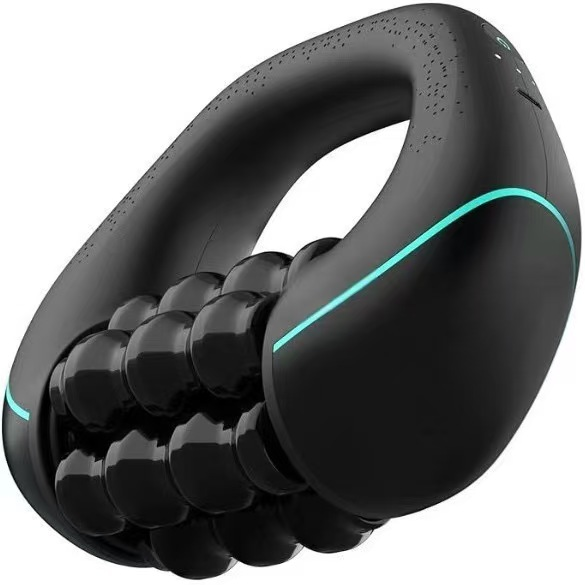
Most people underestimate how much daily abuse their gear actually goes through. A backpack tossed onto concrete, a phone case sliding across asphalt, a jacket scraped against brick walls — all of that friction and impact adds up fast. The smart move is to look past the glossy surface and ask a simple question: what happens when this thing gets slammed, dropped, or dragged? Fabrics with a tight weave and high denier count, or polymers with built-in flex memory, tend to shrug off punishment that would shred cheaper alternatives.
Then there's the matter of edge wear and tear. Corners, seams, and high-contact points always fail first. If a material can't handle repeated bending or scraping at those stress zones, it doesn't matter how strong the middle is. Look for reinforced stitching, double-layer patches, or rubberized rims that absorb shock instead of transmitting it. A good test is to press your thumbnail into the surface — if it leaves a permanent mark, imagine what a set of keys or a rough floor will do over six months.
Finally, think about recovery. Some materials get ugly after one bad scrape, while others develop a patina that actually looks better. Full-grain leather and certain waxed canvases take a beating but still keep their character, whereas cheap vinyl cracks and peels. The goal isn't just survival; it's looking like you chose something that was meant to be used hard, not babied. Pick materials that age like a good tool, not a disposable wrapper.
Tolerance Stacking: The Hidden Geometry of Durability
Every manufactured part carries a whisper of imperfection, a deviation from its nominal blueprint that grows louder when components assemble. Tolerance stacking is the quiet accumulation of these micro-variations across mating surfaces, where a ±0.05 mm gap in one flange and a ±0.03 mm drift in a bearing seat can conspire into an assembly that binds, rattles, or fails prematurely. Engineers who ignore this invisible geometry often discover it only through field returns, when the math of small numbers becomes the physics of broken systems.
The durability of a product is not decided by the single tightest tolerance, but by how tolerances interact under load, temperature, and vibration. A shaft that slides perfectly at 20°C may seize at 80°C because thermal expansion eats the clearance that tolerance analysis assumed was safe. Worst-case stacking treats every part at its extreme, yielding designs that are over-constrained and costly; statistical stacking accepts risk but demands real process data. The hidden geometry lies in choosing the right model—not just the right numbers.
Practical tolerance stacking starts with a loop diagram: trace the chain of dimensions from one functional surface to another, assign each link a distribution, and solve for the gap or interference. But seasoned designers also ask what the assembly should feel like, not just whether it fits. A hinge with zero clearance may pass inspection yet feel gritty after a month of dust ingress; a snap-fit with too much stack may look fine on the bench but crack after the first thermal cycle. Durability lives in that margin between satisfying a drawing and surviving the real world.
Real-Hand Testing Beats Lab Reports
Lab reports have their place, but they can't tell you how a product feels after forty minutes of actual use. Spec sheets and controlled measurements miss the small frictions: a seam that digs in, a button that's slightly out of reach, a grip that turns slippery when your palm warms up. Real-hand testing fills that gap. It's not about dismissing data, it's about adding the layer that only hands-on time can reveal.
When we test with real hands, we drop the product, pick it up a hundred times, use it in bright sun and low light, and hand it to people with different hand sizes. That's when the truth shows up. A tool that balances perfectly on a lab bench might feel top-heavy after twenty minutes in the field. A fabric that passes abrasion tests might still cause irritation after a full day. These are the details that don't always make it into a chart.
That's why we trust real-hand testing more than any single lab report. It gives us confidence in how something actually behaves in everyday life, not just in ideal conditions. If a product survives our hands-on process and still feels good, it's far more likely to work for you too.
Grip Design That Prevents Fatigue Before It Starts
The contour of this grip follows the natural curve of a relaxed hand, so your fingers settle into place without needing to clamp down. A slight swell near the palm fills the hollow that usually collapses under pressure, while the tapered end keeps the pinky from wandering. The result is a hold that feels less like effort and more like a resting posture.
Instead of relying on thick padding that softens over time, the surface uses a dense micro-texture to spread contact pressure across a wider area. That means no single hotspot takes the brunt of the load. Even after long sessions, the skin on your palm and the base of your thumb avoid that familiar raw or bruised feeling.
Fatigue often starts when your wrist bends to compensate for a grip that doesn't align. This shape keeps the hand in a neutral line, reducing the subtle muscle tension that builds before you notice it. By removing the need to constantly readjust, the design stops strain from accumulating in the first place.
Why Assembly Consistency Is the True Craft
The mark of a true craftsperson rarely lives in a single, flawless part. It emerges in how dozens of ordinary pieces come together time after time without drift. When every joint, fastening, and alignment lands in the same place, the object stops feeling assembled and starts feeling inevitable. That shift—from a collection of components to something cohesive—is where quiet mastery shows up.
Achieving that kind of consistency demands more than careful hands. It requires a stubborn refusal to accept "close enough." The best builders develop an internal reference for what correct feels like: the subtle resistance of a thread catching just right, the dull thud of a panel seating fully, the absence of play in a hinge. They measure less and sense more, yet their results stay within tolerances that machines would envy. This isn't repetition for its own sake; it's the discipline of making the hundredth unit indistinguishable from the first.
What customers notice isn't the effort, of course. They notice that the door closes with the same solid weight every time. They notice that two products bought years apart feel like siblings. That reliability—earned through unglamorous, consistent assembly—builds trust no marketing can replicate. In an age of fast prototyping and loose tolerances, consistency becomes the rarest form of craftsmanship.
FAQ
The real difference is inside the housing. High-end units typically use aircraft-grade aluminum drive shafts, precision bearings, and high-torque brushless motors. The outer shell often blends nylon with glass fiber for a solid feel and better heat dissipation. Cheaper models rely on plastic gears and inefficient motors that start getting noisy or locking up within months.
We run them for over 500 hours of continuous use, apply pressure at extreme angles, drop them from working height, and cycle them through temperature and humidity changes. If a unit survives full speed for 30 minutes without the motor overheating or battery performance dropping noticeably, it passes our internal standard.
Noise is not just about comfort; it reflects internal machining precision. A well-built brushless motor with proper damping can stay under 45 decibels, similar to a quiet library. If the gear mesh is even slightly off, the noise climbs quickly with use, and that same friction shortens the product's life.
Many brands only advertise capacity, but the discharge curve and protection circuit matter more. A good design keeps the percussion force stable even when the battery is down to 20 percent. Using 18650 or 21700 cells with a smart power management chip prevents overcharging and deep discharge, which extends the cycle life significantly.
It is critical. Handle angle, weight distribution, and grip texture determine whether you can hold the device one-handed with steady pressure. If the grip is too thick or the center of gravity too far forward, your wrist tires within minutes. We have physical therapists and athletes test prototypes until they can reach their back with an inverted grip comfortably.
From practical feedback, vibration stimulation can increase local blood flow and help release tight fascia. But it is not a medical device and cannot replace rehabilitation therapy. The key is whether the amplitude and frequency match the target muscle group, deeper glute work needs larger amplitude while neck and shoulders respond better to lower frequencies.
Check whether the amplitude spec is honest, listen for motor rattle, and ask if replacement parts are available. Many units look identical outside, but inside the circuit board and bearing grades are completely different. I would look for brands that publish internal structure diagrams or allow teardown reviews; that is a sign of confidence in their work.
Conclusion
Ask a seasoned engineer at a leading massage gun factory what separates a dependable device from a short-lived one, and the answer rarely starts with the motor. Precision shows up in quieter places: the way a piston is aligned within a few microns, the slight chamfer on a bearing seat, the consistent torque on a retaining ring. Tolerance stacking gets overlooked until a unit develops a rattle after two months. When every small variance compounds across twenty components, durability is decided long before the first switch-on.
Materials matter just as much as machining. The housing has to absorb repeated drops, sweat, and temperature swings without cracking, while internal dampeners need to keep foam-like elasticity through thousands of cycles. But lab reports only tell part of the story. Real-hand testing by physiotherapists and athletes uncovers issues no accelerometer can flag—numbness after ten minutes, a grip that forces the wrist into an awkward angle, or noise that feels harsh in a quiet room. That's why grip geometry gets shaped to keep the forearm relaxed and why assembly consistency is treated as its own craft: each unit should feel identical to the one before, no hidden looseness, no over-tightened screw. The best manufacturers treat that repeatability as a point of pride, not just a QC checkbox.
Contact Us
Contact Person: Hannah
Email: [email protected]
Tel/WhatsApp: +86 18266954198
Website: https://www.okmassager.com/