

OEM Gas Insulated Switchgear: Enhancing Power Distribution Efficiency
2026-08-11
As power grids evolve to meet rising demand, the need for efficient, compact, and reliable switchgear has never been greater. OEM gas insulated switchgear (GIS) is revolutionizing power distribution by eliminating the bulk and maintenance headaches of traditional air-insulated systems. But not all GIS solutions are created equal—enter Lugao, a brand that combines precision engineering with scalable OEM designs to help utilities and industries achieve unmatched performance. In this article, we’ll explore how Lugao’s GIS technology is setting new benchmarks in energy efficiency, safety, and long-term reliability.
Redefining Grid Reliability with Compact Switchgear Design
Modern power networks are under constant pressure to deliver uninterrupted service, even as they integrate renewable sources and face aging infrastructure. One of the most effective ways to answer this challenge is through compact switchgear design, which not only saves valuable space but also significantly boosts operational dependability. By engineering smaller, smarter units that can be deployed in tighter footprints, utilities are finding they can strengthen weak points in the grid without overhauling entire substation layouts.
Beyond the obvious spatial advantages, compact switchgear often incorporates advanced insulation and arc-quenching technologies that reduce failure rates. These innovations translate into fewer outages and lower maintenance demands, directly enhancing grid reliability. What makes the approach stand out is how it rethinks traditional switchgear architecture—moving away from bulky, air-insulated setups toward modular, gas-insulated or solid-insulated systems that are inherently more resilient against environmental stresses like humidity, pollution, and extreme temperatures.
The shift toward compact design also simplifies scalability and future-proofing. As load demands evolve, operators can insert or upgrade compact switchgear units with minimal disruption, avoiding the logistical headaches of large-scale retrofits. This flexibility, paired with real-time monitoring capabilities often built into modern compact units, turns switchgear from a passive component into an active asset that continuously safeguards network stability. In essence, redefining reliability isn't just about making equipment smaller—it's about embedding intelligence and ruggedness into the very core of the grid.
Streamlining Energy Distribution Through OEM Innovation
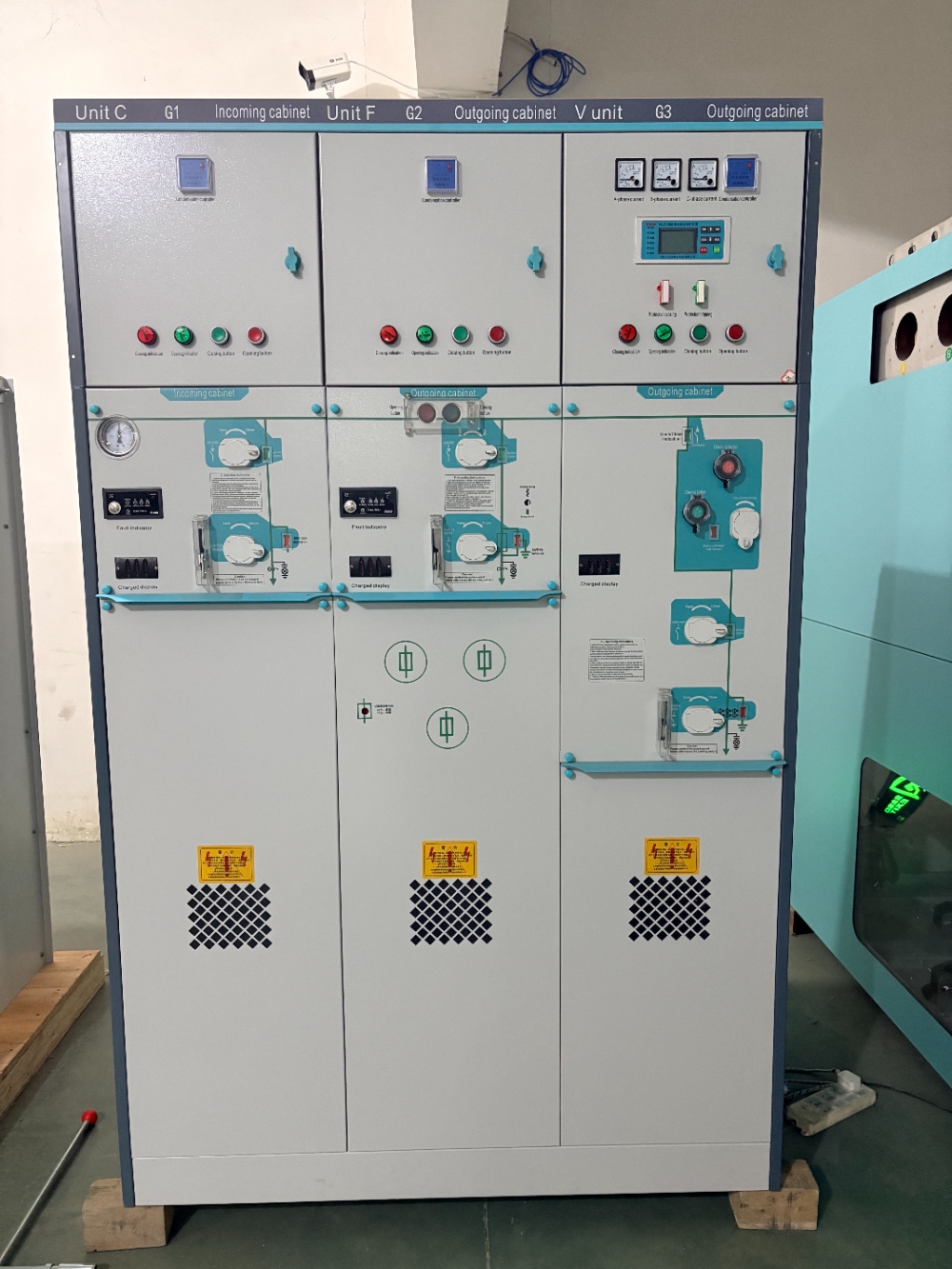
The energy sector is undergoing a quiet but profound transformation, driven not by flashy startups but by the original equipment manufacturers who have always supplied its backbone. These OEMs are rethinking distribution from the ground up, embedding smart sensors and adaptive controls directly into transformers, switchgear, and cables. Instead of waiting for centralized software updates or third-party add-ons, utilities now get hardware that actively monitors load, predicts failures, and reroutes power with minimal human intervention—right out of the factory. It's a shift from passive components to intelligent assets that continuously learn and adjust, taking much of the guesswork out of grid management.
This innovation isn't just about technology; it's about reshaping how energy moves from source to socket. Traditional distribution networks were designed for a one-way flow, but today's landscape, with rooftop solar, battery storage, and electric vehicles, demands a more dynamic exchange. OEMs are answering with modular, bi-directional devices that don’t care whether electricity is coming or going—they optimize it on the fly. A suburban street transformer, for instance, can now automatically dial down voltage during low-demand hours and push excess rooftop solar back into the network, all while keeping the whole system stable and safe. This kind of built-in adaptability might sound complex, but for the utility engineer, it often shows up as fewer alarms and a smoother waveform on the monitoring screen.
Perhaps most remarkably, these hardware-level improvements are unlocking new patterns of resilience without massive infrastructure overhauls. By hardening components against cyber threats at the firmware level and building redundant communications into the very wiring, OEMs are making distribution grids less vulnerable to both digital and physical disruptions. A flooded substation in a coastal town can now island itself, maintaining power locally from nearby solar arrays and batteries, while the rest of the grid isolates the fault. It's a quiet kind of revolution—no grand policy announcements or headline-grabbing projects, just smarter equipment doing what it was redesigned to do: keep the lights on with less fuss and far less waste.
Cost-Effective Power Management Without Compromise
Balancing budget constraints with reliable power solutions often feels like a tug-of-war. However, true cost-effectiveness isn't about cutting corners—it's about rethinking architectures from the ground up. By selecting components that deliver peak efficiency at typical load levels, and leveraging modular designs that scale with demand, you can avoid over-engineering while still meeting strict performance targets. This approach eliminates waste, lowers both upfront and operational costs, and ensures long-term stability without hidden trade-offs.
Intelligent control algorithms are the silent enablers of affordable, high-performance power systems. Adaptive voltage scaling, dynamic frequency tuning, and predictive load switching allow circuits to respond in real time to changing conditions. Rather than running flat-out at maximum capacity, these systems sip power during idle periods and ramp up only when necessary, preserving energy without sacrificing responsiveness. The result is a leaner thermal profile, extended component lifespan, and significantly reduced electricity bills—all transparent to the end user.
Procurement strategies also play a pivotal role. Building partnerships with suppliers who offer transparent pricing and end-of-life planning prevents costly last-minute redesigns. Additionally, incorporating backward-compatible topologies means that future upgrades won't require a complete system overhaul. When every design choice is scrutinized through the lens of total cost of ownership—not just the BOM price—it becomes possible to deliver a solution that embodies both rugged dependability and shrewd economy.
How Gas Insulated Technology Cuts Operational Losses
The shift toward gas insulated equipment in power systems is quietly redefining how utilities think about daily operations. By replacing air with pressurized sulfur hexafluoride (SF₆) or eco-friendly alternatives, these systems drastically shrink the physical footprint of substations while creating a sealed environment that keeps out moisture, dust, and salt. This inherent protection means that critical components like busbars, circuit breakers, and disconnect switches are no longer exposed to the relentlessness of ambient conditions. The result is a dramatic reduction in the kind of slow, cumulative damage that traditional air-insulated switchgear silently accumulates, day after day.
Beyond just shielding equipment, gas insulation fundamentally changes the maintenance rhythm. Air-insulated installations demand periodic cleaning, frequent insulation testing, and constant vigilance against partial discharge caused by contamination. With gas insulated designs, that cycle is all but broken. The sealed, inert atmosphere inside the enclosure maintains its dielectric strength for decades, essentially removing the need for invasive inspections. Fewer shutdowns for upkeep translate directly into lower operational costs and, perhaps more importantly, fewer chances for human error during maintenance to trigger unscheduled outages.
The financial impact shows up in quieter, less obvious ways too. Operational losses aren’t just about repair bills; they’re often hidden in the form of energy dissipated as heat, dielectric losses, or corona discharge. Gas insulated systems, thanks to their compact and shielded construction, exhibit significantly lower leakage currents and almost negligible corona effects even at high voltages. This efficiency gain might seem marginal on paper, but when spread over a 30-year asset lifetime and multiplied across an entire network, it chips away at losses that would otherwise eat into margins without ever showing up on a fault report.
Urban Substation Efficiency in a Smaller Footprint
Modern cities demand power infrastructure that keeps pace with density without devouring valuable real estate. Compact urban substations are meeting this challenge through intelligent design that packs transformers, switchgear, and protection systems into a fraction of the space once thought necessary. By using gas-insulated switchgear (GIS) instead of traditional air-insulated setups, these substations shrink dramatically while boosting reliability and safety. The sealed, maintenance-friendly units can be tucked into basements, retrofitted into existing buildings, or even integrated beneath public plazas, turning dead urban corners into quiet, efficient energy hubs.
The efficiency gains aren’t limited to square meters saved. Advanced thermal management and low-loss components inside these compact substations reduce energy waste, which means less heat to dissipate and no need for large, noisy cooling arrays. Digital monitoring systems continuously optimize load flows and preempt faults, squeezing more capacity from the same footprint. This agility lets utilities defer costly grid expansions and serve rising demand from electric vehicles and heat pumps without disrupting the cityscape.
But the real genius lies in blending into the urban fabric. Architects and engineers now collaborate to screen substations with green walls, disguise them as art installations, or bury them completely beneath parks. The result is a decentralized, resilient grid that whispers power into the neighborhoods without a visual or environmental footprint. As cities densify, these invisible workhorses will remain essential—proving that true efficiency doesn’t just save space, it respects the rhythm of urban life.
Pre-Assembled Units for Smarter Network Engineering
In an industry where time is the ultimate currency, pre-assembled units are rewriting the rules of network deployment. Gone are the days of sprawling equipment racks and the meticulous, error-prone dance of cabling each component on-site. Instead, these factory-built blocks arrive with critical infrastructure—switches, patch panels, power distribution, and cable management—already integrated and tested as a cohesive system. The shift moves the bulk of engineering labor from chaotic construction zones into controlled manufacturing environments, where standardization meets precision. This isn’t just about saving hours; it’s about eliminating the hidden costs of inconsistency and rework that quietly erode project timelines and budgets.
Beyond simple convenience, pre-assembled units offer a cognitive reprieve for network engineers. By abstracting the repetitive physical build, they free up skilled professionals to focus on architecture and optimization—the kind of work that actually differentiates a network’s performance. Imagine a world where site surveys and design blueprints directly feed into a modular product, stripping out weeks of on-site puzzle-solving. This approach also enables a fascinating layer of proactive remote testing: because the unit is validated before it leaves the factory, the inevitable gremlins of field integration are dramatically reduced. The result is a quieter installation, fewer frantic midnight calls, and a system that behaves predictably right out of the crate.
Perhaps the most underappreciated advantage lies in how these units reshape team dynamics and project risk. When a single vendor takes ownership of the assembled subsystem, the finger-pointing between cable contractors, hardware installers, and integrators disappears. The unit becomes a discrete, warrantied product rather than a chaotic accumulation of separately sourced components. This shift in responsibility doesn’t just streamline troubleshooting; it fundamentally changes procurement and logistics. Organizations can now stock standardized building blocks for rapid expansion or disaster recovery, turning what was once a custom-build crisis into a plug-and-play solution. It’s a quiet revolution, but one that makes the network feel less like a construction project and more like a strategic asset.
FAQ
OEM gas insulated switchgear (GIS) is a customized, factory-built switchgear solution tailored to a manufacturer’s specifications, using SF₆ or alternative insulating gases to enclose all live components. Unlike standard GIS, which comes in fixed designs, OEM versions allow utilities to integrate specific functional requirements, form factors, and protection schemes directly into the sealed, compact structure, reducing on-site assembly and ensuring seamless compatibility with existing grid infrastructure.
It minimizes electrical losses through shorter bus paths and optimized conductor geometries inside the sealed enclosure, while its compact footprint cuts down on land use and civil works. By moving to a digitally monitored, factory-tested system, you eliminate many common sources of downtime—like environmental contamination and human error during maintenance—so asset utilization rates climb without adding new infrastructure.
The sealed, gas-insulated design virtually eliminates exposure to humidity, dust, and corrosive agents, which means components last decades longer with near-zero contact wear. You also save on lifetime operational costs because there’s no need for regular cleaning, insulation testing, or building climate control; add in the space savings—up to 90% smaller footprint—and the total cost of ownership often tips in favor of GIS even before factoring in reliability gains.
It’s the go-to choice where space is at a premium—underground substations, offshore platforms, dense urban areas, and mountainous hydropower plants. Additionally, extreme environments like coastal salt-spray zones, polar regions, or high-altitude installations benefit from the sealed housing that keeps performance consistent regardless of outside conditions, something air-insulated gear simply can’t guarantee.
Instead of periodic physical inspection cycles, maintenance becomes largely condition-based thanks to embedded partial discharge sensors, gas density monitors, and thermal imaging ports. Typical interventions might only involve checking gas pressure every few years, with major overhauls stretching beyond 30 years. When work is needed, the plug-and-play modular bays allow replacement of entire functional units in hours rather than days, drastically reducing outage windows.
SF₆ provides exceptional dielectric strength and arc-quenching capability, but its high global warming potential has driven development of alternative gas mixtures like fluoronitrile‑based g3 and dry air/vacuum interruption. Many OEMs now offer SF₆-free GIS up to 145 kV with identical ratings and dimensions, so operators can meet sustainability targets without sacrificing compactness or reliability—an option that’s increasingly demanded in new European and Asia-Pacific installations.
It typically starts with a system study where the manufacturer integrates your protection philosophies, communication protocols, and space constraints into the basic GIS design. You can specify everything from busbar ratings, cable entry positions, and disconnector layouts to advanced digital interfaces like IEC 61850 integration. The result is a device that arrives on site as a pre‑commissioned, fully type-tested package, requiring only external connections—eliminating the unpredictability of on-site wiring and commissioning.
Beyond the obvious arc‑flash protection from having all conductors sealed in grounded metal, the design inherently prevents incorrect operational sequences through mechanical and electrical interlocks. Fire risk is near‑zero because there’s no flammable oil or exposed insulation, and the gas monitoring system provides early warning of any pressure loss before it becomes a dielectric issue, giving operators a safe window to respond rather than facing a sudden catastrophic failure.
Conclusion
OEM gas insulated switchgear (GIS) is transforming power distribution by packing high-voltage components into a sealed, compact system that dramatically improves grid reliability. Unlike conventional air-insulated setups, these units use sulfur hexafluoride or alternative insulating gases to shrink equipment footprint while boosting dielectric strength, making them ideal for urban substations where space is at a premium. The reduced size doesn’t mean a trade-off in performance—factory-assembled modules arrive on site as pre-tested, plug-and-play solutions that cut installation time and minimize human error. By enclosing conductors and breakers in a controlled environment, gas insulated designs also shield critical parts from moisture, dust, and pollution, slashing the risk of flashovers and unplanned outages. This inherent ruggedness translates into fewer maintenance interventions, letting utilities redirect resources toward network expansion instead of constant repairs.
Beyond reliability, OEM innovation streamlines energy distribution by optimizing dielectric cooling and arc-quenching properties of the insulating medium, which lowers energy losses during switching and continuous operation. Such efficiency gains directly chip away at operational costs, enabling leaner power management regimes without sacrificing safety or compliance. The modular, pre-engineered nature of GIS aligns with modern engineering demands—smarter network design becomes possible when standardized cabinets can be scaled up or rearranged with minimal civil works, supporting incremental grid modernization rather than disruptive overhauls. This approach proves particularly valuable in dense cityscapes and industrial parks where retrofitting legacy stations is impractical. By integrating advanced monitoring and automated controls, OEM GIS units further refine energy delivery, allowing operators to pinpoint faults and reroute power in milliseconds, all while occupying a fraction of the land required by traditional switchyards. The result is a resilient, economically sound infrastructure that meets rising electricity demand without the compromises typically associated with compact hardware.
Contact Us
Contact Person: Doreen
Email: [email protected]
Tel/WhatsApp: 8618057712366
Website: https://www.liugaopower.com/