

OEM Shaving Gel Maker Secrets to Crafting a Standout Product Line
2026-08-20
Shaving gel aisles are crowded with copycats, but a few brands manage to make men pause mid-reach. The difference rarely comes from fancy packaging alone—it comes from the quiet engineering behind the formula. As a leading OEM shaving gel maker, Wilson has spent years decoding what transforms a generic gel into a product men actively seek out. What separates a standout product line from a forgettable one? The secrets aren't locked in a lab vault—they're in the way you approach texture, scent, lather, and skin feel. This post pulls back the curtain on the strategic choices that turn a private-label idea into a shelf-dominating reality.
Why Most OEM Shave Gels Fail the 'Second Pass' Test
Most OEM shave gels are built for the first stroke, not the second. They explode into a thick, cushiony lather when you first pump them out, but that initial foam breaks down fast once it hits wet skin. By the time you go back for a second pass over your jawline or neck, the gel has turned thin and watery. There's no real slip left, and the blade starts to drag across unprotected skin, leading to razor burn or missed patches.
The core issue is in the formula. These off-the-shelf gels often rely on cheap, fast-dissolving surfactants that create big bubbles for show but little long-term stability. They also skimp on high-quality lubricants like glycerin or silicone-based compounds, which are what maintain a slick barrier between the blade and your skin. Without enough of those, the second pass becomes a dry scrape rather than a smooth glide.
Better shave gels solve this by adding film-forming polymers or plant-derived lubricants that don't vanish after the first rinse. These ingredients bind to the skin and stay slick even when the visible foam has mostly cleared. If an OEM gel can't hold up on the second pass, it's usually a sign the manufacturer cut corners on the expensive components that actually matter for a comfortable shave.
The Ingredient Sourcing Question Your Manufacturer Hopes You Won't Ask
Most brands treat ingredient sourcing like a box-ticking exercise. They ask for a certificate of analysis, maybe a spec sheet, and move on. But the real question that separates a reliable supply chain from a house of cards is far more uncomfortable: where exactly did each raw material come from, and how many hands did it pass through before it reached your production floor? Manufacturers rarely volunteer this because the answer often reveals a patchwork of brokers, spot-buying, and last-minute substitutions that no one wants to defend.
Pushing past the polished audit reports means digging into the actual transactional chain. Who owned the material at each step? Were the storage conditions consistent across those transfers? Did the supplier of record actually produce it, or were they just reselling someone else's inventory? When you start asking these granular questions, you'll notice how quickly a confident sales team starts hedging. That hesitation is your signal to walk away or renegotiate. A manufacturer with nothing to hide can usually produce batch-level traceability without a week of delay.
The value isn't just about avoiding adulteration or contamination, though that's reason enough. It's about knowing you won't be blindsided by a sudden reformulation because a hidden middleman changed the source without telling you. If your manufacturer treats this question as a nuisance instead of a routine part of onboarding, you're not buying a product—you're buying a liability with a friendly invoice.
How to Build a Scent Story Without Smelling Like Every Other Men's Aisle
Start by rejecting the idea that a masculine scent has to smell like a shower gel or a gym bag. The men's aisle is a wall of near-identical blue fragrances built on ambroxan and calone, all promising freshness but delivering sameness. To build your own scent story, pick a specific emotional moment instead of a vague vibe. Think about the smell of rain hitting hot pavement after a summer storm, the faint metallic tang of old cinema seats, or the powdery green of tomato leaves crushed between your fingers. Those are memories, not marketing categories.
Next, assemble notes that don't usually share a shelf. Skip the predictable cedar-and-bergamot opening and reach for ink, hay, immortelle, or cold iris root. A scent story needs tension: pair something sharp and green with something warm and waxy, or let a mineral note rub against a skin-like musk. Borrow freely from unisex and classic feminine perfumery. If someone leans in and asks what you're wearing because they genuinely can't place it, you've already escaped the men's aisle.
Finally, let the scent evolve on your skin over hours, not seconds on a paper strip. Apply after a light unscented moisturizer to slow the evaporation of top notes. Pay attention to how the drydown behaves when you're warm, tired, or caught in the rain. A well-built scent story unfolds in chapters: the opening should hook, the heart should reveal an unexpected facet, and the base should leave a quiet trail that lingers like a half-remembered conversation.
The Viscosity Sweet Spot That Separates Premium Lather from Runny Mess
A thick, sluggish base won't whip into anything worth spreading, and a watery one collapses before the second pass. The sweet spot sits somewhere between heavy cream and warm honey—viscous enough to cling to the brush, yet fluid enough to trap air when worked. Most premium formulas land around 8,000 to 15,000 centipoise at rest, then shear-thin dramatically during agitation. That drop lets the lather bloom fast without turning into sudsy soup.
What that middle zone actually buys you is bubble architecture. When viscosity is dialed in, the film around each air pocket stays elastic long enough for thousands of tiny, uniform cells to stack into a dense, cushiony foam. Run too thin and those walls burst almost immediately, leaving a frothy collar that dries to nothing. Run too thick and the bubbles struggle to separate, producing a paste that smears rather than lifts. The result is a lather that sits on the skin like a wet clay mask instead of a slick, protective layer.
You can spot the balance without a viscometer. Scoop a small amount between thumb and forefinger, then pull them apart slowly. If the strand snaps cleanly under an inch, it's likely too thin. If it stretches like melted mozzarella without releasing, it's over-thickened. The ideal product forms a short, clean break at about two inches and leaves a faint shiny trail on the skin—a sign the surfactant network is tight enough to hold water but open enough to let air in. That's the difference between a lather that collapses under the razor and one that stays put through a full three-pass shave.
Packaging That Speaks 'Barber Shop' Instead of 'Budget Bulk'
Walk into a real barber shop and you’ll notice the details that scream craft: vintage apothecary bottles, amber glass, paper labels with a slightly rough texture, and typefaces lifted from hand-painted signage. When your beard oil or pomade arrives in packaging that mimics those cues, it stops being just another product on a shelf. Instead, it becomes a small ritual object—something a man feels good leaving on his bathroom counter. Chunky plastic tubs and generic shrink-wrapped cardboard scream 'warehouse clearance.' A squat amber jar with a metal screw cap, a label that feels like thick cotton paper, and a simple twine wrap around the neck? That whispers 'barber chair, warm lather, straight razor.'
The difference isn't just aesthetic. It's about perceived value and the story your product starts telling before the cap is even unscrewed. Budget bulk packaging uses bright, cluttered graphics and cheap materials to shout 'lowest price.' Barber-shop packaging uses restraint—matte blacks, deep greens, cream labels, minimal wording—to imply that the product inside was made in small batches by someone who cares. Think of brands like Reuzel or Uppercut Deluxe: their tins and jars look like they could have been pulled from a barber's cabinet in 1955. That timeless feel pops on a modern shelf precisely because it refuses to compete on price. It competes on vibe.
If you want your grooming line to stand out, study the physical cues of old-school shops: textured kraft paper, foil stamping instead of glossy stickers, cork stoppers, brown glass, and typography that leans into slab serifs or condensed sans-serifs with hand-drawn quirks. Avoid anything overly sleek or techy—unless your brand is a modern barber shop, in which case you can balance raw materials with one clean, bold accent. The key is consistency. Every element, from the weight of the box to the sound the lid makes when it closes, should reinforce the idea that this isn't a commodity. It's a piece of the barber experience, bottled and sold for the man who understands the difference.
Small-Batch Testing: Getting Real Market Feedback Before You Commit to 10,000 Units
Most entrepreneurs get this backwards: they secure a factory, commit to a massive production run, then pray the market loves their product as much as they do. Small-batch testing flips that script entirely. By producing a limited quantity—often just a few hundred units—you put real product into real customers' hands without betting your entire runway on an unproven assumption. This approach isn't about playing it safe; it's about being smart with your early capital and learning what actually resonates before scale becomes a liability.
The feedback you collect during this phase is worth its weight in gold. Not the polite, filtered feedback from surveys or focus groups, but raw, unfiltered reactions from actual paying customers. Maybe they love the concept but hate the packaging durability. Perhaps the size runs smaller than expected, or the unboxing experience underwhelms. These are the details that only surface when someone has parted with their own money. Each piece of feedback becomes a precise adjustment point for your next iteration—something no amount of internal testing can replicate.
Run your small batch through multiple channels: a handful of local retailers, direct online sales, maybe a pop-up event or a niche trade show. The goal isn't to maximize revenue—it's to maximize learning. Track which channels attract the most engaged customers, listen to the questions people ask, and note where hesitation shows up. This data doesn't just protect you from ordering 10,000 units that collect dust; it gives you the confidence to scale when the time is right, knowing that your product, pricing, and positioning have already been battle-tested in the real world.
FAQ
The difference usually comes down to skin feel after rinsing and how well the gel holds its structure through temperature changes. A standout formula avoids that tight, squeaky-clean sensation and instead leaves a hydrated glide that doesn't collapse into foam too quickly during a shave.
Work backward from a very specific end user. If the target is men with coarse, curly facial hair, the gel needs extra slip and maybe a cooling agent that kicks in on the second pass. Adjusting the fragrance load, the clarity of the gel, and even the sound it makes when dispensed can all reinforce that custom feel.
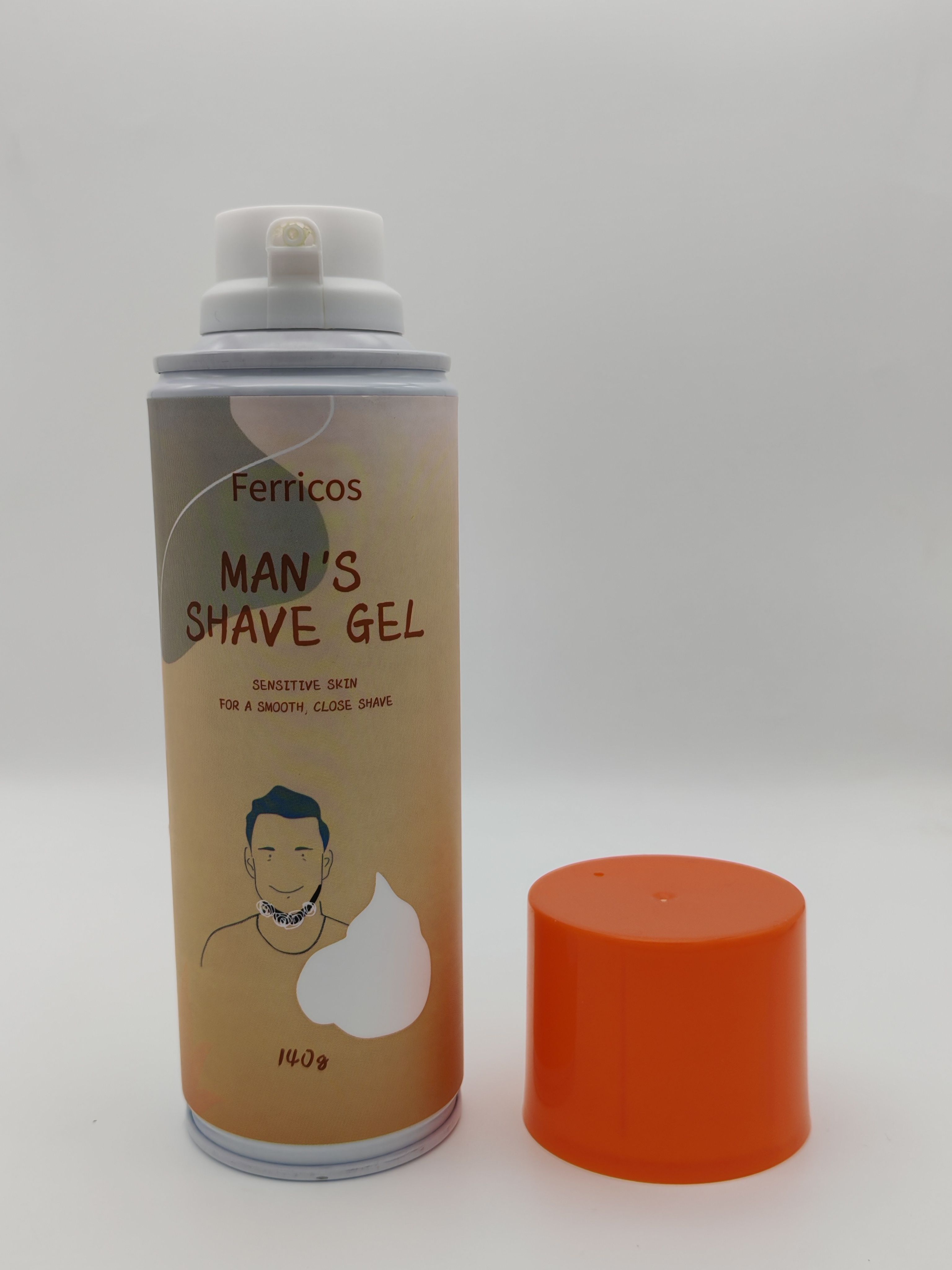
Packaging is the first physical interaction, so it should signal intent before the cap is even opened. A heavier can with a soft-touch actuator, a tinted gel visible through a clear base, or a nozzle that delivers a controlled ribbon rather than a messy blob can easily shift perceived value upward.
Yes, but the trick is to keep the benefit honest. Prebiotic oat ferment, fermented witch hazel, or a small amount of bisabolol can add a soothing story. Pair one hero ingredient with a familiar base of glycerin and aloe so the label stays readable and the product still performs.
They often avoid the obvious heavy woods and marine accords. Instead, they pick an unexpected but still masculine note like green tea, vetiver root, or cold clay, then keep it at a lower concentration. This creates a scent memory that feels curated rather than lifted from a mass-market deodorant.
You need stability testing under both high heat and freeze-thaw cycles, compatibility testing between the gel and the can lining, and real-world shave trials with different razor types. Skipping the can-lining check is a common way to end up with a formula that corrodes or separates months later.
They launch too many variants at once with only a color or scent change. A stronger approach is to offer three or four gels that each solve a distinct problem: one for sensitive skin, one for beard prep, one for head shaving, and maybe a travel size. This gives each SKU a reason to exist beyond shelf filler.
A good partner will run the existing formula through a blind panel and pinpoint where it loses against competitors. Often the fix is not a full reformulation but a change in propellant ratio, a reduction in foam density, or a swap of one emollient that alters the post-shave feel just enough to make it memorable.
Conclusion
Most OEM shave gels lose their slickness on the second pass, leaving skin raw and customers switching brands. Ask your manufacturer where the lubricating polymers and humectants actually come from—cheap glycerin blends behave differently than pharmaceutical-grade aloe or marine extracts. Instead of copying the same “ocean breeze” or “sport” scents crowding every men’s aisle, build a scent story around a specific memory: hot towels, sandalwood shavings, a cracked leather barber chair. Then nail the viscosity. Too thin and it drips off your fingers; too thick and it clogs the razor. Aim for a gel that holds a soft peak on the palm but spreads into a dense, cushioning lather without a fight.
Packaging should whisper “barber shop,” not shout “warehouse bulk.” Use matte-finish tubes or heavy glass jars with understated typography—think vintage apothecary labels, not neon starbursts. Before committing to 10,000 units, run a small-batch trial with 100 to 200 real shavers. Watch them use the product at the sink. Do they reach for more gel? Does the scent linger too long or fade too fast? Adjust the formula and the pack based on those observations, not just a star-rating survey. That last step separates a standout line from another private-label also-ran.
Contact Us
Contact Person: Simon
Email: [email protected]
Tel/WhatsApp: +86 13267966849
Website: https://www.wilsoncosmetic.com