

Pharmaceutical Air Compressor: How to Choose the Right One
2026-08-16
Choosing the right air compressor for pharmaceutical manufacturing isn't just about pressure and flow—it's about ensuring product purity and compliance. Many facilities overlook how critical compressed air quality is until a batch is compromised. This guide from Seize Air cuts through the noise, focusing on the key factors that actually matter: oil-free operation, contaminant control, and long-term reliability. Whether you're upgrading an aging system or designing a new cleanroom line, the wrong choice can lead to costly downtime and regulatory headaches. Read on to learn what separates a truly pharmaceutical-grade compressor from the rest of the pack.
Air Purity Standards That Leave No Margin for Error
In cleanroom certification, the distinction between passing and failing often comes down to a fraction of a micron. Standards such as ISO 14644-1 don't merely suggest allowable particle counts—they demand them under defined sampling conditions. Every cubic meter of air is accounted for, and the margin for error isn't a percentage; it's zero. A single oversight in sampling location or flow rate can invalidate an entire audit, turning a routine check into a costly repeat cycle.
What makes these standards unforgiving is their insistence on repeatability. The same room, tested by two different technicians using calibrated but slightly different equipment, must yield results within a narrow statistical band. This pushes facilities to treat air purity not as a vague goal but as a measurable, enforceable boundary. Routine monitoring becomes less about checking boxes and more about proving that every shift, every batch, and every door opening hasn't nudged the environment out of compliance.
For engineers and quality managers, this no-margin philosophy changes how they design and operate spaces. Redundancy in filtration, rigorous gowning protocols, and real-time particle counters aren't optional extras—they're the only way to stay inside lines that don't move. The standard doesn't care about your production schedule or your budget. It simply says: meet this level, every minute, or the room isn't clean.
What Oil-Free Really Means in a Sterile Manufacturing Space
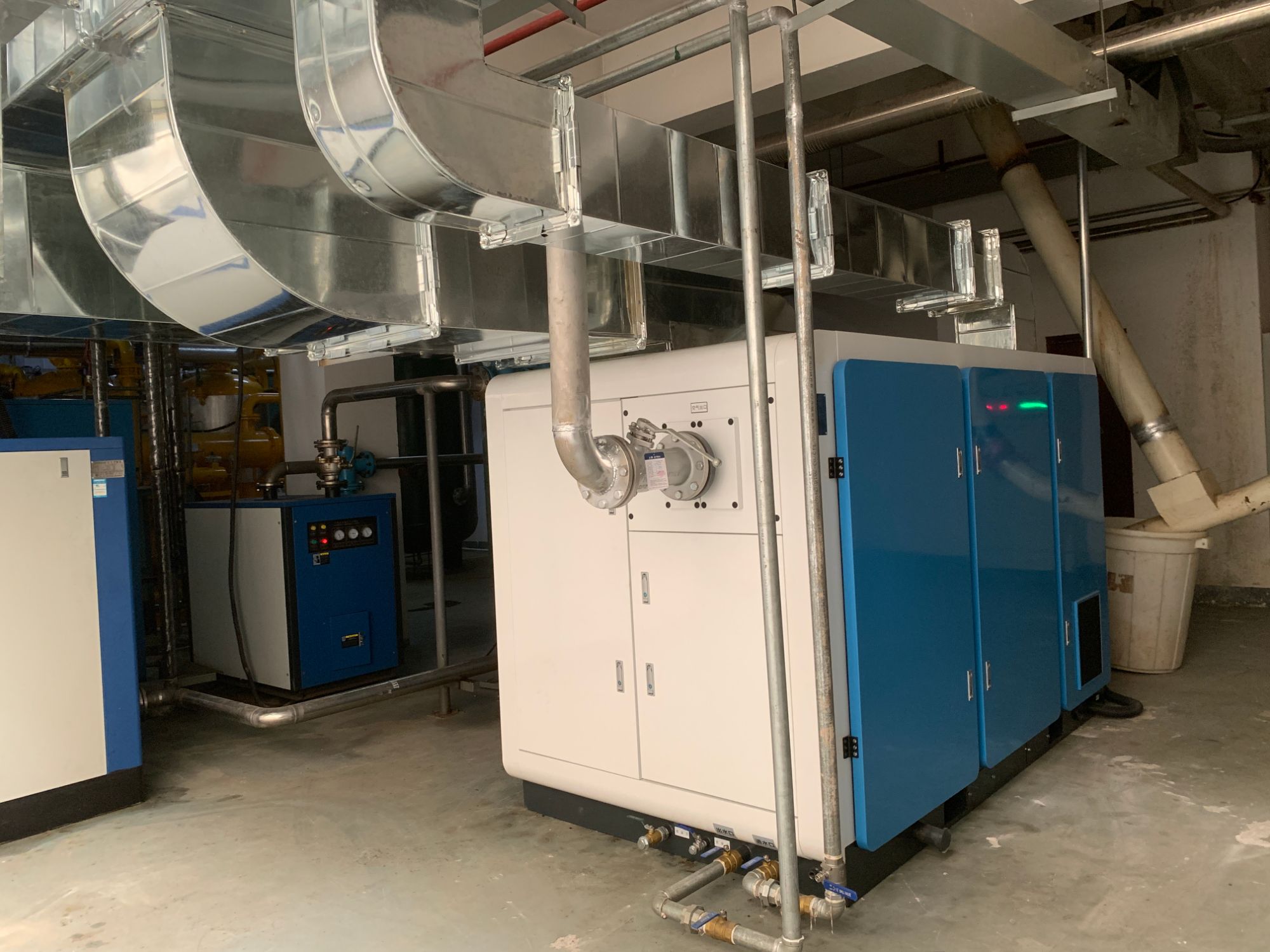
Walk through any sterile suite and you'll hear the word 'oil-free' thrown around like it's a simple checkbox. But in a controlled cleanroom, it's rarely about the absence of a single ingredient. Oil-free means every surface, connection, and moving part that touches the environment has been stripped of lubricants, greases, and hydrocarbons that could shed particles or vaporize under pressure. It's not just about purity — it's about how a single microscopic oil droplet can become a nucleation point for contamination.
The real challenge sits in the mechanical systems. Valves, actuators, and stainless-steel joints that traditionally rely on oil-based lubrication have to be redesigned or coated with dry film alternatives that won't outgas. Even the air compressors feeding a sterile line are often oil-free by design, using water or Teflon-coated internals instead of traditional lubricated pistons. This isn't a preference; it's a requirement when any airborne hydrocarbon can compromise batch integrity or trip particle counters.
But oil-free also changes the maintenance mindset. Without oil to mask wear, technicians hear and feel friction earlier. Pumps and seals fail differently, and preventive schedules shift from oil changes to surface inspections and dry lubricant recoating. In the end, claiming 'oil-free' means accepting a trade: fewer hidden contaminants, but a more exposed, honest mechanical reality that demands constant attention.
Right-Sizing Your Compressor Without Relying on Rules of Thumb
Many compressor selection guides still lean on quick estimates like horsepower per CFM or a fixed margin above nominal demand. Those shortcuts ignore how actual air demand shifts during a shift, the effect of pressure drop in piping, and the way a compressor's efficiency changes at part load. The result is often an oversized unit that cycles frequently, wastes energy, and wears out faster than a properly matched machine.
A better approach starts with measuring real air consumption over time—logging flow and pressure at the point of use, not just at the compressor. Look for peak demand duration, not just an instantaneous spike. That tells you whether the system needs a larger tank, a variable-speed drive, or a smaller fixed-speed compressor paired with storage. The goal is to match the supply curve to the load profile, not to cover a worst-case number that occurs for only a few minutes a day.
Once you have data, size for the control range where the compressor operates most efficiently. For a rotary screw, that often means staying between 60% and 80% of full load for fixed-speed units, or letting a VSD handle the lower bands. Avoid adding a blanket safety factor after the calculation; instead, verify the chosen model against actual pressure requirements and future expansion plans. That way, the compressor fits the system rather than the other way around.
Why Redundancy Is Cheaper Than a Contaminated Batch
A redundant production line or duplicate inspection step often looks like an unnecessary cost on the spreadsheet, but that math falls apart once you factor in what a contaminated batch actually destroys. It is not just the raw materials and labor you lose—it is the disposal fees, the line shutdown, the regulatory paperwork, and the recall that follows your product into the market. Most operators learn this the hard way: one failed batch can easily erase the annual savings of skipping that extra filter or backup sensor.
The real price of contamination is rarely visible on the day it happens. It shows up weeks later in customer complaints, lab retests, and damaged relationships with buyers who expect consistency. Redundancy, by contrast, is a fixed, predictable overhead—a second pump, a duplicate inspection gate, an extra sanitation cycle. You can budget for it. You cannot budget for the chaos of tracing a single microbial colony back through three shifts and four suppliers.
In practice, the plants that stay profitable are not the ones with the leanest lines; they are the ones that treat redundancy as cheap insurance. A $200 backup gasket or a $50 daily swab test is nothing next to a six-figure recall or a lost retail contract. When you compare the cost of building in a second check against the cost of explaining why your product made someone sick, the choice stops being a financial debate—it becomes common sense.
Recovering Heat to Cut Energy Bills Without Touching Air Quality
A lot of commercial buildings still dump warm exhaust air straight outside, then pay again to heat fresh air coming in. Heat recovery systems flip that equation. A plate exchanger or thermal wheel grabs the outgoing heat and uses it to preheat the incoming stream, often recovering 60–80% of the energy that would otherwise disappear through the roof. The savings show up quickly on gas or electric bills, especially in colder climates where heating runs for months.
What makes the approach worth the install is that it does not force a trade-off with ventilation rates. The two airstreams stay separate in most designs, so moisture, cooking fumes, or CO₂ still leave the building while the heat stays behind. Regular filter changes and occasional cleaning of the exchanger surfaces keep pressure drop low and prevent any drop in airflow. Done right, the building breathes exactly as it did before—just with less money leaving through the exhaust.
Maintenance Schedules That Make Audits a Non-Event
A well-designed maintenance schedule operates like a quiet backstage crew—it keeps everything running smoothly without drawing attention to itself. When auditors arrive, the last thing you want is a scramble to locate records or justify missed inspections. The trick is to embed maintenance tasks into the natural rhythm of daily operations rather than treating them as special events. For example, a facility that tags every equipment check with a simple digital timestamp and links it to a work order can pull up a year's worth of compliance data in seconds. Auditors don't need fanfare; they need clarity, consistency, and a trail that doesn't require explanation.
Most audit findings aren't caused by neglect—they're caused by gaps between what was done and what was documented. A maintenance schedule that makes audits a non-event should close those gaps automatically. Think of it as a system that records itself: sensors log runtimes, calendars trigger PM tasks, and completed checklists archive into a locked, time-stamped history. When an auditor asks for the last three years of fire pump tests, you shouldn't be digging through filing cabinets or hoping someone remembers to email a spreadsheet. Instead, the schedule should already have produced a clean, exportable report that matches the regulator's checklist line by line. That level of preparation doesn't happen by accident; it's built into the recurring rhythm.
Finally, the real value of a non-event audit comes from redundancy without burden. A good maintenance schedule layers automatic reminders, supervisor spot-checks, and a simple escalation path when a task slips. But it never asks people to do busywork. Each repeated task should have a clear why—whether it's a manufacturer's interval, a code requirement, or an operational history that shows wear. When the schedule is sensible, staff follow it naturally, and the audit becomes just another page in the same book they've been writing all along.
FAQ
It must produce air that cannot contaminate the product or the cleanroom environment. Oil-free compression is the baseline because even trace oil mist can ruin batches or clog sterile filters. Look for a unit rated for ISO 8573-1 Class 0 for oil and very low particle counts, with stainless steel or FDA-compliant internal surfaces where the air contacts wetted parts.
Start by listing every point-of-use item, from pneumatic valves and tablet presses to drying lines and packaging machines. Add their individual CFM requirements at the required PSI, then account for simultaneous demand and a 20 to 30 percent buffer for leaks and future expansion. Check the compressor's free air delivery rather than its theoretical displacement, and verify performance at your site's altitude and ambient temperature.
Moisture in compressed air encourages microbial growth, corrodes piping, and can make powders clump or stick to equipment. For most oral solid dose and sterile operations, you need a pressure dew point of -40 degrees Celsius or lower, achieved with desiccant dryers. For less critical utility air, a refrigerated dryer around +3 degrees Celsius may be acceptable if your risk assessment supports it.
Confirm the compressor package can meet ISO 8573-1 air purity classes for your specific process. The machine itself should carry CE marking where applicable and relevant ASME or PED certification for pressure vessels. If the air touches product or primary packaging, your qualification file will also need cGMP documentation, material certificates, and sometimes 21 CFR Part 11 compliant controls for data logging.
In almost every pharmaceutical application, oil-free is the safer choice because downstream filters cannot guarantee zero oil vapor, and a filter failure can contaminate an entire production run. Oil-lubricated machines might work for a separate non-product utility loop, like operating general exhaust dampers, but only if the lines are physically segregated and clearly labeled.
You are not just maintaining a machine, you are maintaining a validated system. Every filter change, dryer service, and calibration event must be documented and traceable to the batch. Planned downtime needs to fit within your production schedule, so choose a compressor with readily available spare parts, service intervals that match your shutdown windows, and remote monitoring that alerts you before air quality drifts out of specification.
That approach rarely survives a quality audit. Filters reduce particulates and oil aerosols, but they cannot remove oil vapor, carbon monoxide, or all microbial contamination, and a saturated filter can release trapped contaminants downstream. A standard unit also may have internal coatings or materials that outgas or shed particles. The cost of retrofitting is usually higher than buying a purpose-built pharmaceutical compressor.
Drying is what keeps your compressed air from becoming a breeding ground for microbes and a source of product degradation. Desiccant dryers with dew point monitoring are standard for critical applications, often with a redundant twin-tower setup so drying continues during regeneration. Point-of-use sterile filters or membrane dryers can provide extra protection right before the air contacts sensitive equipment.
Conclusion
Choosing a pharmaceutical air compressor goes far beyond picking a machine that can hit a pressure setpoint. The first non-negotiable is air purity: in a sterile manufacturing space, even trace oil vapor or particulate can compromise an entire batch, so the compressor must meet stringent standards without any margin for error. That is why "oil-free" has to mean true oil-free throughout the air stream, not just a lubricated machine with downstream filtration. A genuinely oil-free compressor design removes the risk of contamination at the source, which is the only way to keep a cleanroom truly clean. Right-sizing is equally critical, and it should never rely on rough rules of thumb that often lead to oversizing or undersizing. Instead, the compressor needs to match the actual demand profile, including peak loads and future expansion, because a poorly sized unit will either waste energy or starve critical processes.
Beyond sizing, smart buyers plan for redundancy because a single point of failure can mean scrapping a contaminated batch that costs far more than a backup compressor. Heat recovery is another often-overlooked lever: modern units can capture compression heat to cut facility energy bills without altering air quality, giving you a payback that operating budgets will notice. Finally, a maintenance schedule that is designed for the pharmaceutical environment—with clear documentation and predictive intervals—turns audits from stressful events into routine sign-offs. In short, the right pharmaceutical air compressor is not the one with the biggest brochure specs, but the one that integrates purity, reliability, and energy recovery into a system that supports sterile production day after day.
Contact Us
Contact Person: Mia
Email: [email protected]
Tel/WhatsApp: +86 19821985894
Website: https://www.seize-air.com