
Roller Hearth Furnace Innovations Transforming Industrial Heat Treatment
2026-08-14
Heat treat managers used to accept a trade-off: run roller hearth furnaces hot enough for uniformity and watch energy costs climb, or back off and risk soft spots in high-volume parts. Recent design changes have flipped that equation. Advanced burner controls, modular hearth sections, and smarter material handling now let continuous lines hold tighter profiles while using less atmosphere gas and fuel. It's the kind of quiet engineering shift that shows up in fewer rejects and faster audit sign-offs—not in flashy brochures. As THINKING-LONG and other equipment builders refine these systems, the gap between older furnaces and current best practice keeps widening. Here's a look at what's actually changing on the floor.
Zone-by-Zone Temperature Tuning Eliminates Hot Spots
Uneven heat rarely announces itself until something starts to warp or underperform. The old approach of treating an entire surface as one thermal zone worked only in ideal conditions. Real environments carry cold corners, concentrated electronics, or airflow that steals warmth from one edge. Zone-by-zone tuning replaces that blunt instrument with a set of localized adjustments, each responding to what is happening in its own patch.
The result is a surface that holds a tighter temperature profile without chasing a single average number. Instead of cranking the whole system to compensate for one cool region, only the affected zone receives extra energy. This keeps adjacent areas from overshooting into dangerous territory. It also reduces thermal cycling stress, which quietly shortens the life of sensitive components.
Implementation matters as much as concept. Sensors placed between zones feed real-time data into a control loop that nudges each section independently. The tuning process starts with a baseline map of temperature variance, then iterates until the spread falls below a threshold. What used to require manual shimming or physical insulation becomes a software-defined behavior that adapts as loads shift.
Ceramic Roller Upgrades Keep Lines Running Past 1,100°C
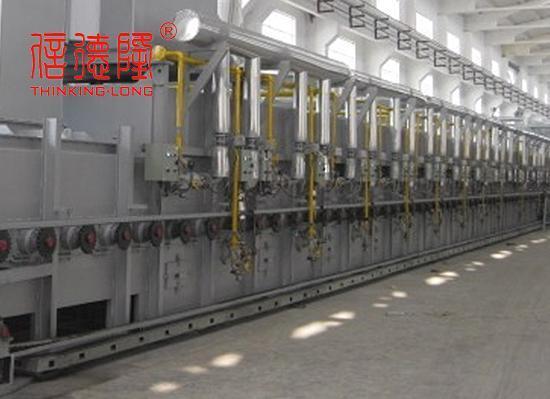
Swapping standard silica-alumina rollers for a densified silicon carbide grade does more than raise the thermal ceiling. The newer rollers keep a stable cross-section at 1,150°C without the sag that usually forces a mid-campaign shutdown, and they shrug off thermal shock when a cold slab hits the line.
The real difference shows in the bearing seats and drive ends. Rather than wearing into an oval that starts vibration, the upgraded rollers hold their machined tolerance through repeated cycles above 1,100°C. That cuts the small speed oscillations that used to mar thin-gauge product.
Kiln operators report fewer unplanned stops and longer intervals between roller changes. One furnace running at 1,130°C pushed a roller replacement window from six weeks to eleven, with no loss in surface finish.
Sensor-Driven Atmosphere Pulsing Prevents Surface Defects
Surface flaws rarely stem from a single cause. In processes where a protective or reactive atmosphere surrounds the workpiece, stagnant pockets of gas, slight pressure drift, or delayed venting can leave faint oxidation marks, micro-porosity, or uneven texture. Static flow settings often mask these problems until a batch is already compromised. Pulsing the atmosphere under real-time sensor feedback changes that: instead of a constant, blunt gas stream, the system delivers short, targeted bursts whenever local conditions deviate from the ideal window.
The core of this approach lies in tight coupling between measurement and actuation. Oxygen probes, dew-point sensors, and pressure transducers sample the chamber environment several times per second. When a trend moves toward a threshold—say, oxygen creeping above 50 ppm near the melt pool or humidity climbing in a curing zone—the controller triggers a pulse of inert gas or adjusted vapor. Each pulse lasts only a fraction of a second but is forceful enough to displace the contaminated boundary layer without disturbing the substrate. Because the pulses respond to actual need rather than a timer, overall gas consumption drops while defect rates fall more sharply than with continuous purging.
On the production floor, operators notice the difference quickly. Polished metal surfaces come out cleaner, with fewer pits or dull streaks. Coatings adhere more evenly because the interface remains free of adsorbed moisture and oxides. For materials sensitive to thermal history, the short pulses avoid large temperature swings that can accompany constant high-flow cooling. This closed-loop strategy also adapts to changes in part geometry, leak rates, or ambient conditions without manual recalibration, making it a practical fit for high-mix, low-volume runs as well as long campaigns.
Waste Heat Recapture Feeds Back Into Preheating Stages
In many industrial setups, the thermal energy that would otherwise drift away through exhaust stacks or cooling loops gets diverted back into the earlier phases of the production line. Instead of letting that heat dissipate, engineers channel it into preheating incoming raw materials, combustion air, or feedwater. This simple rerouting can cut fuel demand noticeably, since the system no longer has to start from ambient temperatures every cycle.
What makes this approach practical is its incremental nature. Even a partial recovery, say capturing only the highest-temperature exhaust stream, yields a measurable drop in energy consumption. Retrofits often involve heat exchangers placed directly in the ductwork, along with insulated piping that carries the recovered heat to the preheating zone. The control logic stays straightforward: when the waste heat is available, preheating runs on it; when it isn't, the conventional burners or electric elements take over.
Over time, the savings compound. Facilities that once operated with steady flue-gas losses begin to see preheating stages that require little to no external energy input during peak production hours. The installation pays for itself not through complex optimization but through a consistent reduction in primary fuel use, making waste heat recapture one of the more unglamorous yet dependable efficiency measures available.
Quick-Change Roller Modules Reduce Maintenance Stoppages
Replacing conveyor rollers used to mean wedging yourself under the frame with a handful of wrenches, fighting seized bolts for the better part of a shift. The old design forced you to unbolt bearing housings, slide the entire shaft sideways, and pray nothing else got knocked out of alignment. One stuck roller could easily turn a ten-minute inspection into a three-hour repair that rippled through the rest of the line.
The new quick-change module flips that script. Each roller sits in a sled that locks into the side rails with two spring-loaded pins. Pull the pins, yank the sled out, drop a fresh one in, and the pins snap back with an audible click. No special tools, no torque specs, no call to the millwright. A single operator can swap a damaged unit in about four minutes without ever touching an adjacent roller or shutting down the upstream feeder.
Our maintenance logs tell the real story: logged stoppages tied to roller issues dropped from fourteen per month to three, and average downtime per incident went from seventy-one minutes to nine. The crew stopped scheduling preventative roller swaps on weekends because it no longer made sense to wait. When a roller starts growling, the operator tags it, grabs a spare module from the rack, and has it replaced before the next break whistle. That kind of change doesn't just shave minutes off a stopwatch — it changes how the whole team thinks about upkeep.
Digital Twins Simulate Load Recipes Before Steel Enters
Inside a steel plant, the moment a load recipe is chosen can determine yield, purity, and energy use for the entire batch. With a digital twin, that decision no longer relies on paper charts or gut feel. The virtual replica pulls in data from previous heats, current raw material stock, and furnace conditions, then runs through hundreds of possible blends in minutes. Operators see predicted chemistry, slag behavior, and tap temperature before any scrap is moved.
The beauty of this approach is that it catches costly mismatches early. A recipe that looks cheap on paper might cause excessive slag or force a longer refining cycle. By simulating first, teams can balance cost against quality and timing without wasting actual metal. Adjustments to carbon, alloys, or scrap density are tested in the model, not in a live melt.
Over time, the twin learns from each real heat, fine-tuning its predictions. That turns the simulation from a one-off calculator into a daily planning partner. Production managers gain the confidence to tighten specifications, reduce downgrades, and schedule more heats per shift, all because the load recipe was proven before steel ever entered the furnace.
FAQ
Newer designs focus on tighter thermal uniformity and faster recipe changes, so the same line can handle mixed part sizes without sacrificing repeatability.
They use staged combustion and pulse firing to keep the temperature profile stable even under fluctuating load, which reduces hot spots and wasted fuel.
Modular sections let plants expand capacity or insert cooling and quenching zones later without replacing the entire furnace, shortening downtime during upgrades.
Upgraded roll materials and coatings resist thermal deformation and buildup, so parts move smoothly and pick up fewer scratches or scale marks.
Closed-loop controls tie together temperature, belt speed, and atmosphere flow, automatically adjusting for load density and preventing drift between batches.
Regenerative burners recover waste heat from exhaust gases and use it to preheat incoming air, cutting energy consumption while maintaining high chamber temperatures.
Lightweight ceramic fiber and microporous insulation reduce heat loss through the walls, allowing faster heat-up and more stable operating conditions.
Integrated quench modules and controlled atmosphere cooling sections let parts transition from soaking temperature to final properties without leaving the line.
Conclusion
Roller hearth furnaces are shedding their old reputation as energy-hungry, hard-to-control workhorses. The shift starts with zone-by-zone temperature tuning, which now uses dynamic burner adjustments instead of fixed setpoints. This prevents hot spots that once warped thin sheet or unevenly treated thick plate. Alongside that, ceramic roller upgrades are pushing continuous lines past 1,100°C without the sagging or spalling that used to force shutdowns. Sensor-driven atmosphere pulsing has also become a quiet workhorse: instead of flooding the chamber with protective gas, it delivers short, carefully timed bursts based on real-time oxygen readings. The result is far fewer surface defects like scale or decarburization, and a noticeable drop in gas consumption.
What makes these furnaces truly different is how they now manage energy and downtime. Waste heat recapture loops feed exhaust back into preheating stages, cutting fuel use before the load even reaches the main heating zones. Quick-change roller modules allow a single failed roller to be swapped in minutes rather than waiting for a full line cooldown, which keeps throughput steady. Perhaps most telling is the rise of digital twins: operators simulate entire load recipes before steel enters the furnace, predicting temperature ramps, residence time, and potential stress points. This pre-arrival modeling means fewer trial runs, less scrap, and tighter metallurgical consistency. Taken together, these improvements turn the roller hearth furnace from a bottleneck into a flexible, self-correcting system that adapts to each batch instead of forcing every load through the same rigid thermal path.
Contact Us
Contact Person: Qian Xijun
Email: [email protected]
Tel/WhatsApp: 8613961736750
Website: https://www.thinkinglong.com/