

Shell Mold Casting: How Reliable Is This Precision Casting Process?
2026-10-10
Every foundry claims precision, but few processes earn the right to be called reliable. Shell mold casting sits in that rare intersection—tight tolerances, smooth finishes, and repeatability that heavy industries actually depend on. At Zhaoyuqi, we've seen how this method quietly outperforms conventional sand casting, yet many engineers still ask the same question: can you trust it for critical parts? This blog digs into the evidence, the limits, and the real-world performance behind the process.
Inside the Resin-Coated Sand Step That Sets Shell Molding Apart
The resin-coated sand step is where shell molding parts ways with conventional sand casting. Dry silica grains arrive at the molding station already wrapped in a thin phenolic resin film, not relying on clay or moisture for bond strength. The pattern plate is heated to roughly 250–300°C, and the coated sand is dropped or blown onto it. Within seconds, the heat melts the resin nearest the pattern surface, fusing the grains into a dense, rigid shell. This is not a slow drying process; it is a rapid thermal cure that locks the tool's contour with very little dimensional drift.
What truly sets this step apart is what happens after the shell reaches its target thickness. The uncured sand in the center is poured out, leaving a hollow form instead of a solid block. That hollow geometry changes everything: the mold is lighter, easier to handle, and far more permeable than a rammed green sand mold. It also gives shell molding an edge when casting thin-walled or finely detailed parts, because the shell's rigidity prevents pattern stripping damage and holds tolerances that bulk sand systems struggle to match.
Holding Tolerances Without Constant Adjustments on the Line
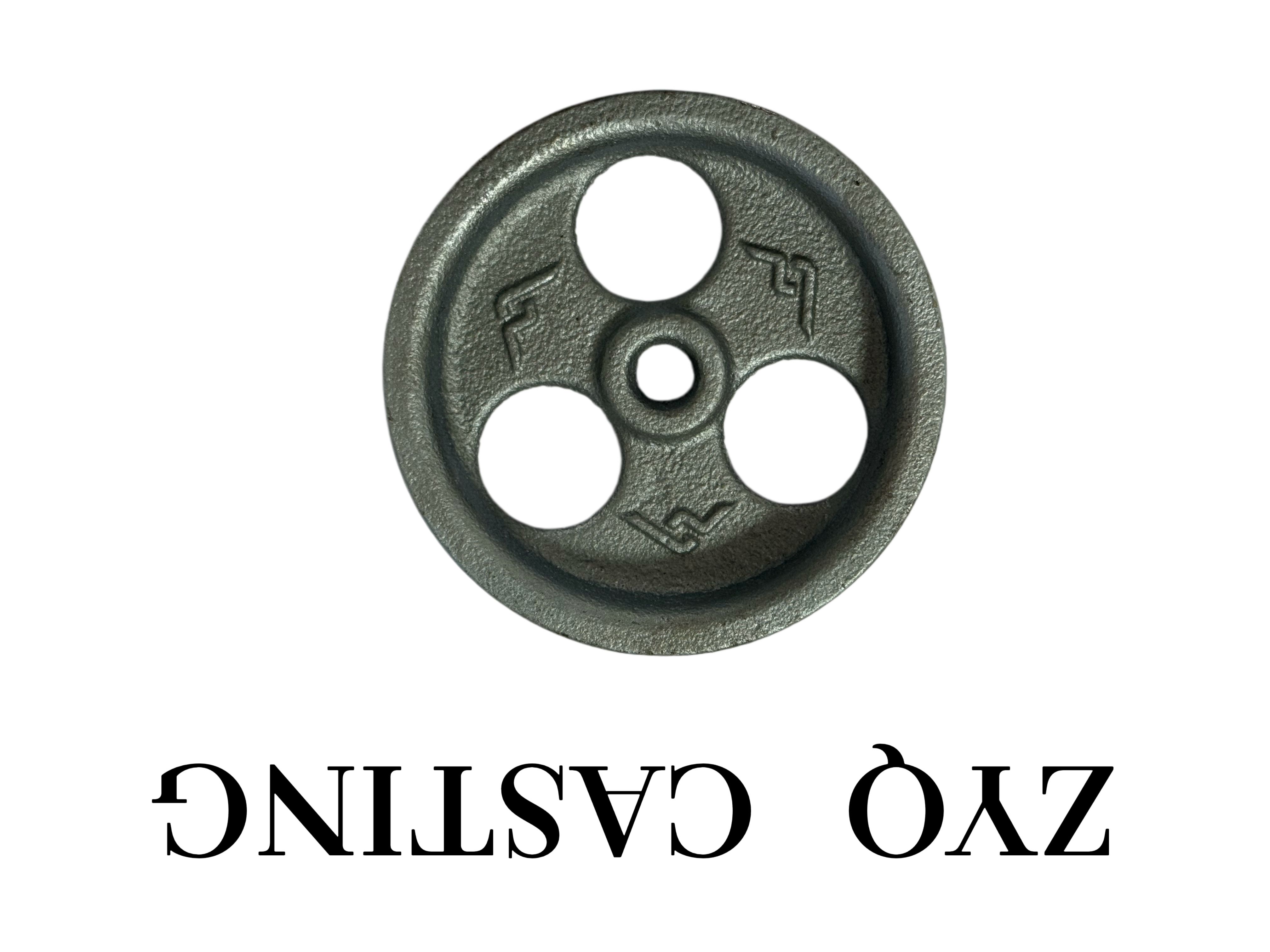
The real trick isn't more inspection or operator tweaks; it's removing the sources of drift before they reach the line. That means rigid workholding, balanced toolpaths, and thermal stability built into the machine and process. When the setup is repeatable within a few microns, tolerance holding becomes a property of the process rather than a daily firefight.
Many shops still rely on periodic manual offsets to chase dimensions, but that approach masks the root cause. Instead, monitoring spindle load, coolant temperature, and tool wear with automatic compensation can keep parts in spec over long runs. Pair that with cutting strategies that spread wear evenly across inserts, and you stop correcting the same error every half hour.
A well-designed process also accounts for material inconsistency. Batch-to-batch variation in hardness or stress can shift dimensions even if the machine is perfect. By qualifying incoming stock, adjusting speeds and feeds from the start, and using in-process gauging only as a confirmation rather than a crutch, the line holds tolerance with far fewer interventions.
Materials and Shapes That Get the Most from Shell Molds
Shell molds reward materials that solidify with a clean, predictable skin. Aluminum-silicon alloys like A356 and 413 pour smoothly into thin ceramic or resin-bonded shells, picking up fine detail without excessive turbulence. Copper-based alloys, especially silicon bronze, are trickier but worth the effort because the mold's smooth interior minimizes post-cast grinding. Stay away from high-shrinkage steels unless you've designed generous fillets and risers—the shell won't forgive that kind of stress.
Shape matters just as much. Thin-walled sections, intricate internal passages, and near-net profiles are where shell molds shine. Because the shell can be made from a disposable pattern, you can include undercuts, sharp corners, and fine lettering that would be impossible or costly in green sand. Hollow cores and curved cooling channels also come out surprisingly clean, as long as you maintain a uniform wall thickness to avoid hot spots.
For the best return, pair the right material with a shape that plays to the mold's strength. A ductile iron bracket with a wall thickness under 4 mm might crack during shakeout, but the same geometry in A356 aluminum will release cleanly and hold tolerances within a few thousandths. Think of shell molding as a precision tool: it doesn't make every casting easier, but for small-to-medium runs of complex, finely detailed parts, nothing else gets you as close to the final shape.
Quality Control Tactics That Keep Reject Rates Low
Scrap rates rarely improve by accident. Shops that hold rejects under one percent tend to share a habit of checking dimensions at the machine instead of waiting for a final inspection. An operator with a calibrated micrometer and a clear tolerance band can catch drift after the first few parts, not after a full shift has run. That immediate feedback loop costs minutes but saves hours of rework or remakes.
Another quiet lever is tool wear tracking. Many machining defects trace back to dull inserts or worn drills that nobody noticed until the surface finish went bad. By logging tool life in actual cutting time and swapping inserts on a schedule, you remove the guesswork. Some workshops keep a simple whiteboard near each cell: tool number, parts cut, next change due. It is low-tech, but it prevents the kind of variation that turns into a rejected batch.
Finally, incoming material checks deserve more credit. A heat number change or a different supplier can shift hardness enough to change chip formation and hole size. A quick hardness test or a first-article layout on new stock catches that before it becomes a production problem. None of these tactics are glamorous, but together they keep reject rates flat without adding layers of paperwork.
A Cost and Lead Time Reality Check Against Investment Casting
Investment casting often gets sold on precision, but the moment you add up actual lead times and per-unit costs across a production run, the picture shifts. Tooling alone can take weeks to finalize, and every design tweak after that resets the clock. Meanwhile, quoted piece prices rarely reflect the full burden of scrap rates, secondary machining, or the administrative overhead of chasing multiple suppliers.
When you compare like-for-like quantities, processes like CNC machining or metal additive manufacturing frequently close the gap on surface finish and tolerance while avoiding the upfront pattern and shell-building delays. The real question isn’t whether investment casting can hit a spec on paper, but whether the cumulative time from CAD to first article—and the true cost per conforming part—still makes sense for your order size and revision cadence.
A fair reality check means pulling your own historical data: average number of design iterations per project, actual rejection rates at incoming inspection, and the hours your engineers spend coordinating wax patterns and shell builds. Those numbers, not the brochure tolerances, determine whether investment casting is a competitive route or a legacy habit.
Where Shell Mold Castings Show Up in Real Equipment
Walk through any modern manufacturing floor and you'll spot shell mold castings hiding in plain sight. Hydraulic valve bodies, gear housings, and pump impellers rely on the process for their precise internal passages and smooth surface finishes. The method shines when parts need tight dimensional control without extensive machining, which is why agricultural machinery, construction equipment, and heavy-duty trucks all lean on shell molded components for reliable performance under load.
Look closer at mobile equipment and the pattern continues. Steering knuckles, differential cases, and suspension brackets benefit from shell molding's ability to hold complex geometries while keeping weight in check. Railway brake systems and marine engine parts also make use of the technique, since the fine grain structure reduces porosity and improves fatigue life in harsh operating environments. Even power tools and industrial pumps quietly depend on these castings to avoid premature failure.
The real advantage emerges in high-volume runs of heat-resistant and wear-prone parts. Exhaust manifolds, turbocharger housings, and furnace grates all come out of shell molds with less flash and better repeatability than traditional sand casting. Equipment designers favor the process when they need consistent wall thicknesses and crisp edges without secondary operations eating into the budget. That combination of precision and economy keeps shell mold castings embedded in everything from compactors to conveyor systems.
FAQ
The precision comes from the thin resin-bonded sand shell, typically 8 to 12 mm thick, which is cured against a heated metal pattern. Because the pattern is machined to exact dimensions and the shell has excellent dimensional stability during pouring, you get tighter control over wall thickness and less mold wall movement than conventional green sand. In practice, many foundries hold tolerances around ±0.005 inch per inch or better on small features, which is solid for a sand-based method.
Reliability depends heavily on gating design and venting, but the shell's smooth cavity and high green strength allow sections down to about 3 mm without excessive misruns. For complex cores, shell cores are often used inside other molds because they resist erosion and produce clean internal channels. However, very deep blind pockets may trap gas, so experienced pattern makers add vents or use multiple shell segments to manage that.
It shines with ferrous alloys like carbon steel, low alloy steel, ductile iron, and gray iron, though it also handles aluminum bronze and some stainless grades. Part weight typically ranges from a few ounces up to about 50 pounds, with larger castings becoming less economical because the shell itself must withstand the metal pressure. Thin-walled gear blanks, valve bodies, and camshaft components are common fits.
Surface finishes usually fall between 125 and 200 RMS microinches, which is much smoother than standard sand casting. Dimensional repeatability is often better than ±0.005 inch for small parts, and draft angles can be reduced to about 1 degree because the shell releases cleanly from the pattern. That means less stock left for final machining and fewer rejected parts due to surface defects.
Investment casting wins on ultimate surface finish and intricate detail, but shell mold casting is more robust for medium-volume production where you need good accuracy at a lower cost. Shell molds handle heavier sections and can be poured faster, reducing cold shut risks. The trade-off is that shell mold casting usually leaves a small parting line, whereas investment casting is seamless. For parts with simple to moderate complexity, shell mold is often the more consistent daily producer.
The biggest risks are shell cracking during handling, gas porosity from resin binder decomposition, and sand inclusions if the shell breaks during pouring. Over-curing can make the shell brittle, while under-curing leaves it weak and prone to distortion. Good process control on shell temperature, resin percentage, and pouring speed avoids most of these. Also, moisture pickup in stored shells is a silent killer because it causes steam defects.
It can be, but only if the pattern cost is justified. Typically, a metal pattern for shell molding costs more than a loose pattern for sand casting, but less than a wax injection die for investment casting. For runs of 50 to 2,000 pieces, it often hits the sweet spot. Prototype shops sometimes 3D print a plastic pattern and make a limited number of shell molds, though the heat curing step demands good thermal stability from the pattern material.
Conclusion
Shell mold casting earns its reputation by turning a thin, resin-coated sand shell into a surprisingly stable mold. The process starts with heated patterns that cure the sand-resin mix, creating a cavity rigid enough to hold dimensions without constant line adjustments. This is why foundries can run long batches of steel, iron, or aluminum parts—especially thin-walled housings, brackets, and manifolds—without chasing tolerances. The resin bond also allows for smoother surfaces and finer detail than standard green sand, which means fewer secondary operations and less variation from part to part.
On the cost and quality side, shell molding sits between basic sand casting and investment casting. It cannot match the extreme accuracy of investment casting, but it delivers a much lower lead time and tooling cost while still beating conventional sand methods on repeatability. Quality control relies on managing resin coating thickness, burn-off, and shell curing, not on heroic operator intervention. That predictability keeps reject rates down in real equipment like hydraulic valve bodies, gear housings, and pump components. For medium-to-high volume precision parts that don't justify full investment casting, shell mold casting is a dependable middle path—rigid enough to trust, flexible enough to afford.
Contact Us
Contact Person: Nico Yin
Email: [email protected]
Tel/WhatsApp: 8618561567088
Website: https://www.ductileironparts.com/