
Stainless Steel Casting Exporter: Delivering Durable Components Worldwide
2026-11-16
Stainless steel castings that fail early rarely fail because of the alloy—they fail because the exporter cut a corner you never saw. At Supreme Machinery, we’ve made transparency and durability the core of every shipment, from the first pattern review to the final crate leaving our dock. Here’s what that looks like when the parts arrive at your facility.
Where Tight Tolerances Meet Clean Surface Finishes
Pushing tolerances down to the micron level is one thing; making the surface look like a mirror is another. In practice, these two goals often fight each other. A tool path optimized purely for dimensional accuracy can leave faint tool marks, while a focus on smooth finishes can cause the part to drift out of spec as material is removed unevenly. The trick is to treat cutting parameters, tool geometry, and coolant delivery as one integrated system. For example, using a smaller stepover with a high-feed roughing strategy followed by a light finishing pass can keep flatness within a few microns and still deliver a surface roughness below Ra 0.4 without any hand polishing.
What separates a good shop from a great one here isn't a single machine or a special tool. It's the understanding that every upstream decision leaves a fingerprint on the final surface. Stress relieving the raw stock before machining prevents warpage that would ruin any tight tolerance. Clamping pressure, if not controlled, can distort a thin-wall part by more than the allowed tolerance before the cutter even touches it. And in grinding, the dressing interval and wheel speed directly affect whether the surface shows chatter marks or comes out clean. Manufacturers who excel in this area tend to use a layered approach: rough to release internal stress, semi-finish to stabilize dimensions, then finish with low cutting forces and small depths of cut. That sequence, not any single piece of equipment, is what makes the difference.
Inspection used to be the place where tight tolerances and surface quality went to be judged, often too late. That's changing fast. With in-process probing and surface scanners now mounted directly on machine tools, it's possible to monitor critical dimensions and surface texture in real time. When a tool starts to wear or the machine begins to drift thermally, the control system can adjust offsets automatically before the part goes out of spec. This means a part that once had to sit in a temperature-controlled lab for hours can now be verified in minutes on the shop floor. For customers, that translates into shorter lead times, fewer rejected parts, and a finished component that truly meets both the micron-level tolerance and the clean, smooth surface they were promised.
Export-Ready Packaging That Survives the Long Haul
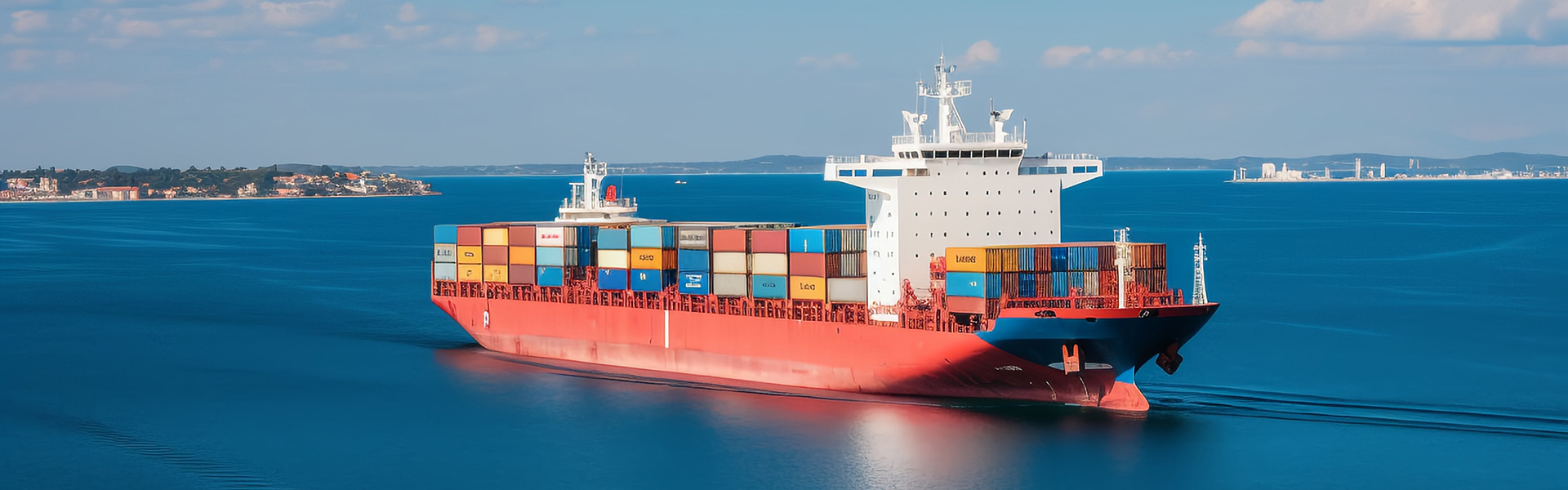
When a shipment crosses oceans, changes hands at multiple docks, and sits in humid warehouses, the packaging isn't just a box—it's the only thing standing between your product and a costly damage claim. Most standard cartons start to sag after a few thousand miles of vibration, but export-ready packaging is built with reinforced corners, moisture-resistant liners, and load-bearing design that accounts for stacked pallets and rough forklift handling. It's not about adding more tape; it's about rethinking the material structure so the container itself becomes a shock absorber.
One often-overlooked factor is the variability of international shipping environments. A package that survives a domestic truck route may fail after two weeks in a salt-sprayed container ship hold. That's why export-grade solutions incorporate treated corrugated fiberboard, marine-grade adhesives, and edge protectors that prevent crushing at the exact points where straps bite into the carton. Testing under simulated drop, compression, and vibration cycles—far beyond what a lab would run for local delivery—separates packaging that merely looks tough from packaging that actually arrives intact.
The real advantage comes down to economics. Reinforced packaging adds a small upfront cost per unit, but it eliminates the much larger losses from damaged goods, refused shipments, and replacement air freight. Smart exporters treat the carton as part of the product warranty: if the box fails, the brand fails. A crate that shows up dented but functional sends a message about your company's reliability, while one that spills its contents on the tarmac sends the opposite. Investing in long-haul survival isn't an option—it's the baseline for any serious international order.
Choosing the Right Alloy for Corrosive and High-Load Jobs
Corrosion resistance alone rarely tells the whole story. A part that survives a salt spray test in the lab can still fail early when it is asked to carry heavy loads, resist pitting in chloride-rich environments, or handle sudden temperature swings. Experienced engineers tend to look past generic stainless grades and weigh the specific failure modes first: stress corrosion cracking, crevice corrosion, galling, and fatigue under cyclic loading all behave differently depending on the alloy's nickel, molybdenum, and nitrogen content.
For high-load applications in aggressive media, duplex and super duplex stainless steels often earn their higher upfront cost by combining yield strengths two to three times those of standard austenitic grades with strong resistance to chloride pitting. Precipitation-hardening alloys such as 17-4 PH can be useful when a combination of hardness and moderate corrosion resistance is enough, but they may struggle in stagnant seawater or acidic process streams. Meanwhile, nickel-base alloys like Alloy 718 or Alloy K-500 become the quieter workhorses when both temperature and mechanical stress climb beyond the comfort zone of stainless steel.
The right choice usually comes down to matching the environment's weakest point with a material that is overqualified there, not just adequate everywhere. Pay attention to crevice geometry, surface finish, and whether the load is constant or cyclical. A slightly more expensive alloy that eliminates one dominant failure mode is often cheaper than a stronger but less compatible material that has to be replaced or reworked after every outage.
Full Traceability From Melt to Final Inspection
Traceability here is not a passive log. Each heat receives a unique identity at the furnace, tied to its alloy composition, tap temperature, and deoxidation practice. That identity follows the metal through rolling, forging, machining, and any surface treatment.
At every downstream step, operators record actual process parameters against the heat number, not just the nominal values from the specification. If a later test reveals an unexpected grain structure, the exact reheat curve and reduction ratios that produced it can be pulled within minutes.
Final inspection closes the loop. The inspector reviews the full upstream record before signing off, so no certificate depends on final dimensions alone. What remains is a chain of evidence that can be audited all the way back to the original melt.
Lead Times That Line Up With Your Production Calendar
When lead times are planned against your actual production calendar, every order moves with a rhythm that makes sense. Instead of guessing when materials will arrive or when a line will free up, you can schedule work in a way that accounts for weekends, holidays, and existing commitments. This means fewer surprises on the floor and more confidence when you promise a delivery date to a customer.
A production calendar that reflects real capacity lets you see the full picture before you commit. You can spot open windows, avoid double-booking a work center, and adjust upstream processes so components show up exactly when they are needed. The result is a smoother flow from raw material to finished goods, with less idle time and fewer last-minute expediting costs.
Over time, this alignment turns lead times into a competitive advantage. Teams stop firefighting and start planning, suppliers get clearer signals, and customers learn they can rely on the dates you provide. It is not about speed for its own sake, but about consistency—every step of the process timed to the calendar you already run your business on.
Real-World Applications Across Global Supply Chains
From cold-chain logistics for vaccines crossing continents to just-in-time parts delivery for automotive assembly lines, the practical footprint of modern supply chain tools is vast. A shipment of fresh produce from Kenya to Rotterdam, for instance, now relies on sensor-driven alerts that flag temperature deviations before spoilage occurs, letting dispatchers reroute or adjust conditions mid-transit. These aren't theoretical pilots; they're daily operations in ports, freight hubs, and distribution centers where minutes of delay translate into real cost.
Consider the electronics sector, where a single missing microcontroller can halt an entire production run. Teams now use interconnected platforms that pull live data from suppliers in Taiwan, assembly plants in Mexico, and warehouses in Germany to spot bottlenecks early. Instead of waiting for a weekly report, a planner in Texas can see that a specific capacitor order is stuck in customs at Frankfurt and immediately trigger a backup purchase from a secondary vendor in Malaysia—without a flurry of phone calls or spreadsheet hunting.
Even less glamorous segments like bulk chemicals or construction materials benefit. A cement distributor serving remote mining sites in Australia can combine weather forecasts, road conditions, and inventory levels to schedule deliveries before heavy rains wash out unpaved routes. By aligning physical movement with real-time data, these applications reduce empty miles, lower working capital tied up in safety stock, and keep critical projects on schedule—quietly reshaping how goods flow across borders every single day.
FAQ
We work with 304, 316, 316L, and duplex grades like 2205, depending on the corrosion resistance and strength the part needs. Each melt is spectro-tested before pouring so the chemistry always matches the certificate.
We use slow, controlled cooling after casting and then solution anneal the parts to restore full corrosion resistance. Before shipping, samples from each lot go through salt spray testing or intergranular corrosion checks when the application calls for it.
We ship to all sizes, from a single pallet for a machine shop to full containers for OEMs. Our minimum order is lower than many foundries because we batch similar patterns together, which keeps small orders cost-effective.
Our castings are used in food processing plants, desalination equipment, boat deck hardware, valve bodies, and even architectural railing systems. We've delivered to clients in Europe, North America, Southeast Asia, and the Middle East.
Absolutely. We accept STEP, IGES, or PDF drawings, and we can reverse-engineer from a physical sample using 3D scanning. After the tooling is made, we send a first-article casting for approval before full production.
For sea freight, we wrap each casting in VCI paper, place it in a custom-cut foam nest, and then into a plywood crate with shock-absorbing pads. Air shipments use double-wall corrugated boxes with foam inserts to save weight without risking damage.
If a customer finds a defect caused by our process, we ask for photos and the lot number. Often we can machine a small area or send a replacement part. For full lots, we issue a credit or re-run the production at our expense, and we share the root-cause analysis.
You get a commercial invoice, packing list, certificate of origin, material test certificates, and a mill test report for each heat number. If the destination requires a fumigation certificate or insurance, we arrange those as well.
Conclusion
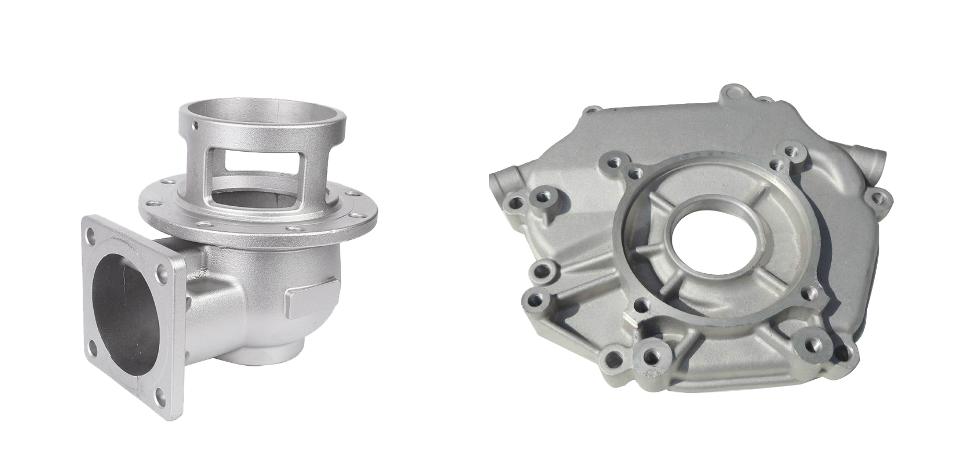
For years, stainless steel casting exporters have quietly kept heavy industry moving, but the ones worth keeping on speed dial do more than pour metal. They pair tight dimensional control with surfaces that need little post-machining, so a pump housing or valve body arrives ready for assembly instead of a week in the fettling shop. Alloy selection is not a catalog guess either: duplex, 316, or precipitation-hardened grades are matched to the actual corrosive load and stress the part will see, not just a generic “stainless” label. That matters when the component ends up in a subsea manifold or a food-processing line where failure is not an option.
What separates a reliable export partner from a one-off foundry is how the work holds up beyond the casting bay. Export packaging is engineered for container voyages and rough handling, not just domestic trucking, so parts land without dings or hidden cracks. Every heat has traceability from raw melt to final inspection, giving buyers a clear audit trail when their own clients ask hard questions. Lead times are planned around actual production calendars—not optimistic best-case promises—so a shipment from overseas does not idle a whole assembly line. Across global supply chains, these castings show up in mining equipment, marine hardware, chemical pumps, and process machinery, where durability and repeatability earn the next order.
Contact Us
Contact Person: Paul
Email: [email protected]
Tel/WhatsApp: 8615067447509
Website: https://www.spironcasting.com