

Street Furniture Factory Innovations Transforming Urban Spaces
2026-07-23
In the heart of every city, street furniture silently shapes our daily experiences. Yet, behind these benches, bins, and bollards lies a world of factory innovation that's quietly transforming urban spaces. At zemso, cutting-edge manufacturing meets visionary design, redefining how we interact with our streets. Discover how these advancements are crafting smarter, more sustainable cities.
Modular Designs Breathing New Life into Neglected Plazas
A grid of concrete pavers sits half in shadow, the seams between them collecting debris and the faint memory of footsteps. There is a particular stillness to plazas that have been forgotten—spaces that once hummed with markets or midday idlers, now reduced to pass-throughs. Modular design doesn't just fill these voids; it listens to them. At the core of this approach is a quiet respect for what already exists, paired with an almost playful adaptability. Instead of fixed monuments, imagine clusters of moveable seating that can be rearranged for a weekend concert or a solitary lunch, lightweight canopies that filter sunlight into shifting patterns, and planter boxes on casters that green the edges without ever taking root. The pieces arrive flat-packed, assembled on-site without the need for heavy machinery, and can be switched out seasonally or as needs evolve. It's a conversation with the plaza, not a declaration.
What makes these interventions stick isn't just flexibility—it's a careful calibration of scale and texture. The best modular elements feel neither temporary nor overbearing. A micro-forest of potted trees can break the wind without blocking sightlines; a series of low, undulating benches mirrors the rhythm of adjacent buildings while offering a place to pause. Designers often work with a kit of parts that includes lighting, water features, and even small performance stages, all designed to plug into a shared grid. This framework turns a barren expanse into a living room for the neighborhood, where the furniture moves but the feeling of invitation stays. The materials matter too: rusted steel that weathers beautifully, reclaimed wood that tells a story, acoustically treated panels that dampen traffic noise. Suddenly, the plaza isn't just a shortcut—it's a destination, one that shifts with the hour and the crowd, never the same place twice.
Beyond aesthetics, there's an economic logic to modular thinking in public space. Municipal budgets are often too thin for grand revitalization projects, and permanent construction can be a gamble when community needs are still emerging. A modular approach allows for small, iterative bets: test a seating cluster in one corner, add shade where the sun hits hardest, swap out a play structure that isn't being used. It's low-risk placemaking that can be scaled up if it succeeds or quietly adjusted if it doesn't. Maintenance becomes simpler too—a cracked paver or a faded canopy can be replaced individually without disrupting the whole. Over time, the plaza becomes a patchwork of proven elements, a collage shaped by trial and the daily rhythms of the people who claim it. In this way, modular design doesn't just revive a neglected space; it gives it a mechanism for continual reinvention, breathing into it a life that can keep pace with the city around it.
Smart Benches Turning City Squares into Connected Hubs
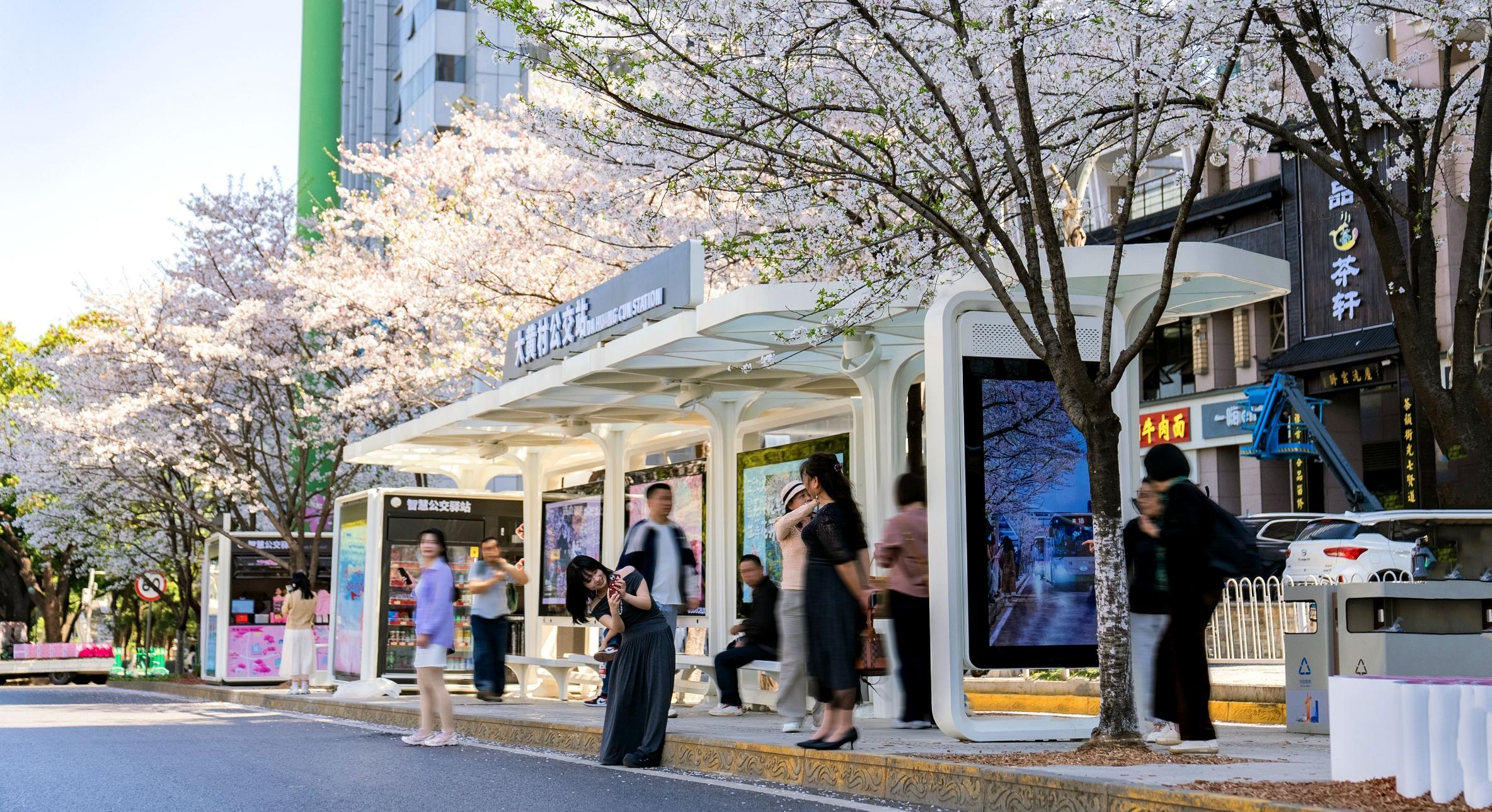
Picture a typical city square: people rushing through, a few resting on outdated benches, and the hum of urban life all around. Now imagine those same benches doing more than just offering a place to sit. Smart benches are quietly redefining public spaces, weaving connectivity and convenience into the fabric of everyday city life. They’re not just slabs of wood or metal anymore—they’re charging stations, Wi-Fi hotspots, and environmental sensors rolled into one, turning passive squares into active, data-informed hubs.
In cities from London to Singapore, these benches are popping up with features that blend seamlessly into their surroundings while solving real urban challenges. Solar panels power USB ports and wireless charging pads, letting anyone top up a phone without hunting for a cafe. Built-in sensors track air quality, noise levels, and foot traffic, giving city planners a real-time pulse on how public spaces are used. It’s a subtle shift—the bench you sit on while eating lunch might also be feeding data into an app that suggests quieter routes home.
But beyond the tech, these benches are changing how people interact with public spaces. They become natural gathering points, where someone stops to charge their device and ends up chatting with a neighbor, or where a tourist finds free Wi-Fi and discovers local events on a nearby digital display. By layering utility with comfort, smart benches encourage longer stays and more spontaneous connections, subtly transforming a square from a place you pass through into a destination you want to linger in.
Solar-Powered Lighting Sculpting Safer Nightscapes
When the sun dips below the horizon, a quiet transformation unfolds. Streets once shadowed and uncertain begin to glow with a gentle, self-sustaining light. These aren't your typical harsh floodlights but carefully placed, solar-powered fixtures that highlight pathways, building edges, and gathering spots without overwhelming the natural darkness. The result is a nightscape where contrast is softened, and every step feels considered. Powered entirely by the day's rays, the lights operate independently of the grid, blending resilience with an almost organic rhythm—waking as dusk settles and resting at dawn.
Beyond simple illumination, the design rewrites how we move through public spaces after dark. By sculpting light where it matters most—low-level bollards marking a curve in the sidewalk, a warm wash over a set of steps, a subtle halo around a bench—the environment itself guides behavior. Shadows are intentional, not an afterthought; they define boundaries without creating hiding spots. This careful orchestration makes a park feel open and welcoming even at midnight, encouraging people to linger rather than rush through. The technology fades into the background, leaving only the atmosphere it shapes.
What stands out is how seamlessly this approach adapts to different settings. In a residential lane, soft, downward-directed beams create a patchwork of safe, well-lit patches without spilling into bedroom windows. Along a commercial strip, solar pendants strung overhead turn an ordinary sidewalk into a lively promenade. Each installation learns from its context—charging needs, weather patterns, pedestrian flows—so the lighting feels custom-fit, not stamped from a template. Over time, these solar sentinels do more than illuminate; they rebuild a neighborhood's relationship with the night, proving that safety doesn't require a flood of electricity, just a smarter touch.
Locally Sourced Materials Rooting Furniture in Place
Furniture gains a quiet, stubborn character when built from timber felled within walking distance of the workshop. The grain carries the storm patterns of a particular hillside, the shade of a known forest. Suddenly a chair isn't just a shape — it's an extension of the ground you stand on. Clay dug from the same earth that supports the house walls, wool shorn from sheep grazing the common land, reeds cut from the marsh at low tide: these aren't nostalgic gestures. They are a refusal to sever the thread between the object and its origin.
Using what's at hand does more than shrink a carbon footprint. It makes the piece harder to duplicate, harder to forget where it came from. The maker's knowledge shifts from generic joinery to reading the wood's regional dialect — how this oak warps in damp air, how that cherry darkens under a north-facing window. The result is work that ages into its surroundings instead of clashing with them. A table made from a neighbor's fallen sycamore will never look like a catalog import. It belongs.
There is also an understated defiance in local materials. In an era of instant shipping and interchangeable aesthetics, choosing the slow, stubborn integrity of nearby stone or coppiced hazel is a deliberate anchor. Furniture rooted in place invites the outside in — the limestone dust, the salt haze, the fungal lace of a woodland floor. It asks you to sit with a piece of the landscape and, just for a moment, remember where your own feet are planted.
Playful Installations Sparking Unscripted Social Moments
There's something deeply human about stumbling upon an installation that practically begs you to play. The best ones don't come with manuals—they just sit there, humming with quiet potential, until someone dares to touch, twist, or step inside. A giant set of chimes that only sings when bodies move through it. A wall that ripples with light under your palm. These pieces aren't about passive admiration; they're catalysts for the kinds of spontaneous, unpolished interactions you can't manufacture.
What transforms a clever idea into a truly magnetic experience is the permission it gives to be imperfect. People sing off-key, jump without grace, laugh at their own awkwardness. The installation holds space for that rawness, turning solitary fumbles into shared comedy. Strangers begin mirroring each other, trading suggestions without words. By the time someone's figured out how to make the whole structure pulse in unison, a tiny, temporary community has formed—one built on nothing but the shared thrill of making something come alive together.
The aftermath is almost the best part. People drift away carrying stories they'll retell at dinner, exaggerated already but no less true in spirit. Because that moment of unexpected connection—with the object, with each other—sticks harder than any polished event. It's proof that we're desperate for analog magic in a digital age, for reminders that our hands and voices can still shape the world around us in delightfully useless, essential ways.
Circular Economy Models Rewriting the Lifespan of Urban Fixtures
City benches, lamp posts, and bus shelters rarely get a second act. Under the old linear logic, a cracked seat or outdated lighting spells the end and a one-way trip to the landfill. But that script is being quietly torn up. A shift toward keeping materials in play for longer—through repair, refurbishment, and modular swaps—is transforming these everyday structures from disposable objects into long-term assets. It’s not just about recycling; it’s about designing out waste from the very start, so a fixture’s life can stretch across decades rather than a single contract cycle.
One approach gaining ground moves the transaction from a one-time sale to an ongoing service. Instead of a city buying a hundred streetlights, it pays for illumination, while the manufacturer retains ownership and handles maintenance, upgrades, and eventual remanufacturing. Another tack involves snapping together components like building blocks, making it painless to replace a worn armrest or a faded solar panel without scrapping the entire unit. These strategies turn durability into a design feature, not an afterthought, and nudge manufacturers to favor robust, easily separable materials that can be endlessly reincarnated into fresh products.
The ripple effects are already visible in districts that have quietly adopted these principles. A public seating system with replaceable slats and cast-iron ends that can be recoated on site has outlasted its projected lifespan by sixteen years and counting. Elsewhere, a network of smart poles is routinely refreshed with updated sensors, their housings remaining untouched while the guts evolve. What emerges is a quieter, less wasteful rhythm of urban upkeep—one where the skeleton of a fixture becomes a platform for continual renewal, and the very notion of “end of life” starts to feel like a relic.
FAQ
Street furniture covers everything from benches, bollards, and bike racks to planters, public lighting, and waste bins. Innovation has become critical because cities are rethinking public spaces as social hubs rather than just transit corridors. With rising urban populations and climate pressures, old one-size-fits-all designs no longer serve communities; factories are now pushed to create pieces that are more sustainable, multifunctional, and responsive to local identity.
Factories are moving away from mass-produced uniformity. CNC machining, robotic welding, and parametric design software allow for small-batch customization without huge cost penalties. This means a bench in Barcelona can have a completely different geometry from one in Berlin, each tailored to site-specific ergonomics or cultural motifs, yet produced in the same facility. Digital design files also make it easier to swap materials or adapt a product for accessibility without starting from scratch.
Take the smart bench. On the surface it's just a place to sit, but integrated solar panels charge phones, sensors track air quality, and modular attachments can hold planters or laptop tables. In cities like London, these benches have turned dull transit stops into micro-hubs where people willingly spend time, boosting footfall for local businesses and providing real-time environmental data to city planners—all from a single factory innovation.
It's at the core. We're seeing a shift to recycled and bio-based materials—for instance, benches made from discarded fishing nets or post-consumer plastics that look and feel like wood but require zero maintenance. Factories are also designing for disassembly: components can be replaced individually, extending product lifespan drastically. Some even use cradle-to-cradle certification, ensuring that at end of life every part can be recovered and fed back into production.
Smart material choices are key. Anti-graffiti nanocoatings make surfaces easy to clean without harsh chemicals. Modular designs allow a damaged slat or broken armrest to be swapped out in minutes by city crews, rather than replacing whole units. Some factories even embed tamper-proof connectivity modules that quietly alert maintenance teams if a piece is moved or damaged, reducing response times and repair bills.
It's about moving beyond minimal legal compliance. Factories co-design with disabled communities to develop tactile wayfinding integrated into paving and seating, or benches with varied heights and armrest configurations that assist people with mobility issues. Some innovations include audio beacons in bollards for the visually impaired, or charging docks at wheelchair-accessible tables, making public furniture genuinely welcoming to everyone.
Many innovations are surprisingly scalable. Open-source design platforms allow local manufacturers in developing cities to download plans for modular, low-cost street furniture optimized for local materials and climate. A simple re-design of a plastic-molding mold can turn municipal waste into durable seating at a fraction of the import cost. Connectivity features might be skipped, but the core ideas around modularity and sustainable materials are universally applicable.
We'll see deeper integration with nature, like structures that double as vertical gardens or rainwater harvesting systems. Factories will become data partners, producing furniture that lights up, cools down, or even shifts configuration based on pedestrian flow or weather, acting as responsive urban infrastructure. The boundary between furniture, architecture, and technology will blur, turning factories into key players in liveable city evolution.
Conclusion
Urban spaces are being redefined by a wave of street furniture innovations emerging from progressive factories. Modular designs allow plazas to adapt to different events, turning neglected areas into dynamic community stages. Smart benches equipped with charging ports and Wi-Fi transform city squares into connected hubs where people can work or socialize outdoors. At night, solar-powered lighting not only illuminates pathways safely but also sculpts the landscape with artistic glows, making public areas inviting after dark. Manufacturers are increasingly turning to locally sourced materials, which root each piece in the regional identity—from reclaimed wood that echoes a neighborhood’s history to stone that matches the natural geology.
Beyond functionality, playful installations—from interactive musical seats to kinetic sculptures—spark unscripted encounters, encouraging strangers to interact and play. These elements remind us that urban furniture can be catalysts for spontaneous joy. Underpinning many of these advancements is a commitment to the circular economy: fixtures are designed for disassembly, repair, and material reuse, rewriting the lifespan of street components. Factories are adopting take-back schemes and modular upgrades, ensuring that yesterday’s bench can become tomorrow’s planter. Together, these innovations are not just about objects; they’re about nurturing more resilient, human-centered urban ecosystems.
Contact Us
Contact Person: Leo
Email: [email protected]
Tel/WhatsApp: +86 18901905138
Website: https://www.zemsogroup.com/