
Top 10 Pole-Mounted Transformer Factories Leading the Market
2026-11-16
Ask most buyers how they choose a pole-mounted transformer factory and the answer is usually the same: whoever has the shortest lead time when a project is already behind schedule. That is exactly why the real market leaders often stay under the radar. This list breaks down ten manufacturers that consistently show up in utility and EPC projects, including CNKEEYA, a supplier worth knowing before your next RFQ goes out.
The Shortlist That Shapes Utility Procurement Everywhere
By the time a utility issues a formal request for proposals, most of the real filtering has already happened. A handful of familiar manufacturers and service providers tend to dominate the early conversations, often because their equipment is already installed or because an engineering firm has worked with them for years. That quiet pre-selection narrows the field long before scoring rubrics come into play, and it quietly decides which innovations ever get considered.
The shortlist is rarely written down in one place. It lives in maintenance logs, approved vendor registries, and the preferences of consultants who draft technical specifications. When a utility keeps buying from the same suppliers to avoid integration headaches, the shortlist stops being a snapshot of the market and becomes a legacy of older decisions. Cost models and reliability data may suggest alternatives, but those alternatives never reach the table if they are not already inside the circle.
Shifting that pattern takes more than issuing an open tender. It means treating the pre-qualification stage as a deliberate design exercise: reviewing vendor lists on a fixed cycle, running small pilot orders that let untested suppliers prove themselves in low-risk settings, and separating compatibility concerns from genuine performance requirements. Without that kind of maintenance, the shortlist quietly does the choosing before any evaluator opens a bid.
Factories That Earned Their Reputation One Storm Season at a Time
Some names never needed a loud marketing push. In coastal towns where hurricane shutters rattle and river gauges climb past the red line, certain factories became known the old way: their products showed up on time, bolted tight, and kept working when everything else quit. Year after year, the same crews would unpack the same familiar stamps on steel brackets and waterproof housings, learning to trust not a brochure but the memory of surviving the last bad season.
That trust did not come from a single perfect summer. It accumulated through missed holidays, overnight runs to flooded loading docks, and the quiet refusal to ship a weak seam or a thin coat of sealant. When a storm tore through a neighborhood, the failures of cheaper suppliers became obvious at sunrise. These factories understood that their reputation lived or died in those first hours after the wind dropped, when linemen, roofers, and homeowners checked what held and what did not.
Over time, the name stamped on a pump housing or a set of storm brackets carried the weight of local history. A purchasing manager might not recall the brand slogan, but he could tell you which plant in Ohio or Louisiana had air-freighted replacement parts during a late October flood. That is the kind of standing no trade show booth can buy; it is earned one storm season at a time, when the only metric that matters is whether the equipment kept its promise.
Inside the Production Lines Where Consistency Is the Real Benchmark
The line does not reward occasional brilliance. A single flawless unit means almost nothing if the next one drifts by half a millimetre or arrives with a connector seated just shy of its click. What operators watch for is not the standout part but the absence of variation across the shift, the hour, the bin.
Much of the real work happens before a defect can exist. Torque settings are checked against ambient temperature, fixtures are re-datumed after a tool change, and hand-scanned labels are matched to the specific revision resting on the pallet. These routines rarely make noise, yet they decide whether the line hums or lurches.
Consistency here is not a poster near the exit. It is the quiet repetition of a pallet stopping in the same place, a gauge sliding into the same slot, and a line that keeps its rhythm without someone having to explain why.
Custom Ratings, Coatings, and the Push for Longer Field Life
In many operations, the gap between catalog specifications and actual field conditions has become too wide to ignore. Standard load ratings assume a clean, well-aligned environment, but that rarely matches what happens underground or offshore. More teams now ask suppliers to recalculate ratings around the specific duty cycle, shock loads, temperature swings, and contamination levels they actually see. That shift changes the conversation from a paper lifespan to the real survival time in an installed environment.
Coatings have moved beyond basic corrosion barriers. A growing number of applications pair a custom rating review with a coating selected for one or two failure modes rather than a general-purpose finish. For example, a bearing exposed to both brine and fine sand may benefit from a hard, low-friction top layer that also resists pitting, while a coupling in a high-humidity environment might need a coating optimized more for adhesion under torque than for surface hardness. The key is matching the coating to the measured failure pattern, not just applying a familiar option.
The combined effect of custom ratings and targeted coatings is often a meaningful extension in field life, but it requires better records from the field. Sites that document removal reasons, wear patterns, and operating hours before switching to custom components tend to see the strongest gains. Without that feedback, a custom rating is just a revised number and a coating is just a surface treatment. With it, both become part of a longer-running maintenance strategy.
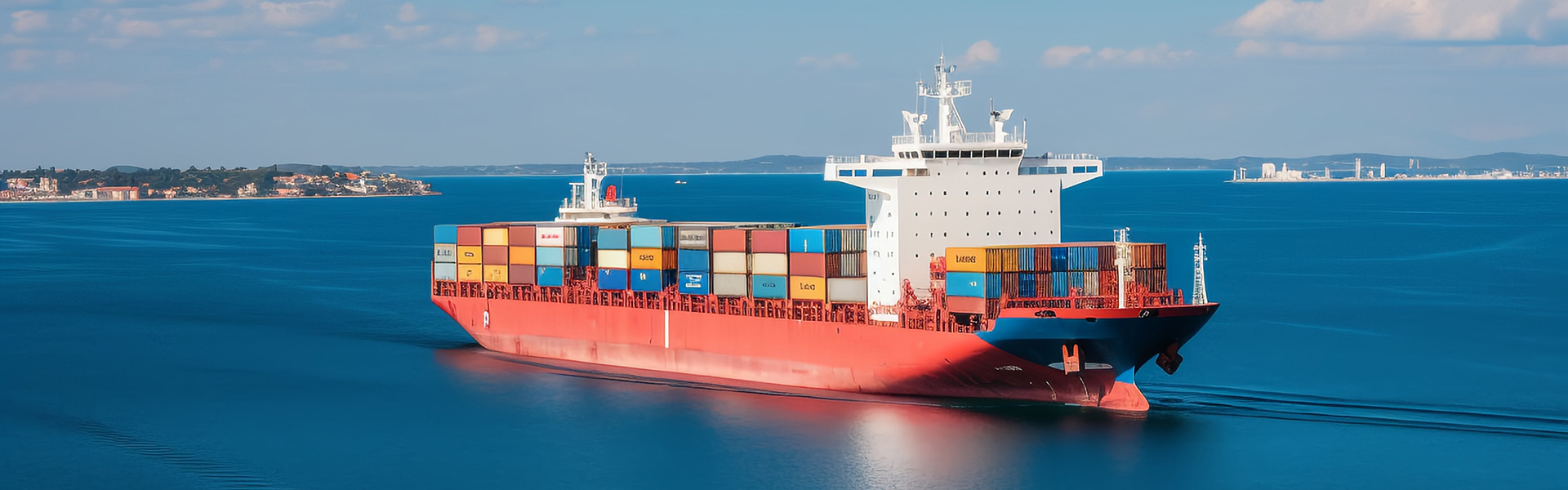
Regional Footprints and the Export Routes That Carry These Units
The geography of production is rarely a single dot on a map. Instead, it sprawls across industrial corridors, port cities, and inland logistics hubs, each leaving its own mark on how units move. A cluster of assembly plants in the Pearl River Delta, for instance, feeds a steady stream of finished goods toward Shenzhen and Hong Kong, where container lines thread through the South China Sea. Farther north, rail-linked dry ports in Zhengzhou or Chengdu push cargo toward Europe along fixed corridors that bypass traditional sea routes. These regional footprints are not static; they shift with labor costs, tariff regimes, and infrastructure upgrades, redrawing the practical map of export capacity every few years.
Export routes, in turn, carry more than cargo. They carry the rhythm of a region's production cycles, the constraints of seasonal demand, and the quirks of local regulation. A route out of Ho Chi Minh City may rely heavily on feeder vessels that shuttle containers to Singapore before long-haul legs, adding time but lowering per-unit cost. By contrast, a Mexican border crossing near Laredo moves units by truck in hours, not weeks, yet faces choke points tied to customs staffing and bridge capacity. Understanding a unit's origin means tracing the specific handoffs—truck to rail, rail to vessel, vessel to distribution center—that shape both lead times and landed costs.
What often gets overlooked is how these footprints and routes feed back into product design. A factory located near a dedicated automotive terminal can commit to just-in-time delivery of bulky subassemblies; a supplier six hundred kilometers inland, reliant on congested highways, cannot. Export corridors also influence packaging choices, pallet dimensions, and even the sequencing of production batches to match vessel schedules. In practice, the
Signs of a Factory That Will Still Matter in a Decade
A factory that still matters ten years from now won't be the one with the most screens on the floor. It will be the one where change is treated as a daily habit, not a quarterly project. You can spot it in the way a line operator rearranges a work cell without waiting for three approvals, or how a shift manager can explain why a machine ran slower on Tuesday using data she pulled herself. That kind of fluency is hard to copy.
Long-term relevance also shows up in supplier relationships. The plants with a future tend to know the second- and third-tier names behind their critical materials, and they keep alternate routes warm even when the primary path is cheap. They do not confuse a full warehouse with resilience; they measure how fast they can reroute, rework, or replace without stopping delivery.
Another signal is less visible: the way experienced knowledge moves. If a retiring technician's instincts are still locked in his head, the factory is already losing capability. The ones built to last have ways to turn those instincts into checklists, simulations, or coaching moments, so new hires absorb judgment, not just instructions.
FAQ
It comes down to the unglamorous details like tank sealing, bushing alignment, and finish consistency. Utilities remember plants that ship units that stay leak-free after several hard winters, not just the one that submitted the lowest initial bid.
Many have shifted from basic wet-spray painting to automated powder coating with zinc-rich primers and heavier edge coverage. Some also pull random production samples for salt-fog testing, which catches weak spots that ordinary visual inspection would miss.
Not really. Some of the strongest suppliers are mid-sized plants that rely on modular winding and tank fixtures, so they can switch between ratings without a full line changeover. That kind of flexibility often beats sheer volume when regional orders vary.
Weight and dimension restrictions have pushed better plants toward more compact core-and-coil assemblies that do not sacrifice kVA capacity. They also pre-pallet units so field crews can unload with a standard digger derrick, which trims installation time.
Top plants go beyond a basic temperature rise check. They cycle units under overload conditions, measure hot-spot gradients, and inspect gasket compression afterward. That process exposes insulation stress before it becomes an outage statistic.
They want a clean baseline oil sample taken prior to shipping so later gassing can be compared. Leading factories support this by filling and sealing tanks under controlled vacuum and recording oil batch data alongside each serial number.
Small design choices give it away: hanger bracket placement that respects lineman glove reach, lift lugs that keep the unit balanced when tilted, and nameplates positioned for reading from a bucket truck. Those details usually come from plants that regularly speak with field crews.
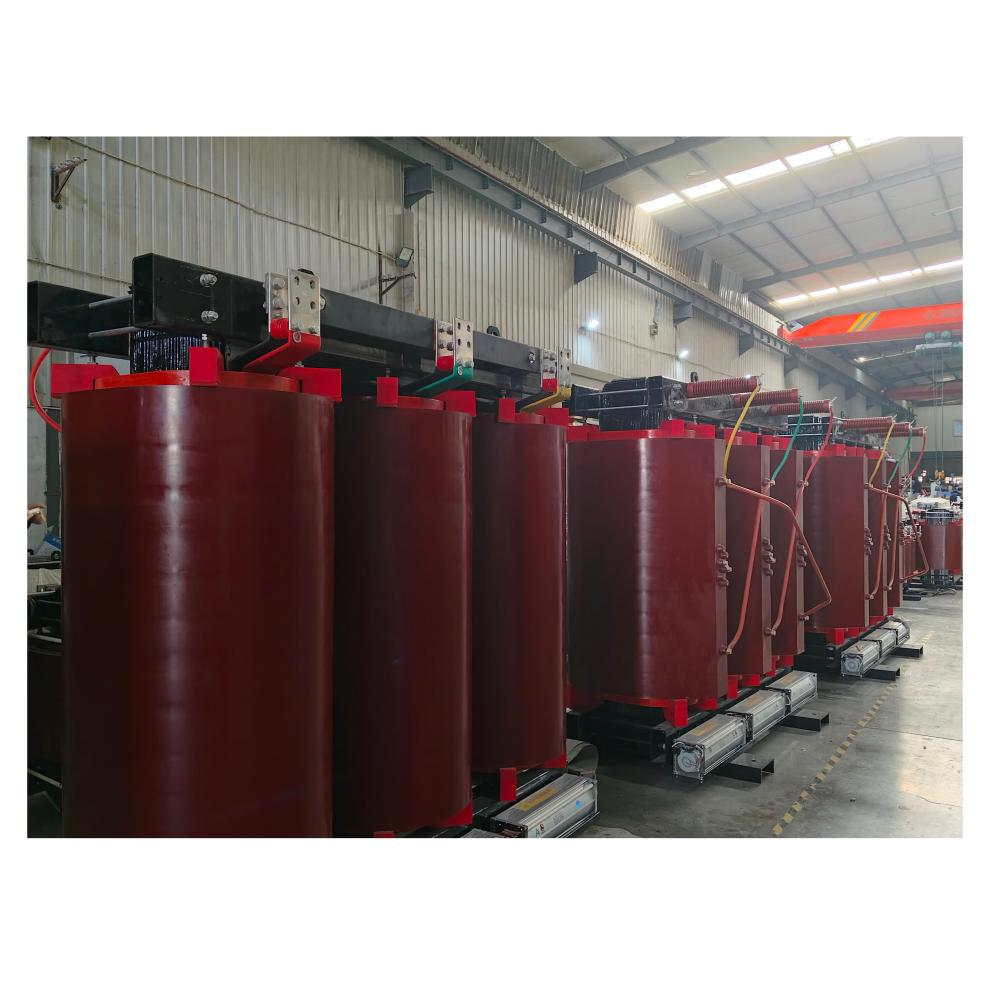
It is not just output volume. The leading plants control the full manufacturing sequence from core cutting and coil winding to tank welding and coating, and they perform leak and dielectric tests before release. Smaller regional shops may be closer to the job site but often lack that level of process control.
Conclusion
Utility buyers rarely change vendors on price alone. The factories that dominate pole-mounted transformer supply have earned their place through repeated storm seasons, when units are pushed hard and failures become public. Their production lines are not particularly glamorous, but consistency in winding, core stacking, and tank sealing is what separates a unit that lasts twenty years from one that fails after five. Many of these manufacturers also moved beyond standard designs years ago, offering adjusted ratings, specialized coatings, and corrosion-resistant hardware for coastal or high-humidity regions. That kind of flexibility matters when a rural cooperative in the Midwest and a utility in Southeast Asia cannot use the same specification.
Geography plays a quiet role as well. Factories with strong regional footprints and dependable export routes tend to hold their positions because they can deliver without relying on a single chokepoint. What keeps them on the shortlist is not marketing but a track record of units staying in service longer than expected. Looking ahead, the factories likely to still matter in a decade are those investing in better insulating materials, tighter process control, and honest load-testing rather than chasing short-term volume. They train their own winding crews, keep older equipment calibrated, and document failures instead of hiding them. That cultural habit is hard to copy and even harder to disrupt.
Contact Us
Contact Person: Queenie
Email: [email protected]
Tel/WhatsApp: +86 15558806611
Website: https://www.cnkeeya.com