
Top Aluminum Patrol Boats: The Ultimate Guide to Choosing a Reliable Vessel
2026-08-03
When it comes to safeguarding coastal waters, rivers, or offshore installations, few vessels match the rugged versatility of aluminum patrol boats. But with so many options on the market, how do you separate the dependable workhorses from the pretenders? At Allheart, we believe a reliable patrol boat starts with smart design and uncompromising build quality. In this guide, we'll walk through the key features that define top-tier aluminum patrol boats and help you make a confident choice—whether you're intercepting threats, conducting rescues, or simply asserting authority on the water.
Why Aluminum Dominates Patrol Boat Construction
Aluminum’s grip on patrol boat building isn’t just about tradition—it’s a hard-won advantage shaped by decades of maritime trial and error. The metal’s low density, roughly a third that of steel, slashes hull weight without sacrificing the structural backbone needed for rough-water chases. This lightness directly translates into shallower draft and better fuel efficiency, letting patrol boats slip into coastal nooks where heavier vessels can’t follow. When a pursuit hinges on agility, every kilogram counts, and aluminum delivers that edge without the constant corrosion headaches of steel.
Beyond weight, the alloy’s natural resistance to saltwater pitting keeps maintenance yards from becoming a second home. Unlike fiberglass, which can crack under repeated impact or prolonged UV exposure, marine-grade aluminum absorbs bumps and shrugs off sun damage. Welders appreciate how easily it fuses into watertight compartments, eliminating the leak-prone joints common in riveted steel hulls. In an industry where downtime means missed interceptions, this durability pays off in patrol readiness—less time in dry dock, more time on the hunt.
Modern construction techniques have amplified these perks. Advanced extrusion methods let shipyards shape aluminum into complex, integrated stiffeners and deck fittings in a single pass, reducing assembly hours and potential failure points. The material’s recyclability also aligns with tightening environmental mandates, giving fleet operators a quieter way to meet sustainability targets without touting it in press releases. From the welders’ booths to the final sea trials, aluminum quietly proves its case: it’s simply the most practical choice when performance and longevity hang in the balance.
Hull Dynamics and Stability in Real-World Conditions
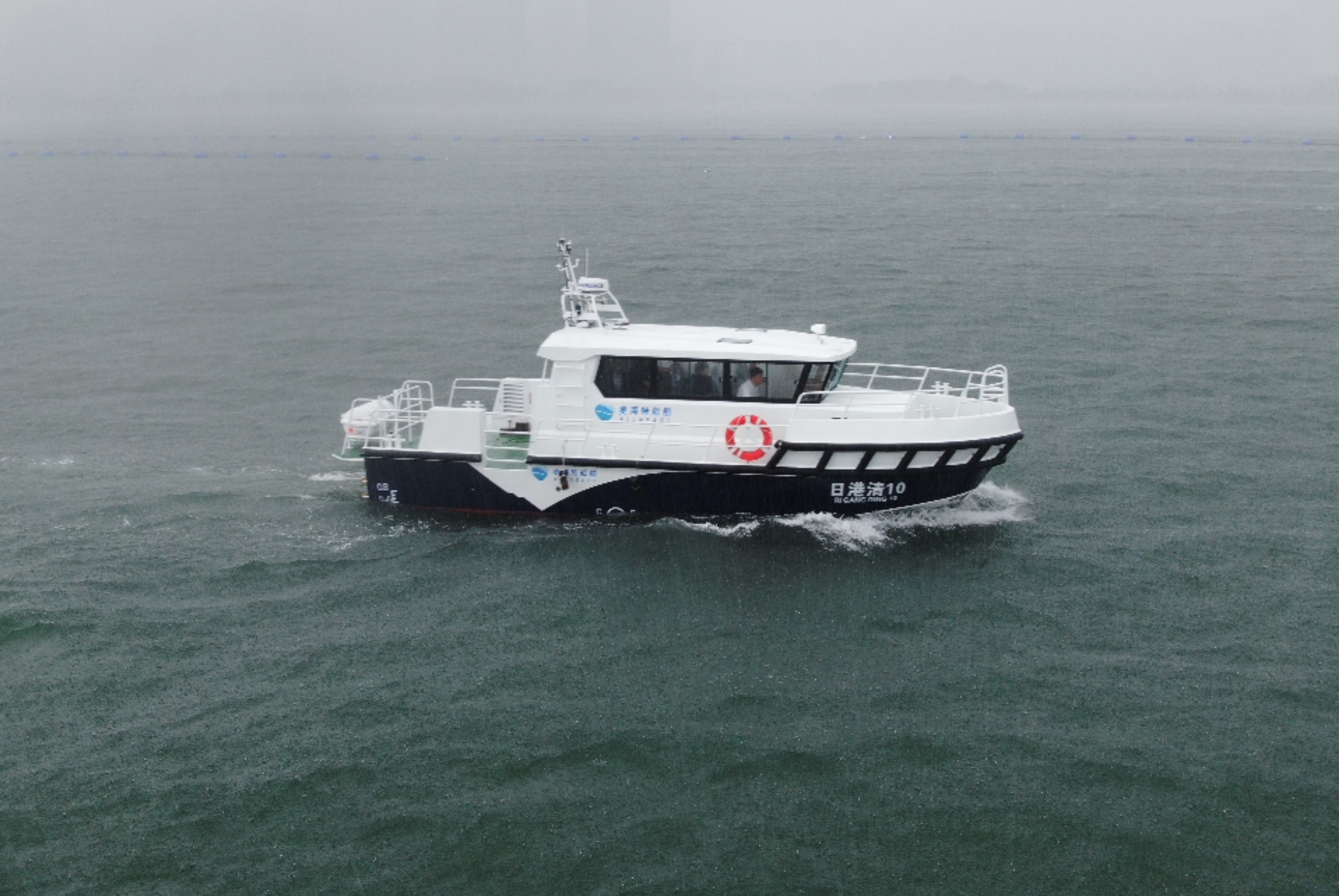
The true test of any vessel's design comes not in the calm of a harbor, but in the unpredictable embrace of the open sea. Hull dynamics shift dramatically when met with steep chop, cross swells, or a quartering sea. In these moments, the subtle interplay between wave length, encounter frequency, and roll resonance can amplify motion far beyond what any tank test predicted. Stability isn't a fixed value plucked from a curve; it's a live negotiation between form, weight distribution, and the ever-changing surface beneath. Captains learn to feel when the hull is working with the water rather than fighting it, a kind of intuition born from watching how spray breaks over the bow and how the deck tilts underfoot.
Operators often discover that real-world loading conditions rewrite the rulebook. A partially filled tank, a shifting catch in the hold, or gear lashed slightly off-center can introduce a heel that leaves righting arms weaker on one side. The same hull that felt planted at the dock might develop a lazy, lingering roll offshore, sapping crew energy and increasing risk. It's in these subtleties that experience outweighs textbook calculations—understanding that a following sea can lift the stern and tuck the bow deeper into the wave ahead, suddenly altering steering control. Small adjustments in trim or throttle sometimes transform an anxious ride into one where the hull settles into a rhythm, reminding us that stability is as much about seamanship as it is about naval architecture.
Tailoring Deck Layouts to Operational Demands
Every vessel has a unique rhythm dictated by the tasks it performs. A well-designed deck layout isn't just about placing equipment wherever it fits; it's about understanding the daily workflow, the sequence of operations, and the physical demands on the crew. When you tailor the layout to operational demands, you reduce unnecessary movement, minimize clutter, and create a space where every tool and station feels like a natural extension of the work itself. This approach turns the deck into a functional partner rather than just a stage.
Practical considerations drive the design. Think about how gear is moved, where crew members need to stand, and what happens during critical moments like docking or deploying equipment. For fishing vessels, this might mean centering hauling equipment to shorten the distance from catch to storage. On research ships, it involves arranging winches and A-frames so that scientific gear can be deployed and recovered with minimal interference. Even subtle changes, like repositioning a ladder or adjusting the height of a safety rail, can dramatically improve efficiency and safety over long shifts.
The real payoff comes when the deck layout adapts to evolving missions. A vessel might switch from towing gear to cargo handling, or from passenger tours to emergency response. Building in modular attachments, adjustable mounts, or flexible tie-down systems allows the deck to transform without major rebuilds. By anticipating changing operational needs and embedding flexibility into the structure, you future-proof the workspace—ensuring the deck remains not just functional, but truly responsive to whatever demands arise.
Matching Propulsion Systems to Mission Profiles
Selecting the right propulsion system isn't just about raw power; it's an exercise in aligning capability with intent. A deep-space probe designed to coast for decades after a brief, intense push has vastly different needs than a satellite constantly adjusting its orbit to avoid debris. We look at the full arc of the mission—from initial orbital insertion to end-of-life disposal—and map that against the unique traits of chemical, electric, and hybrid systems. Chemical engines deliver high thrust for quick maneuvers but carry the penalty of low efficiency, while electric propulsion sips propellant over months or years, trading time for mass savings. The art lies in matching the rhythm of the mission with the temperament of the engine.
Mission planners often wrestle with a fundamental trade-off: urgency versus economy. When a spacecraft must escape Earth's gravity well or execute a rapid planetary capture, nothing beats the impulsive kick of a bipropellant chemical stage. But once in a stable trajectory, the calculus shifts. Here, electric propulsion—particularly Hall-effect or gridded ion thrusters—can take over, using a fraction of the propellant to perform the same net change in velocity. This hybrid philosophy is increasingly common; think of a Mars orbiter that brakes into capture using chemical thrusters, then spirals down to its science orbit using electric ones. The result is a lighter launch mass or greater payload capacity, both of which translate directly to mission feasibility and cost.
Beyond the traditional dichotomy, emerging profiles demand fresh thinking. Constellations in low Earth orbit now rely on high-thrust, low-latency electric systems that can perform hundreds of collision-avoidance maneuvers per year without exhausting propellant reserves. Interplanetary smallsats, once dismissed as too tiny for meaningful propulsion, now leverage compact electrospray or pulsed plasma thrusters to navigate independently. Even the choice of propellant matters: green monopropellants simplify ground handling, while solar thermal concepts promise a middle ground between chemical efficiency and electric patience. The common thread is that a propulsion system is never an isolated component—it's a co-designer of the mission, shaping not just how we get there, but what we can do once we arrive.
Longevity on the Water: Care and Upkeep Essentials
Keeping a boat in top shape isn't just about occasional scrubbing—it's a rhythm you settle into, like checking the tide before heading out. Start with a consistent rinse-down after every trip, especially if you've been in saltwater. Salt crystals act like sandpaper on gelcoat and metal fittings, quietly eating away at surfaces you rely on. A quick freshwater wash, including the trailer and outboard, adds years to your vessel's life without much effort.
Beyond the exterior, pay attention to the systems that often get overlooked until they fail. Bilge pumps, through-hull fittings, and electrical connections all need regular inspection. A corroded wire or a cracked hose can turn a day out into a rescue call. I've found that applying a thin layer of dielectric grease on battery terminals and connector plugs wards off the damp-induced gremlins better than any quick fix.
Finally, don't underestimate the value of a good cover and proper winterizing. UV rays break down vinyl and fade hull colors faster than you'd think, while freezing water trapped in engine blocks spells disaster. If you store your boat outdoors, invest in a breathable, fitted cover and make sure the engine is drained or filled with antifreeze. These habits aren't glamorous, but they're what keep your boat ready to launch season after season.
Calculating the Real Cost of Ownership Over Time
When we talk about owning something—whether it’s a car, a piece of equipment, or even a subscription service—the sticker price is just the starting point. The real cost includes ongoing expenses like maintenance, repairs, energy consumption, and eventual disposal. These hidden factors can compound over time, often surpassing the initial purchase price if you’re not careful.
To get a clear picture, start by mapping out the entire lifecycle. Break down costs into predictable categories: fixed annual fees, variable usage costs, and irregular maintenance. Then estimate how long you’ll keep the item and what its residual value might be. This isn’t just a budgeting exercise—it’s a tool to compare options that might look similar upfront but diverge dramatically over five or ten years.
Don’t forget the less tangible elements like time lost to repairs or the productivity impact of downtime. Assigning even a rough dollar value to these can shift your perspective. A slightly more expensive product with lower ongoing costs and greater reliability often wins in the long run. By calculating total ownership cost over the expected lifespan, you’re not just buying a product—you’re investing in lower stress and fewer surprises.
FAQ
Aluminum offers an exceptional strength-to-weight ratio, which means the boat can be faster and more fuel-efficient without sacrificing durability. It also resists corrosion well in both saltwater and freshwater, and can take a beating from debris or rough landings without cracking like fiberglass might.
Consider your typical mission profile first—how many crew members you’ll carry, the equipment onboard, and the operating range. A boat that’s too small limits capability and comfort, while one that’s too large wastes fuel and becomes harder to handle at slow speeds. Aim for the smallest hull that fits your primary use case plus a 20% safety margin for extra payload.
Deep-V hulls with a sharp deadrise angle cut through waves smoothly and reduce pounding. Look for boats with variable deadrise that transition from a steep entry at the bow to a flatter section aft; this gives a good balance between seakeeping and stability. Some builders add spray rails or stepped hulls to improve ride and efficiency.
Welded hulls are generally stronger and more watertight over time because there are no rivets to loosen from constant flexing. For high-speed, heavy-duty operations where hull integrity is critical, welded construction is the standard. Riveted hulls can be lighter and cheaper but require more maintenance to keep fasteners tight and sealed.
Outboard motors are common for their serviceability and weight savings, but sterndrives or waterjets offer better protection in shallow waters and during beaching. For long patrols, diesel sterndrives provide excellent fuel economy and torque. Dual engines add redundancy—if one fails, you can still get home—which is vital for offshore work.
It’s critical. On a long shift, poor ergonomics cause fatigue and reduce alertness. The helm should have logical switch placement, shock-mitigating seats, and good sightlines. Ample dry storage for gear, secure weapon mounts, and easy access to handrails and boarding platforms can make a real difference in operational effectiveness.
Rinse the hull thoroughly after every saltwater use to prevent crevice corrosion, especially around welds and fasteners. Check sacrificial anodes regularly and replace them when half-consumed. Inspect the protective coating or paint film for scratches, and touch up bare metal promptly. Keep electrical connections clean and dry, and service engines according to a strict schedule, not just by hours.
Absolutely. Many builders offer modular deck layouts that let you reconfigure for search and rescue, drug interdiction, or dive operations. You can add removable seating, tow posts, boarding ladders, or even mounting plates for specialty equipment. Just ensure any modifications don’t compromise weight distribution or structural integrity, and always work with the builder on significant changes.
Conclusion
Nothing matches the resilience and performance of aluminum for patrol craft that face harsh saltwater, unpredictable weather, and grueling hours. The metal’s natural corrosion resistance, high strength-to-weight ratio, and repairability keep these boats in service without the worry of hidden rust. But material is just the start. The best patrol boats feature deep-V or modified-V hulls designed to slice through chop and deliver predictable handling when the sea turns rough. You feel that stability during rapid turns, boarding maneuvers, or while holding station in wicked currents. Up top, deck layouts are never one-size-fits-all: custom arrangements put lockers, weapon mounts, tow posts, and boarding platforms exactly where your crew needs them, minimizing fatigue and boosting safety. A well-configured deck can be the difference between a successful interception and a missed opportunity.
Power choices must align with how you actually run—and few things are worse than an underpowered patrol boat in a pursuit. Whether you opt for diesel inboards, water jets for shoal work, or twin outboards for speed and serviceability, matching the propulsion to your mission profile cuts fuel burn and extends engine life. Once on the water, longevity hinges on consistent care: regular freshwater rinses, sacrificial anode checks, and mindful storage habits stretch a hull’s life by decades. Over time, the real cost isn’t in the purchase price but in operational expenditures. Smart buyers calculate total ownership cost across fuel, maintenance, insurance, and resale value, knowing that a slightly higher upfront investment in quality often saves a fortune later. Aluminum patrol boats that are thoughtfully specified and properly maintained become fleet workhorses that crews trust for years.
Contact Us
Contact Person: Benny Hu
Email: [email protected]
Tel/WhatsApp: +8618354225697
Website: https://www.allheartmarine.com/