
Top Geomembrane Liner Choices for Durable Containment Projects
2026-07-31
Selecting the right geomembrane liner can make or break a containment project—one small oversight might lead to seepage, environmental hazards, or costly repairs. Yet with so many options flooding the market, how do you pinpoint the truly durable solution? From rugged HDPE to flexible LLDPE, each material brings its own strengths and hidden quirks. At JInseed Geosynthetics Solution, we’ve seen firsthand how the right liner transforms a risky site into a long-lasting fortress. In this post, we’ll cut through the noise and explore the top choices that actually hold up under pressure. Let’s dive into the liners that contractors trust and why your next project might depend on this very decision.
What Makes HDPE Liners a Project Favorite?
HDPE liners have quietly become the backbone of modern containment projects, and it’s not hard to see why. Their exceptional chemical resistance means they can handle aggressive leachates, acids, and hydrocarbons without breaking a sweat—something traditional materials often struggle with. On top of that, the material’s flexibility allows it to conform to uneven subgrades and settle with the earth over time, dramatically reducing the risk of cracks or leaks that could turn a straightforward project into a costly liability.
Durability in the field is where HDPE really shines. With high tensile strength and puncture resistance, these liners withstand heavy machinery during installation and the constant pressure of overlying waste or water long after the job is done. The welding process creates monolithic seams that are actually stronger than the liner itself, giving engineers and regulators confidence that the barrier will hold for decades. Plus, UV stabilizers baked into the resin mean even exposed sections won't degrade quickly under relentless sunlight—a practical advantage on jobsites where covering every inch immediately isn't always possible.
What often tips the scales, though, is how HDPE liners streamline the construction timeline and budget. Panels can be custom-fabricated in large sizes off-site, then rolled out and seamed quickly, slashing labor hours compared to labor-intensive alternatives. This efficiency doesn't come at the cost of environmental compliance—the material is inert and doesn't leach harmful additives, which simplifies permitting and aligns with sustainability goals. When project managers weigh the long-term performance against the initial outlay, the math consistently favors HDPE, making it the unsung hero behind countless landfills, ponds, and containment cells.
The Case for LLDPE in Challenging Terrains
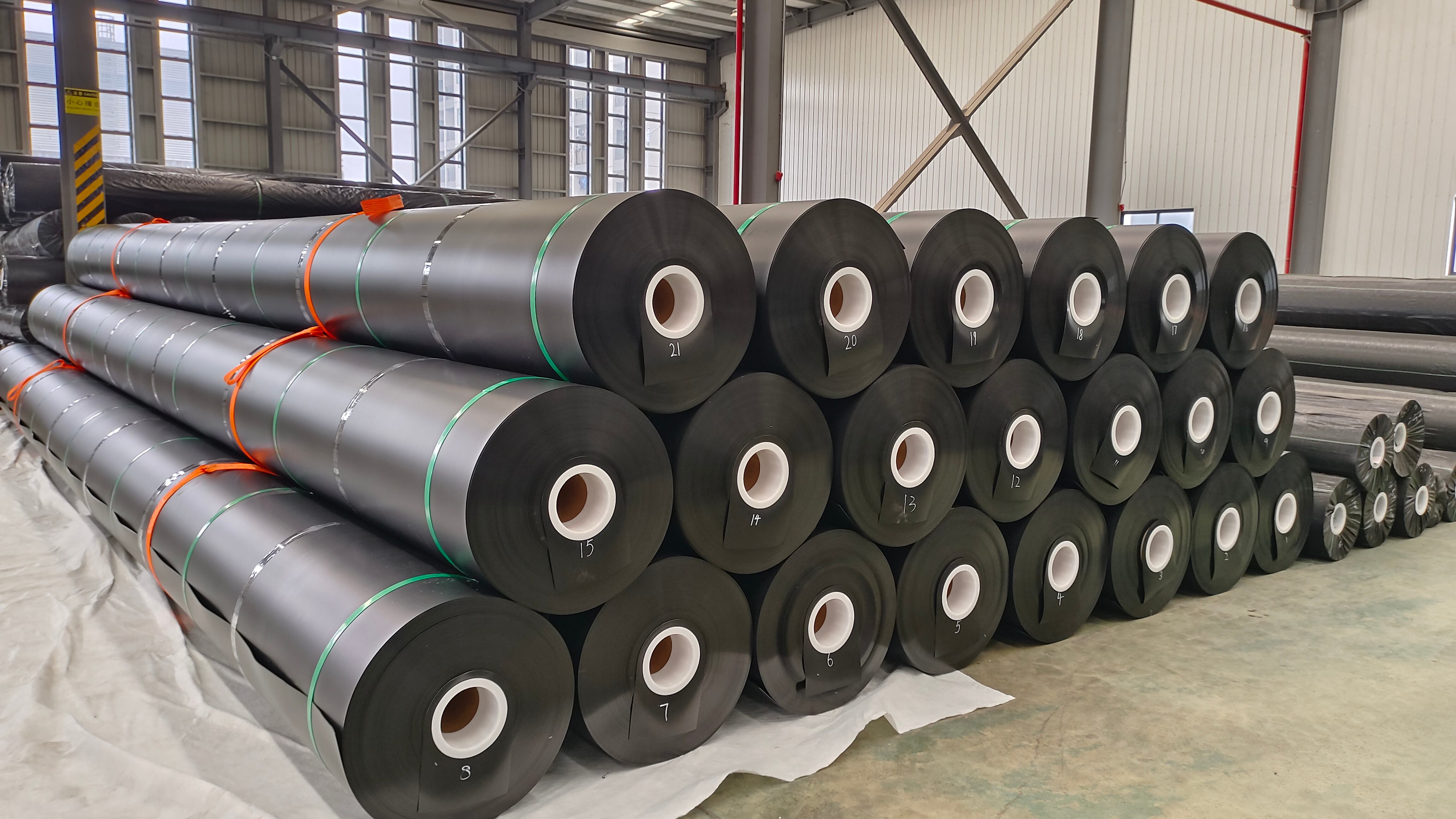
In environments where the ground shifts unpredictably and abrasive forces are relentless, material choice becomes pivotal. Linear low-density polyethylene (LLDPE) stands apart due to its unique molecular architecture—short chain branches that impart exceptional flexibility and stress crack resistance. Unlike more rigid plastics that can fracture under repeated strain, LLDPE geomembranes and pipes absorb ground movement without compromising integrity. This inherent pliability makes them particularly suited for earthquake-prone zones, mining sites with unstable substrates, or arctic installations where freeze-thaw cycles punish less forgiving materials.
The practical advantages extend beyond mere survival of harsh conditions. LLDPE exhibits remarkable chemical inertness, resisting degradation from acidic soils, hydrocarbons, and saline groundwater that would rapidly deteriorate metals or conventional concretes. In remote or ecologically sensitive areas, its longevity translates directly into reduced maintenance sorties and fewer disruptive interventions. Weldability on-site further allows for seamless monolithic installations, eliminating leak-prone joints that plague modular systems. Real-world deployments in landfill caps exposed to aggressive leachate or brine ponds in desert solar farms have demonstrated multi-decade performance, reshaping expectations for infrastructure lifespan.
Yet the choice is not solely technical—it also reflects a shift toward adaptable, low-waste construction philosophies. LLDPE’s lightweight form simplifies transport to rugged, off-road sites, cutting logistical complexity and fuel consumption during delivery. When eventual removal or repurposing is necessary, the material can be recycled into non-critical applications, reducing the environmental burden. This blend of resilience, chemical passivity, and logistical pragmatism positions LLDPE not as a premium alternative, but as the commonsense baseline for projects where failures are not an option and the terrain refuses to compromise.
PVC Liners: Flexibility Meets Cost-Effectiveness
PVC liners have carved out a solid reputation in industries ranging from construction to agriculture, largely because they strike a rare balance between adaptability and budget-friendliness. Unlike rigid alternatives, these liners can be custom-fabricated to fit complex shapes, irregular pond beds, or secondary containment areas without requiring expensive on-site welding. The material itself is forgiving during installation, stretching and conforming to substrate shifts without compromising its integrity. This innate flexibility shrinks labor hours and reduces the likelihood of callbacks, which directly translates into savings that project managers appreciate.
The cost argument goes beyond the initial purchase price. PVC’s lightweight nature cuts freight charges, and its simple seaming process means specialized crews aren’t always necessary. Over the long haul, the liner’s resistance to punctures, chemicals, and UV degradation—when properly formulated—keeps maintenance costs surprisingly low. Many field technicians note that repairs, when needed, are straightforward and can often be done without draining the entire containment area, avoiding costly downtime. That kind of practical longevity makes PVC a go-to choice for applications where budgets are tight but performance can’t be negotiable.
What truly sets PVC apart, though, is how effortlessly it adapts to mid-project changes. Design alterations that would send other liner systems back to the drawing board are often accommodated with a simple on-site adjustment. This responsiveness, combined with a price point that leaves room in the budget for other critical components, explains why contractors increasingly spec PVC liners for everything from decorative water features to large-scale wastewater storage. It’s a material that doesn’t overpromise; it just delivers where it counts—on the ground and under the surface.
EPDM’s Role in Long-Term Water Containment
EPDM membranes have become a cornerstone in long-term water containment due to their exceptional flexibility and resistance to weathering. Unlike rigid materials that crack under thermal stress, EPDM accommodates structural movement and temperature swings without compromising the seal, making it ideal for reservoirs, ponds, and landfill caps where decades of reliable service are expected.
The material's molecular backbone—ethylene propylene diene monomer—is inherently resistant to UV radiation, ozone, and chemical degradation. This means that even when fully exposed to sunlight or submerged in mildly acidic or alkaline water, EPDM liners retain their physical properties far longer than PVC or reinforced polyethylene alternatives, significantly reducing the risk of sudden leaks and the need for invasive repairs.
Installation practices also play a key role in EPDM’s longevity. Factory-fabricated panels minimize on-site seaming, and vulcanized splices create monolithic barriers that eliminate common leak paths. When combined with proper subgrade preparation and protective overlayers, an EPDM containment system can effectively isolate water for 30 years or more, offering peace of mind for environmental agencies and water managers alike.
Reinforced Polypropylene: The Hidden Gem
When you think of high-performance materials, reinforced polypropylene rarely tops the list. Yet this unassuming polymer with added fibers or fillers delivers a rare balance of stiffness, impact resistance, and chemical inertness that pure plastics struggle to match. It quietly outperforms many pricier engineering resins in damp environments, under constant vibration, or wherever lightweight durability matters most.
What truly sets it apart is its adaptability. By tweaking the type and percentage of reinforcement—glass, carbon, talc, or even natural fibers—manufacturers can tune the material’s behavior without a complete redesign. This means thinner walls, reduced weight, and lower part counts in everything from automotive under-hood components to sports equipment. The result feels custom-made for applications that demand reliability without the premium price tag.
Its stealth extends to processing as well. Unlike some reinforced thermoplastics that wear down molds or require special drying, reinforced polypropylene flows easily and bonds well with inserts. Cycle times stay short, scrap rates drop, and complex geometries become feasible. It’s the kind of material that solves problems you didn’t realize you had—until you discover how much simpler your production line can run.
How to Match Liner Material to Project Demands
Start by clearly mapping out what your project actually throws at the liner. Think about the chemicals involved, their concentration, and the temperature range. A tank holding dilute acids at room temperature has very different needs from one storing hot, aggressive solvents. If abrasion from slurries or solids is also in the mix, that pushes you toward materials with high wear resistance. Overlooking these early specifics is the fastest way to field failures later on, so don't skip this step even if the timeline is tight.
Once you have a solid grasp of the chemical and physical demands, compare them against real-world performance data for each candidate material. Generic compatibility charts rarely tell the whole story. Immersion testing results and case studies from similar installations reveal how a liner holds up under combined stresses—like thermal cycling plus chemical attack. Also weigh the practical side: can the material be installed reliably on site, and what does the repair process look like if something goes wrong? Sometimes a slightly less resistant but easily repairable option wins out when downtime costs are factored in.
Finally, bridge the gap between technical specs and budget without compromising safety. High-performance liners like PVDF or ETFE come at a premium, but may be the only logical choice for extreme conditions. For moderate environments, a well-installed epoxy or polyurethane system often delivers outstanding value. Don’t just default to the cheapest material that “should” work—instead, estimate the full lifecycle cost including inspection intervals and potential premature replacement. A thoughtful match upfront pays off in fewer shutdowns and a system that stays reliable year after year.
FAQ
HDPE liners bring excellent chemical resistance and long-term durability to the table. Their high strength and low permeability make them a reliable choice for landfills, mining, and industrial ponds, even in harsh conditions.
LLDPE is more flexible than HDPE, so it withstands uneven settling and temperature swings without cracking. This adaptability reduces the risk of tears during installation and over the life of the containment system.
PVC liners have fallen out of favor in large-scale applications because they lose plasticizers over time, weakening the material. However, they can still be cost-effective for temporary covers or decorative ponds where longevity isn't critical.
EPDM offers outstanding elongation and puncture resistance, making it ideal for ponds and reservoirs that need a durable, UV-stable barrier. It’s less suited for aggressive chemical storage but excels in water containment.
Textured surfaces increase friction on slopes, preventing soil or protective cover from sliding. For landfills or heap leach pads with steep inclines, textured liners provide essential slope stability without mechanical anchorage.
The key is matching the liner’s properties to site-specific risks, not just the price per square foot. A cheaper material that fails early will cost far more in repairs and environmental liability than investing in a suitable, quality product upfront.
Regular inspections for punctures, seam stress, and drainage issues can catch problems before they worsen. Prompt repairs, protective cover layers, and monitoring for chemical compatibility are all crucial for maximizing service life.
Conclusion
Selecting the right geomembrane liner can make or break a containment project, and a handful of materials have emerged as frontrunners for their proven performance under demanding conditions. High-density polyethylene (HDPE) remains the workhorse of the industry—its chemical resistance, UV stability, and impressive tensile strength justify its widespread use in landfills, mining, and wastewater applications. Yet no single product fits every scenario. Linear low-density polyethylene (LLDPE) enters the conversation when sites present uneven subsidence or irregular topographies; its enhanced flexibility and elongation allow it to stretch without sacrificing seam integrity, making it a lifesaver in geotechnically active zones. Meanwhile, PVC liners continue to carve a niche where budget constraints and pliability are top priorities, offering a lightweight, easy-to-install barrier that still guards against a wide array of common chemicals. For long-term water containment, EPDM shines—its high resistance to weathering and thermal cycling makes it a preferred choice for reservoirs, canals, and decorative ponds that must endure sun and freeze-thaw cycles without embrittlement.
Beyond the familiar names, reinforced polypropylene is gaining quiet traction as a hidden gem, combining sturdy multi-layer reinforcement with superior puncture resistance for projects that demand extra mechanical toughness, such as brownfield redevelopments or secondary containment above rough subgrades. The real art lies not just in knowing the materials, but in adeptly matching liner properties to the specific demands of a project—chemical exposure, expected lifespan, installation conditions, and budgetary limits must all inform the selection. A liner that works flawlessly in a potable water tank may fail entirely in an oily industrial setting. Understanding the interplay between substrate stability, fluid aggressiveness, and mechanical stress helps engineers move beyond generic specifications and craft truly durable containment systems. Ultimately, a thoughtful evaluation of these candidates—HDPE for brute strength, LLDPE for conformability, PVC for economy, EPDM for environmental resilience, and reinforced PP for rugged duty—empowers project teams to specify with confidence, ensuring that the chosen liner will remain a silent, dependable barrier for decades to come.
Contact Us
Contact Person: Jerry Qiu
Email: [email protected]
Tel/WhatsApp: +65 84265294
Website: https://www.jinseed-geo.com