

Top Louver Damper Valve Selection: Essential Features for Optimal Airflow Control
2026-07-09
When it comes to maintaining precise airflow in HVAC and industrial systems, the choice of louver damper valves can make or break performance. But with so many options out there, how do you zero in on the features that truly matter for optimal control? At THT, we believe the right valve design isn't just about moving air—it's about reliability, energy efficiency, and long‐term cost savings. In this post, we’ll walk you through the key selection criteria that often get overlooked, so you can avoid common pitfalls and dial in the perfect solution for your project.
Material Matters: Choosing the Right Build for Your Louver Damper
The backbone of any louver damper isn't just its mechanical design—it's the alloy or coating standing between smooth airflow and premature failure. When we start talking about material selection, the first thing to weigh is the operating environment. Is the damper sitting in a mild indoor airstream, or is it facing corrosive flue gases, salt spray, or extreme temperature swings? Carbon steel might be a workhorse for basic HVAC applications, but introduce humidity or chemical carryover, and suddenly you're counting the days until rust compromises blade edges and linkage. That's where upgraded materials earn their keep.
Galvanized steel offers a step up with its zinc armor, yet even that can struggle in continuously wet or acidic conditions. For demanding settings—think exhaust streams from industrial processes, marine ventilation, or wastewater treatment—stainless steel becomes the prudent baseline. Grades like 304 and 316 aren't interchangeable buzzwords; 316's molybdenum content gives it a decisive edge against chlorides, making it the go-to for coastal installations or systems handling saline mists. And let's not forget aluminum, which brings inherent corrosion resistance without the weight penalty, often finding homes in air-intake dampers where moderate conditions meet a push for energy-efficient actuation.
Beyond the base metal, don't underestimate the role of seals and bearings. A robust frame means little if the blade edge seals harden and crack under temperature cycles, or if bushing materials swell when exposed to certain chemicals. The right material pairing between blade tips and the damper frame can turn a potential leak point into a long-term seal. Ultimately, matching material choices to real-world stressors—including thermal expansion, exposure cycles, and even cleaning protocols—ensures that your louver damper doesn't just fit the budget but actually holds up through its intended service life.
Size and Fit: Ensuring Proper Integration with Your System
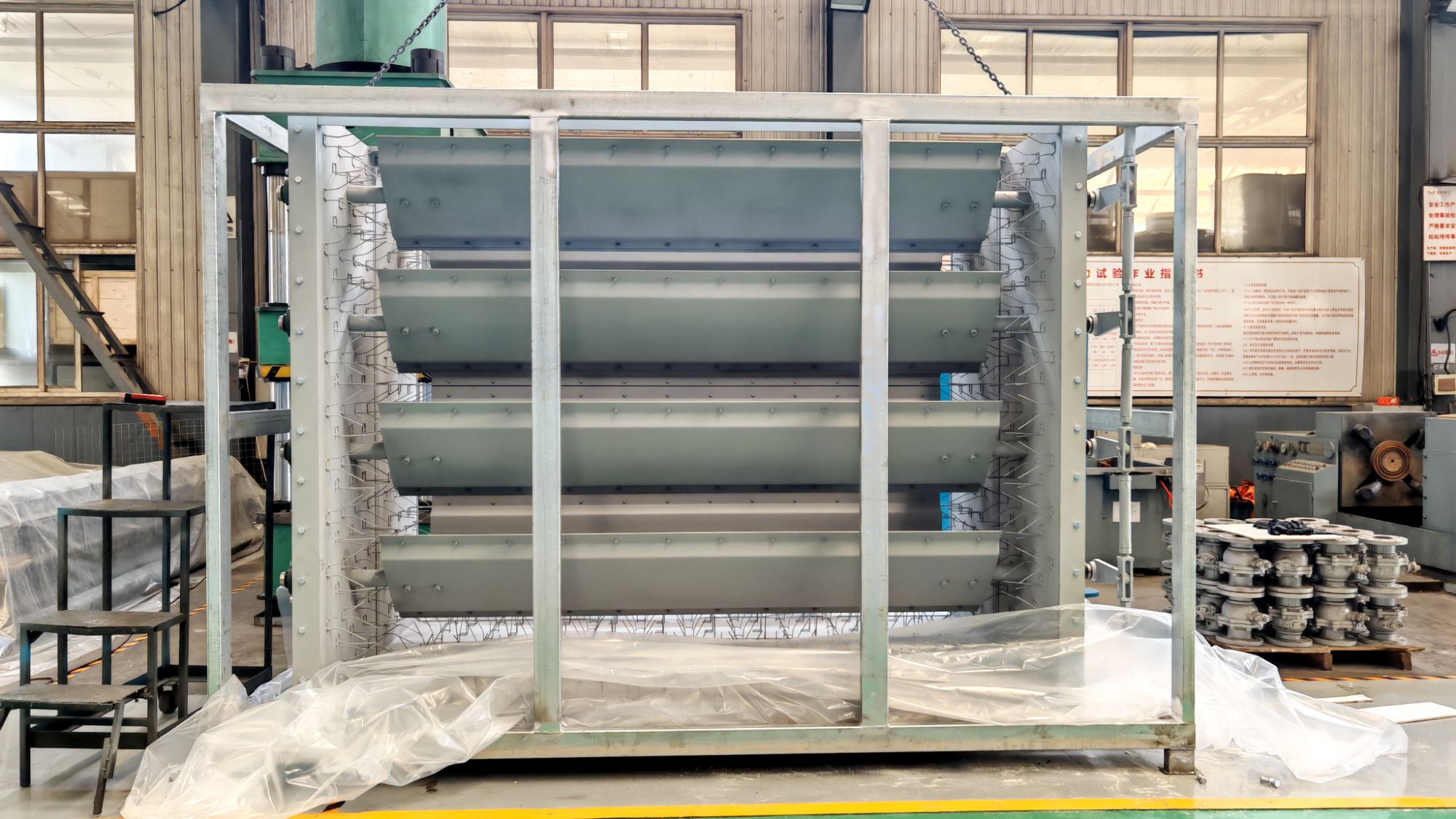
When evaluating equipment for your workspace, physical dimensions often get overlooked until it's too late. A component that seems modest in a spec sheet can become an obstacle if it doesn't align with existing mounting points, shared ductwork, or adjacent machinery. Measure not just the footprint but also clearance for airflow, cable routing, and any swing-out access panels. A few millimeters in the wrong direction can turn a straightforward install into a costly customization project.
Beyond the static envelope, consider how the unit behaves under real operating conditions. Thermal expansion, vibration isolation, and even the flex of flooring materials all influence long-term integration. If you're connecting to legacy infrastructure, factor in adapter plates or transition brackets upfront—these small fabrications save hours of field engineering later. Standardized interfaces are helpful, but don’t assume compatibility until you've verified layout drawings side by side.
Finally, think about future serviceability. Tight fits might satisfy today's floor plan, but if technicians can't reach a filter or lift a cover without dismantling surrounding gear, maintenance intervals will stretch out and costs will climb. Leave enough elbow room for tools and a clear path for removing larger subassemblies. The best integrations are those where the system looks almost casual in its placement, as if it was always meant to be there.
Actuation Options: Manual or Motorized Control for Precision
Choosing between manual and motorized actuation largely depends on the level of precision your application demands. Manual controls offer a tactile, straightforward approach that allows for subtle, real-time adjustments without the need for power sources or complex programming. They excel in environments where simplicity and direct feedback are valued—think of fine-tuning a microscope focus or positioning a sample stage by hand. The unmediated connection between the operator and the mechanism often results in a more intuitive feel, especially for tasks that rely heavily on human skill and judgment.
On the other hand, motorized systems bring a new layer of accuracy and repeatability to the table. With stepper or servo motors, you can achieve positioning down to sub-micron levels, programmed to move in precise increments that human hands simply cannot replicate consistently. This is crucial in automated workflows, long-duration experiments, or when remote operation is essential. Motorized actuators also integrate seamlessly with software, enabling complex motion sequences, data logging, and feedback loops that refine precision over time.
Some setups even blend both approaches—a manual coarse adjustment paired with a motorized fine control, for instance. This hybrid strategy lets you rapidly get close to the target position by hand and then switch to automated micro-stepping for the critical last nanometer. This not only saves time but also preserves the best of both worlds: the speed and intuitiveness of manual operation with the uncompromising accuracy of motorized technology. Ultimately, the choice hinges on your specific requirements for throughput, consistency, and operator involvement.
Pressure Drop and Efficiency: Balancing Flow and Resistance
Every curve on a pump chart tells a story about energy, and pressure drop is the villain that steals efficiency. When fluid navigates a system, friction along pipe walls and turbulence from sudden bends create resistance, bleeding away the energy you’ve already paid for. The trick isn’t to eliminate this resistance—that’s physically impossible—but to understand it well enough to keep the system operating in its sweet spot, where horsepower isn’t wasted simply shoving liquid against its own reluctance to move.
Valves offer a deceptive solution: throttle them down, and you can dial in the exact flow you need. But that throttling introduces a deliberate pressure drop, transforming kinetic energy into heat and noise that serves no productive purpose. A smarter approach often lies in trimming impellers or adjusting motor speeds, letting the pump itself match demand without forcing the fluid through an artificial bottleneck. It’s a quieter, cooler, and ultimately cheaper way to find the balance between pushing enough flow and fighting unnecessary friction.
In practice, achieving that equilibrium demands more than just a well-selected pump. Regular maintenance keeps internal clearances tight and surfaces smooth, preventing silent efficiency losses that no instrument will flag until the power bill arrives. The goal is a system where pressure drop is acknowledged but never ignored, managed but never magnified—a fluid path where every psi has a purpose, and none of it gets squandered on resistance that could have been avoided.
Sealing Performance: Preventing Leakage for Energy Savings
A seal that fails even slightly can quietly drain your system's efficiency. Tiny leaks, often invisible to the naked eye, allow pressurized media to escape, forcing pumps and compressors to work harder to maintain the required pressure. This extra energy consumption not only drives up operational costs but also contributes to unnecessary carbon emissions. In many industrial settings, the cumulative effect of multiple small leaks can lead to energy losses of 10% or more, making sealing integrity a direct path to reducing both utility bills and environmental impact.
Beyond energy waste, compromised seals can undermine the reliability of an entire operation. When seals degrade, they permit contamination from external sources—such as moisture, dust, or process fluids—to infiltrate sensitive components. This intrusion accelerates wear on bearings, valves, and cylinders, leading to unplanned downtime and expensive repairs. Selecting the right seal material and design for the specific temperature, pressure, and chemical exposure is crucial; for instance, seals made from advanced elastomers or PTFE blends can maintain elasticity and resilience over a wider operating range, effectively blocking leaks even under fluctuating conditions.
Achieving lasting sealing performance also depends on proper installation and regular inspections. Even a premium seal can fail prematurely if it is twisted, cut, or installed in a groove that is too tight or too loose. Training maintenance teams to follow precise fitting procedures, and incorporating routine checks using methods like ultrasonic leak detection or pressure decay tests, catches potential issues before they escalate. By treating sealing as a strategic element of energy management, facilities can achieve a quieter, cleaner, and more cost-effective operation—one where every joule of energy is used for productive work, not lost to the atmosphere.
Durability and Maintenance: Long-Term Reliability in Demanding Environments
In tough industrial or outdoor settings, equipment longevity isn’t just a nice-to-have—it’s essential. Our products are built with corrosion-resistant alloys and sealed against dust and moisture, ensuring they hold up under constant vibration, temperature swings, and exposure to chemicals. This rugged design minimizes unexpected failures, so you can count on consistent performance year after year without sky-high replacement costs.
Maintenance should be straightforward, not a headache that eats into your uptime. We’ve made sure key components are accessible without specialized tools, and wear parts are clearly marked for quick swaps. Onboard diagnostics give you a heads-up before issues escalate, turning reactive scrambles into planned check-ups. That simplicity means your team can focus on the job, not on deciphering complex service manuals.
The real payoff comes when you look at the total cost of ownership. By choosing gear that’s over-engineered for harsh conditions and designed for easy upkeep, you dodge the hidden expenses of constant repairs and early replacements. From arctic chill to desert heat, our equipment proves that long-term reliability is the smartest investment you can make for demanding operations.
FAQ
A louver damper valve is a mechanical device with adjustable blades that regulate the volume and direction of air within ductwork or ventilation systems. It allows precise control over airflow, helping maintain desired pressure levels, temperature consistency, and indoor air quality by either opening, closing, or modulating the passage.
Blade profile, spacing, and alignment are key. Aerodynamically shaped blades reduce turbulence and noise while maximizing flow efficiency. Opposed-blade configurations offer better modulation over parallel-blade types in many scenarios, and the ability to maintain a tight seal when closed prevents unwanted leakage.
Manual actuation suits systems where adjustments are infrequent and accessibility is straightforward. Automated options, such as electric or pneumatic actuators, are better for dynamic environments requiring remote control, integration with building management systems, or fail-safe operations. The choice hinges on the need for real-time response and labor availability.
Stainless steel and aluminum are common for corrosion resistance and strength. In harsh environments with chemicals, high humidity, or extreme temperatures, specialized coatings or alloys may be necessary. The material must match the ductwork's environment to prevent degradation, which could compromise seal integrity and operational smoothness over time.
Absolutely. Oversized dampers can lead to poor low-flow control and hunting, while undersized ones create excessive pressure drops and energy waste. Accurate sizing involves matching the damper dimensions to the duct cross-section and considering the required free area ratio for the specified air velocity and pressure conditions.
A damper's leakage rating indicates how much air passes through when fully closed. Low-leakage dampers are essential in critical applications like cleanrooms or isolation zones where cross-contamination must be avoided. High-quality seals and precise blade closure mechanisms keep bypass airflow to a minimum, improving overall system efficiency and performance.
Features like adjustable end-stop bolts, integrated pressure taps, and thermal breaks often get sidelined but offer tangible benefits. End-stops simplify field adjustment, pressure taps enable accurate flow measurement, and thermal breaks prevent condensation on blades in cold systems—details that enhance both functionality and longevity.
Conclusion
Selecting a louver damper valve that truly optimizes airflow goes far beyond basic dimensions—it’s a careful balance of material resilience, precise sizing, and operational control. The environment dictates whether you need the corrosion resistance of stainless steel, the lightweight economy of aluminum, or perhaps specialized coatings for chemical exposure. Equally critical is how the damper integrates with your existing ductwork; even a slight mismatch in frame thickness or blade orientation can create turbulence that undermines entire system performance. Then there’s the choice between manual and motorized actuation: direct linkage may suffice for static balancing, but systems demanding variable air volume or remote adjustments benefit enormously from modulating actuators with feedback, letting you dial in comfort and efficiency without manual intervention.
Beyond selection, real-world performance hinges on managing pressure drop without sacrificing flow capacity and ensuring the seal tightness that prevents costly leakage. Aerodynamically profiled blades and low-torque linkages keep resistance minimal, while perimeter gaskets or silicon-blade edges achieve shutoff leakage rates that align with ASHRAE standards—each percentage point of leakage avoided translates directly into operational energy savings over time. Combined with robust bearings and self-lubricating bushings that shrug off high-cycle demands, a thoughtfully chosen damper valve becomes a fit-and-forget component. Maintenance stays minimal, downtime is rare, and the upfront investment continually pays back through consistent airflow regulation and reduced utility bills in even the most demanding industrial or commercial settings.
Contact Us
Contact Person: Su Zhang
Email: [email protected]
Tel/WhatsApp: +86-25219206
Website: https://www.tht-valve.com/