Top River Channel Dredging Manufacturer: Innovations in Deepening Waterways for Global Trade
2026-05-10
Global trade flows through waterways, and keeping them navigable demands cutting-edge technology. As a top river channel dredging manufacturer, YaKai Dredger is revolutionizing how we deepen and maintain critical shipping routes. From smart automation to eco-friendly designs, their breakthroughs are setting new standards. Dive into the innovations pushing the boundaries of dredging.
The Shift Toward Precision Dredging in Modern Waterways
Precision dredging has quietly reshaped how engineers and environmental managers approach sediment removal. Instead of stripping entire channel beds with mechanical scoopers, modern operations rely on sensor-guided suction heads and real-time turbidity monitors. The goal isn't just to dig deeper—it's to remove only the contaminated or obstructive material while leaving stable substrates undisturbed. This surgically targeted work reduces collateral damage to benthic habitats and minimizes the plume of suspended solids that traditionally turned downstream waters murky for days.
A key driver behind this shift is the integration of multibeam sonar and positioning systems that create sub-centimeter maps of the underwater terrain. Dredge operators now follow three-dimensional models that highlight exactly where silt, clay, or invasive vegetation has accumulated. On-screen guidance tells them when to adjust cutterhead rotation or pump intake speed, preventing over-dredging and the accidental release of legacy pollutants. In some projects, contractors have cut disposal volumes by nearly half simply by distinguishing between layers that look identical to the naked eye but differ sharply in grain size or chemical load.
Regulatory pressure and the rising cost of confined disposal facilities have also pushed the industry toward finesse. Ports and waterway authorities increasingly demand environmental windows where dredging only occurs during fish migration lulls, paired with continuous water-quality feedback loops that halt work if thresholds are breached. These protocols sound restrictive on paper, but they've fostered a generation of equipment that is quieter, more fuel-efficient, and surprisingly adaptable—one that turns dredging from a blunt instrument into something closer to underwater surgery.
How Adaptive Cutter Design Handles Unpredictable Riverbeds
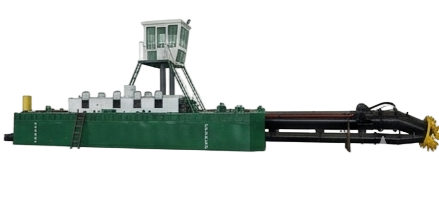
Dredging operations often face the challenge of unpredictable riverbeds, where sudden transitions from soft sediment to buried boulders or compacted clay can stall progress and damage equipment. Adaptive cutter design addresses this by integrating real-time feedback mechanisms that sense changes in soil resistance and automatically adjust cutter speed, torque, and tooth engagement. When the cutter encounters hard material, hydraulic pressure sensors trigger a reduction in rotation speed while increasing cutting force, preventing tooth breakage and maintaining consistent excavation. This dynamic response allows the dredge to power through mixed ground conditions without manual intervention, reducing downtime and keeping projects on track.
The key to handling erratic riverbed profiles lies in the cutterhead's interchangeable tooth systems and modular geometry. Hard-facing alloys and carbide-tipped teeth can be swapped out depending on the anticipated substrate, but adaptive designs go further by using teeth that react to impact loads. Some cutters employ spring-loaded or hydraulically dampened pick holders that retract slightly when striking a large rock, dissipating energy and minimizing damage. Meanwhile, the overall shape of the cutter—whether a basket, wheel, or auger style—can be optimized with variable helix patterns and relief grooves that channel debris away, preventing clogging when transitioning from sand to cohesive soils. These features work together to let the cutter maintain a steady bite even when the riverbed throws surprises.
Operators also benefit from intelligent monitoring systems that map the riverbed in real time, feeding data back to the adaptive cutter. Sonar and GPS positioning pinpoint hard spots before the cutter reaches them, allowing preemptive adjustments to the cutter’s angle and depth. Combined with machine learning algorithms that learn from past encounters, the system can predict likely obstacles based on local geology and current readings. This fusion of mechanical resilience and digital foresight ensures that even in rivers with highly variable beds—from loose gravel to bedrock—the adaptive cutter continues working effectively, reducing wear and fuel consumption while protecting the surrounding ecosystem from excessive disturbance.
Silting Solutions That Keep Global Supply Chains Moving
Dredging might sound like a straightforward operation, but the reality is far more nuanced—especially when dealing with silt that stubbornly settles in the wrong places. Ports and waterways are the arteries of international trade, and even a thin layer of accumulated sediment can slow down the massive vessels that modern logistics depend on. Without ongoing maintenance, these critical passages would quickly choke up, forcing ships to wait for tides or take longer alternate routes. The solution lies in a blend of adaptive dredging techniques and real-time monitoring, ensuring that channels remain open and cargo keeps flowing steadily.
One of the quieter revolutions in this field is the shift toward precision handling of silt. Traditional methods often just relocated the problem, but today’s approaches focus on the sediment's potential as a resource. By analyzing the composition on-site, teams can decide whether to use it for coastal restoration, construction fill, or even convert it into usable land. This not only reduces disposal headaches but turns a recurring cost into an opportunity. Coupled with silent, low-emission equipment that can work around busy port schedules, these solutions mean that environmental and community concerns are addressed without sacrificing operational tempo.
What really keeps the system resilient, though, is the move away from reactive cycles. Instead of waiting for a crisis, predictive models now draw on data from sensors and satellite imagery to forecast silt buildup before it becomes an obstacle. This allows for targeted, smaller-scale interventions that prevent disruptions rather than scrambling to fix them. In an era where supply chain fragility has become all too clear, this kind of behind-the-scenes consistency makes all the difference. It’s not glamorous, but it’s what ensures the raw materials and finished goods keep reaching their destinations on time, every time.
Real-Time Monitoring and the End of Over-Dredging
For decades, dredging operations relied on intermittent surveys and rough calculations, inevitably leading to the removal of excess material. This outdated approach not only wasted resources but also inflicted unnecessary damage on aquatic ecosystems. With real-time monitoring, the industry has finally broken free from guesswork, shifting to a precise, data-driven method that ensures only the intended volume is touched.
Sensors mounted directly on dredging heads now feed continuous data on sediment density, depth, and composition directly to operators. Instead of digging blindly, the crew sees exactly where the targeted layer ends and the undisturbed natural bottom begins. Instant alerts and visual overlays turn dredging into a surgical procedure, eliminating the common practice of over-dredging that often went unnoticed until a post-project survey revealed the mistake.
The environmental payoff is immediate and measurable. Habitats that previously suffered from excessive trenching and turbidity are now spared, while project owners avoid costly disputes and restoration fees. By merging real-time feedback with adaptive controls, the industry has effectively closed the chapter on over-dredging, proving that economic efficiency and ecological care can advance hand in hand.
Balancing Marine Life with Deeper Channels: A Case for Green Dredging
Deepening shipping channels is often seen as a threat to fragile marine ecosystems, but a new approach is flipping that narrative. Green dredging integrates environmental stewardship directly into navigation projects, ensuring that economic gains don't come at the expense of the sea. By carefully timing operations to avoid spawning seasons, using silt curtains to contain sediment plumes, and repurposing dredged material for habitat restoration, ports can expand while actively enhancing biodiversity. It's a delicate equilibrium where commerce and conservation move in tandem, proving that human activity need not write a tragedy for ocean life.
At the heart of this philosophy lies a simple question: What if every scoop of sediment removed could yield an ecological net gain? Innovative techniques now allow dredged sand to nourish eroded beaches or create artificial reefs that soon teem with fish. Sensors on dredger heads can identify and avoid seagrass meadows, while real-time turbidity monitoring triggers automatic pauses if water quality dips. These aren't distant ideals—pilot projects in Europe and Australia have shown that with the right protocols, marine mammals and turtles can safely coexist alongside busy construction fleets. The result is a blueprint for infrastructure that leaves the underwater world richer, not poorer.
Critics once dismissed such measures as costly window dressing, but the calculus is shifting. Pressure from coastal communities, insurers concerned about long-term risks, and a growing scientific consensus are pushing green dredging from niche to norm. When a deeper channel safeguards against supply chain disruptions while simultaneously reviving seagrass beds that sequester carbon, the business case writes itself. The hardest work isn't engineering—it's changing mindsets and drafting contracts that treat ecological metrics as seriously as cubic yards moved. In the end, balancing marine life with deeper channels isn't a compromise; it's an investment in the resilience of both our ports and our planet.
Customized Fleet Strategies for Narrow Inland Routes Versus Mega Ports
Operating on narrow inland waterways demands a completely different fleet mindset compared to dredged mega port basins. Shallow drafts, low bridge clearances, and restrictive lock chambers force ship designers to push beyond standard hull forms. Vessels here often sacrifice deadweight for maneuverability, incorporating twin screws, retractable pilothouses, or even articulated tug-barge combinations that split for tight bends. The rhythm of these passages relies on barge trains pushed by compact tugs, where every meter of beam and draft is scrutinized to avoid grounding or scraping against ancient stone revetments.
Mega ports, on the other hand, are engineered for the largest boxships and bulkers afloat, with deep-water berths and sprawling turning basins. Fleet strategies here revolve around colossal dimensions and relentless turnaround pressures. The vessels themselves become floating warehouses, demanding shoreside gantry reach and automated mooring to slash idle time. Tug fleets are scaled up accordingly, moving from single-drum winches to high-tension escort systems that can halt a 400-meter behemoth. Scheduling software and predictive draft modeling eclipse the local pilot’s rule-of-thumb that still governs on narrow canals.
Crafting a tailored approach means accepting that one size fits neither. For inland corridors, lightweight materials and hybrid drives can trim air draft and fuel consumption while respecting centuries-old infrastructure. At mega hubs, the focus shifts to ultra-large cellular holds and cold ironing readiness to meet megaship demands. The link might appear in multi-modal feeder loops, where a shallow-draft vessel picks up cargo from the giant terminal and winds through regional waterways—bridging two worlds that otherwise operate on largely separate strategic tracks.
FAQ
Rather than relying on standard equipment, they've developed customized cutter suction dredgers with enhanced pump systems that handle silt and rock more effectively. Their engineering team constantly refines designs based on real-world riverbed conditions.
By deepening shipping channels more efficiently, they allow larger cargo vessels to access inland ports. This cuts transshipment needs and directly reduces shipping costs for international supply chains.
They integrated real-time sonar mapping with automated dredge head adjustments, so operators can precisely target sediment layers without over-dredging—saving time and minimizing environmental disturbance.
They recently widened a critical bend in the Mekong River, dealing with unpredictable currents and submerged debris. The team deployed specialized anchors and floating booster stations to maintain safe, continuous operations.
They use silt curtains and monitor turbidity levels closely, adjusting work speed as needed. Dredged material is often repurposed for land reclamation or wetland restoration rather than simply dumped.
Beyond initial deepening, they provide periodic resurveying and maintenance dredging contracts that adapt to shifting sediment patterns, ensuring consistent channel depths year-round.
Several African and Southeast Asian ports have been able to expand their capacity significantly. For instance, after deepening access channels, one port saw a 40% increase in annual cargo throughput.
Conclusion
In the evolving landscape of global trade, a leading river channel dredging manufacturer is redefining how waterways are deepened and maintained. The shift toward precision dredging has transformed traditional brute-force methods, allowing operators to sculpt channels with surgical accuracy. At the heart of this innovation is adaptive cutter design that intuitively adjusts to unpredictable riverbeds, effortlessly handling everything from compacted silt to hidden boulders. These advancements are coupled with intelligent silting solutions that proactively manage sediment accumulation, ensuring supply chains never choke on unexpected shoaling. Real-time monitoring systems now feed continuous data to onboard operators, virtually eliminating the waste of over-dredging and optimizing fuel use. This data-driven approach not only cuts costs but also preserves the delicate balance of river ecosystems.
The manufacturer is equally committed to green dredging practices that protect marine life while carving deeper channels. By integrating turbidity curtains and wildlife-friendly scheduling, they demonstrate that infrastructure development and environmental stewardship can coexist. Recognizing that no single vessel fits all scenarios, the company offers customized fleet strategies—deploying compact, agile dredgers for narrow inland routes and robust, high-capacity machines for mega port expansions. This tailored approach minimizes disruption in confined waterways and maximizes efficiency in industrial hubs. Each project is treated as a unique challenge, blending cutting-edge technology with ecological sensitivity. The result is a resilient global network of waterways that supports the relentless pulse of international trade, proving that visionary dredging is not just about moving mud but about connecting markets with sustainable foresight.
Contact Us
Contact Person: Nancy
Email: [email protected]
Tel/WhatsApp: (+86) 13869631558
Website: https://www.yakaidredger.com/