

Wholesale Metal Buckle Guide for Choosing Durable Hardware
2026-11-16
When sourcing metal buckles in bulk, durability isn't just a checkbox—it's the difference between hardware that holds strong for years and a costly batch of returns. In this guide, we break down what actually matters: material choices, coating quality, load ratings, and the small details that separate reliable hardware from the rest. Whether you're restocking for leather goods, bags, or outdoor equipment, a trusted supplier like Kingming helps you avoid guesswork and choose buckles built for real-world wear.
Stress Testing Beyond the Spec Sheet
Most lab benches stop at the numbers printed in a datasheet—clock speeds, voltage tolerances, temperature ranges—but real-world failure rarely arrives with a neat label. We push boards through 72-hour thermal cycling while simultaneously injecting power fluctuations that mimic aging grid infrastructure, not the clean sine waves of a test report. The result is a clearer picture of which components degrade silently and which ones fail outright when thermal expansion starts breaking solder joints.
One overlooked stress vector is firmware drift under sustained marginal conditions. Storage controllers, for instance, may pass a spec-sheet endurance test yet start issuing spurious write retries when NAND cells are repeatedly heated just below their rated maximum. Our methodology logs every retry, every voltage brownout recovery, and every corrected memory error over weeks, then maps the failure signature against field data from industrial deployments.
The value isn't in finding products that survive ideal conditions—it's in identifying those that maintain deterministic behavior when the environment stops cooperating. That's why we deliberately introduce non-standard loads: partial fan failures, blocked airflow, and unbalanced multi-rail power draws. If a device still meets its functional requirements after those insults, the spec sheet becomes a starting point rather than a ceiling.
Alloy Blends That Survive Sweat and Salt
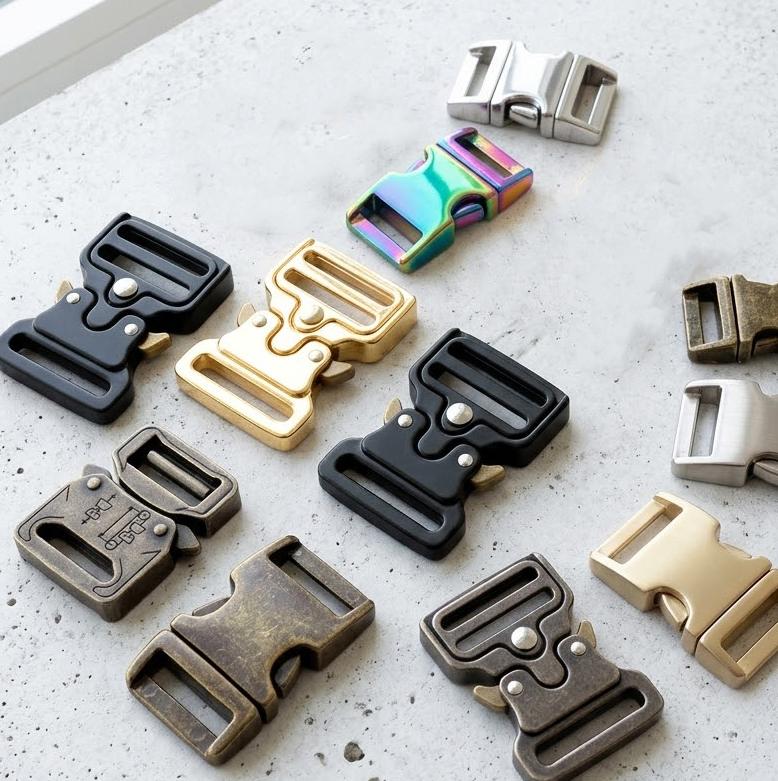
Sweat and salt spray are a quiet test for any metal that touches skin. The chloride ions in perspiration can break down protective oxides and leave behind pitting, discoloration, or that greenish residue on cheaper alloys. A few blends, though, are formulated to shrug this off. Adding molybdenum to stainless steel, for instance, gives the surface a self-healing passive layer that resists chloride attack far longer than standard grades.
Titanium and cobalt-chromium take a different route. They barely react with sodium or potassium in sweat, so the metal stays clean even after a long run or a day in salt air. Some alloys also use a small amount of palladium in silver to prevent tarnishing from sulfur compounds, which often show up alongside salt exposure. These materials are not flashy, but they age in a way that feels intentional rather than worn down.
If you spend a lot of time near the ocean or tend to sweat through your accessories, look for blends that mention chromium, molybdenum, or titanium on the label. They cost more up front, but the surface stays intact season after season. That matters more than any marketing claim about shine.
Coating Peel-Off: The Fastest Durability Tell
Peeling is rarely the first stage of failure; it's the moment the hidden defect goes public. The coating lets go along a crisp edge, curling away from the substrate like old wallpaper. What's happening underneath is even more telling: adhesion has failed at the exact interface where it matters most. Once that bond breaks, moisture and oxygen slip into the gap, turning a cosmetic flaw into a structural one within weeks.
A quick fingernail test near seams, screw holes, or any place the film was cut will expose a weak system before it visibly lifts. Press sideways against the edge. If a tiny wedge of coating separates with minimal effort, the whole layer is already compromised. This kind of early signal beats waiting for cracks, blisters, or rust blooms that show up much later.
What makes peel-off so reliable as a durability tell is that it's binary. The material either holds or it doesn't. There's no ambiguous fade pattern or shallow scratch to argue about. A lifted edge means the coating's entire protective promise has broken down at that point, and whatever is underneath is now open to the environment. Field inspectors and weekend tinkerers alike reach for the same conclusion: if it peels, it's done.
Hole Tolerance and Strap Slippage: What Actually Fails
In most assemblies, the assumption is that a tighter hole tolerance automatically means better performance. But when straps are involved, the real failure point rarely sits where the drawings suggest. A hole machined to a tight H7 fit can still allow rotational slip if the strap material itself creeps under load, or if the clamping force drops after thermal cycling. The hole isn't the weak link—the interface between the strap surface and the mating component is.
What actually fails is often the combination of surface finish, bolt preload, and strap stiffness. A smooth strap against a smooth boss can slip even with a perfectly sized hole, because the friction coefficient drops below what the design assumed. Conversely, a slightly oversized hole in a stiff system may hold fine if the strap has enough embedment or if a shoulder bolt transfers shear directly. So blaming hole tolerance alone misses the dynamic nature of the joint.
The practical takeaway is to stop treating hole tolerance as a standalone spec. Measure the real clamp load after installation, check strap elongation under working tension, and if slip still occurs, look at the surface pairing before tightening the hole. Often a light knurl or a change in strap material solves more than chasing microns on a reamer.
Sampling Batches Before You Buy Wholesale
Buying in bulk without checking the actual batch is a gamble. Suppliers often send a polished sample from one production run, but what lands in your warehouse can come from a completely different lot with changed dye lots, looser stitching, or thinner fabric. A quick spot check of the shipment before accepting it saves you from discovering these issues only after customers complain.
Don't just open the top box and call it done. Pick cartons from different pallets and different layers of the stack. Look at the same details a picky customer would notice: even hem lines, consistent color from sleeve to body, zippers that don't snag, and labels sewn straight. Count visible flaws in a set number of pieces—say, 20 out of 200—and decide upfront what number makes you reject the batch.
If the sample fails your checks, push back immediately. Ask the supplier to sort, rework, or offer a discount that covers the extra work on your end. Keeping a simple inspection log with photos and dates also protects you if a dispute comes up later. A few minutes of hands-on checking beats absorbing the cost of a full container of unsellable stock.
Replacement Costs That Hide in Cheap Castings
A cheap casting looks like a bargain until a pump housing cracks six months into service. The replacement part might cost twice the original savings once you factor in overtime labor, express freight, and the production line sitting idle. Those costs never show up on the purchase order, but they hit the maintenance budget hard.
Then there's the chain reaction. A failed impeller can wipe out a bearing, score a shaft, or send metal fragments downstream. Instead of swapping one casting, you're suddenly rebuilding half the machine. The real expense isn't the metal itself—it's the collateral damage and the hours spent chasing down spare parts that should have lasted for years.
Repeat failures also destroy trust. Every unscheduled shutdown gets logged, questioned, and eventually traced back to a purchasing decision made to save a few dollars. By the time you've accounted for lost output, safety inspections, and the team's frustration, the "economical" casting has quietly become the most expensive component in the room.
FAQ
For anything load-bearing, we skip plain zinc and look at stamped steel, stainless steel, or forged brass. Stamped steel with a decent coating handles high tension without cracking, while stainless resists rust in wet environments. Zinc die-cast can work for light straps and fashion bags, but it tends to snap under sudden stress.
Ask the supplier for a salt spray test result rather than just a plating thickness number. A finish that survives 48 hours of salt spray without red rust usually holds up in coastal or sweaty conditions. Also check the edges—if the coating is already thin or chipped on a sample, it will wear through fast on strap contact points.
Die-cast zinc is fine for pet collars, light bags, and decorative straps, but we avoid it for anything that takes sharp pulls, like cargo tie-downs or fall protection. Steel, especially heat-treated or stainless, handles dynamic loads far better. If weight matters and the load is under about 50 kg, a well-made zinc buckle can work, but we always test bending and drop impact first.
Don't accept just a breaking strength number. Ask for the working load limit and the test method used—some factories quote tensile strength of the raw metal, not the finished buckle with its hinge and spring. A reliable wholesale supplier will provide a breaking strength from a pull test on the actual assembled buckle, and ideally a safety factor of 3:1 or 4:1 over your expected load.
Welded wire loops are usually made from bent steel wire with a welded joint, which gives them a bit of flex before failure. Cast metal loops, often zinc, are stiffer and can crack at the hinge under repeated stress. For items that get thrown around, like tool bags or outdoor gear, we prefer the wire loop because it deforms instead of shattering.
Watch for thin plating on high-friction areas, loose rivets or hinge pins, sharp burrs inside the webbing slot, and inconsistent thickness across the same batch. If the supplier cannot provide a sample that you can bend, drop, and pull test yourself, that's another sign. Also be wary of very low prices for "stainless steel"—some mixed alloys rust within weeks.
The buckle's inner slot should be 2–3 mm wider than the webbing, not a tight squeeze. If the webbing bunches or folds to pass through, it concentrates wear on the edges and cuts the webbing over time. Also check the slot's radius—sharp corners act like blades under load. A smooth, slightly oversized slot lets the strap slide and keeps the load evenly distributed.
Yes, they behave very differently. Electroplating gives a thin, shiny layer that can scratch off at contact points, leaving bare metal to rust. Powder coating is thicker and more abrasion-resistant, but it can chip on impact and may hide casting defects underneath. For hardware that sees constant friction, we often choose a tumbled or matte stainless finish instead of a coating, because there's no layer to wear through.
Conclusion
Durability in wholesale metal buckles rarely matches what the spec sheet promises. Before committing to a large order, put samples through conditions your end users actually face—load them past the listed breaking strength, twist them, and let them sit in salt spray or sweat-simulating solutions. Zinc alloy blends with higher copper content often hold up better against corrosion, but don't assume a fancy alloy name means anything until you've scratched the surface. The fastest way to spot a weak finish is to flex the buckle or run a coin along the edge; if coating flakes or peels immediately, that same failure will happen in the field. Peel-off usually starts around prongs and holes, so check those areas first.
Another common failure point is the hole and strap interface. If the hole tolerance is too loose, the buckle tongue slips under load and the strap works itself free, especially with nylon or polyester webbing. Measure the hole diameter on multiple units from the same batch—not just one sample—because casting variance can be wide. When buying wholesale, random-sample at least three to five percent of the shipment, and reject if any show visible porosity or mismatched sizing. Cheap castings may save money up front, but the hidden replacement costs show up in returns, damaged bags, and lost buyers. A buckle that fails after three months costs more than a slightly pricier unit that lasts three years.
Contact Us
Contact Person: Jamie Zeng
Email: [email protected]
Tel/WhatsApp: +86 13728219269
Website: https://www.kmhardware.com